

Abandoned places
1 2

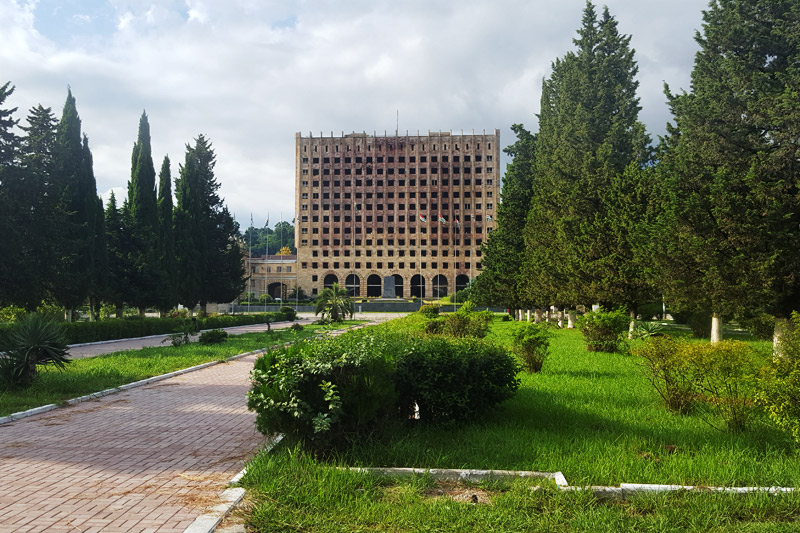
Abkhazia is a heaven for fans of abandoned buildings. It feels like every second house in Sukhumi is abandoned. The most famous of them is probably the old government house right in the middle of town.
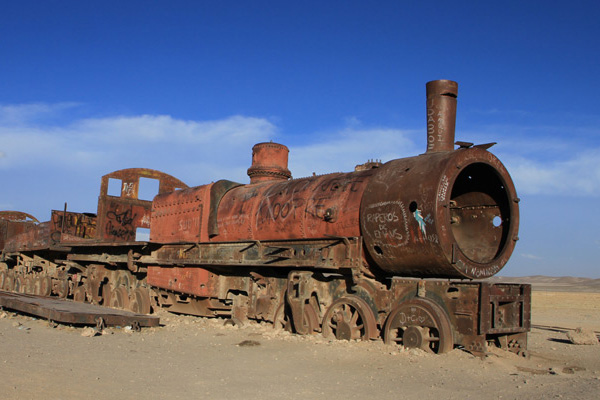
If you like deserted places, the train graveyard just outside of Uyuni is a true gem. A collection of turn of the century (end of 19th start of 20th century) steam locomotives and trains are spread out in the desert. Uyuni used to be a major crossroad of train tracks for transporting minerals away from the mines. Since the decline of the mining industry in the area, the old steam train were also abandoned and put to rest in the desert. For most tour groups this is the first stop on the standard tours in and around the salar de Uyuni. To avoid the crowds and for better light it is better to go late afternoon.
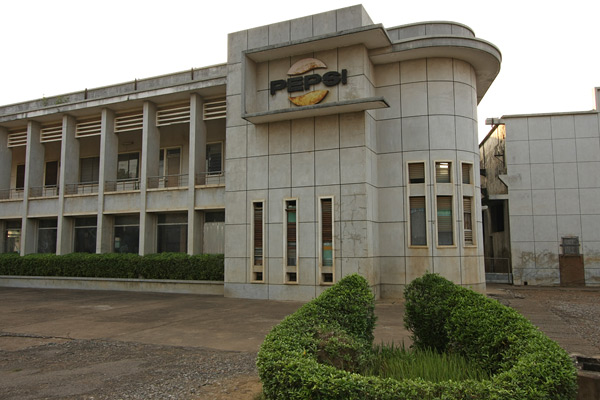
When the Khmer Rouge came to power in 1975, things went wrong very fast. Those who could escape did that, leaving whatever behind, and the Pepsi bottling plant in Battambang is such a leftover. One day the Khmer people were enjoying a cold Pepsi, and the next day everything was banned. The national bank was blown up and the elite was killed in a foolish attempt to make Cambodia a self-supplying Maoist state. Today the Pepsi plant with its faded logo still stands with piles of old bottles inside. You might have to ask the caretaker to open the otherwise locked building. Why the building hasn't been sold off is a mystery to us, but in the meantime it is possible to visit a Pepsi bottling plant which has not made Pepsi for more than 35 years.
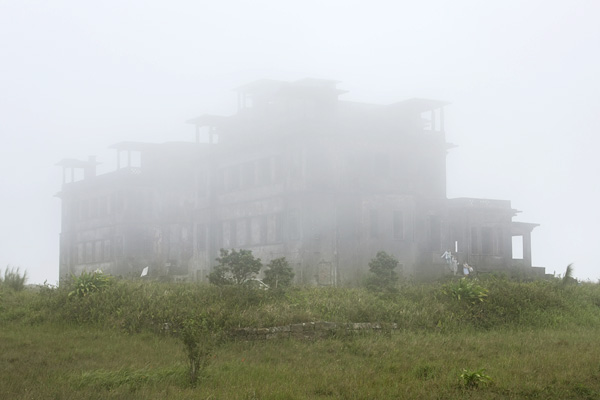
To escape the tropical heat of the low land, the French built an elaborated hill retreat in 1921 at the top of Bokor mountain, deep in the Cambodian jungle. At 1062 m, the weather here is chilly with clouds rolling in, probably giving the French colonists a flavour of their Alps. The hill station consisted of a catholic church, post office, and the flashy Grand Bokor Palace Hotel & Casino with a ball hall and gambling rooms. The hill station was first abandoned in 1940 and later in 1972 when the Khmer Rouge took power of the area. During the Vietnamese invasion in 1979, the Khmer Rouge withdraw to the jungle and kept Bokor Hill Station as a stronghold, which was still under Khmer Rouge control until the 1990s. Today you can join a tour to visit the ghost town. The company of Sokimex (yes, same company who owns all the gas stations and the entrance to Angkor Wat) has magically gained a 99-years-lease of Bokor Mountain and is now building another 5-stars resort and casino.
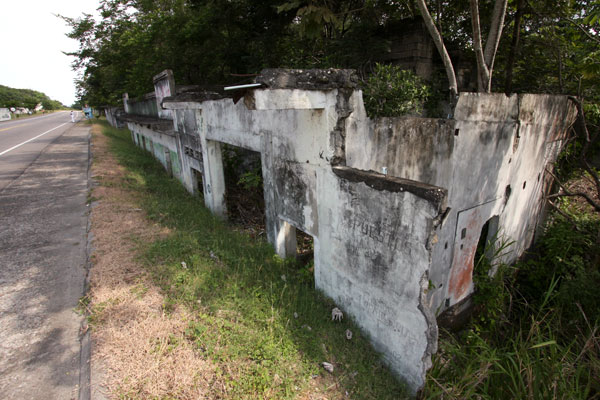
On the evening of the 13th of November 1985, volcano Nevado del Ruiz erupted and sent an avalanche of ashes and mud towards the town of Armero, more than 45 km away. Within a short time, the town was buried in meters deep mud, which took the people by surprise since they had been reassured by authorities earlier the same day that there was nothing to worry about. 23 000 people were killed, more than two thirds of the town's population. Today, the road from Mariquita goes through the ghost town, where the surviving houses still stand half covered in dirt in the shade of big trees. There are tombstones everywhere and part of the town church is half preserved. Besides the handful of DVD vendors along the road (they sell a documentary about the catastrophe), the place is completely deserted and a grim memorial of a recent tragedy.
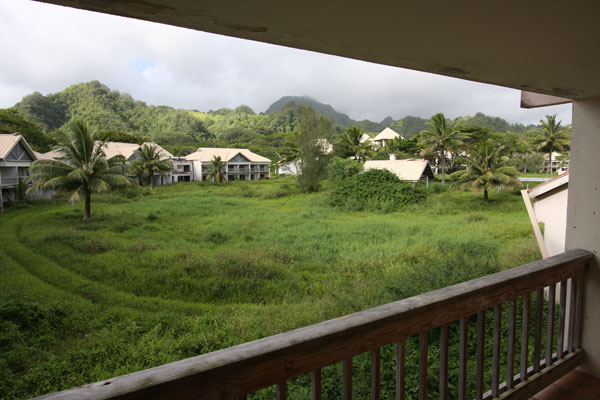
The Cook Islands is pretty fine place and unfortunately did the Sheraton Hotel Group think the same thing in early 1990s. In cooperation with the government they started to build what was suppose to be a five-star resort. When it was almost completed the project shipwrecked due to financial problems (and corruption, according to some rumors). Though they tried to resurrect the hotel several times it never got fully completed, but they got pretty close. The swimming pool is there and some rooms even have spa and fan installed. Today the ghost hotel lies abandoned and overgrown, and does apparently still account for half the national debt. If you have a taste for the bizarre and do not mind a bit of broken glass, it could be an opportunity to have a free night in an almost-complete Sheraton.
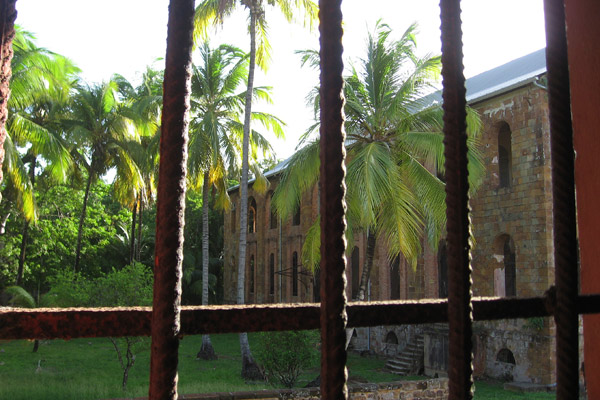
Such beautiful palm tree-filled islands bear such a sad history. These islands were named Îles du Salut (Salvation islands) after the missionaries came to escape the diseases on the main land. There wasn’t much salvation on these islands, but prison camps for the French. It wasn’t the worst place of all the French prison camps in Guiana but still life was tough, escape nearly impossible and many people didn’t survive this place. The islands are owned by the space centre and are being renovated. During a rocket launch they get completely evacuated.
The main island, Île Royale, is where you can stay overnight in either guard houses or in a hammock in a prison quarter. There are trails all over the island with beautiful views to the other islands, monkeys, parrots and plenty of agoutis, a rodent somewhere between a rat and a hamster. Île St Joseph is smaller and is also worth a visit. The prison buildings here are decayed and overgrown by trees which gives it an even more spooky feeling. The third island, Île du Diable, is closed for visitors.
The main island, Île Royale, is where you can stay overnight in either guard houses or in a hammock in a prison quarter. There are trails all over the island with beautiful views to the other islands, monkeys, parrots and plenty of agoutis, a rodent somewhere between a rat and a hamster. Île St Joseph is smaller and is also worth a visit. The prison buildings here are decayed and overgrown by trees which gives it an even more spooky feeling. The third island, Île du Diable, is closed for visitors.
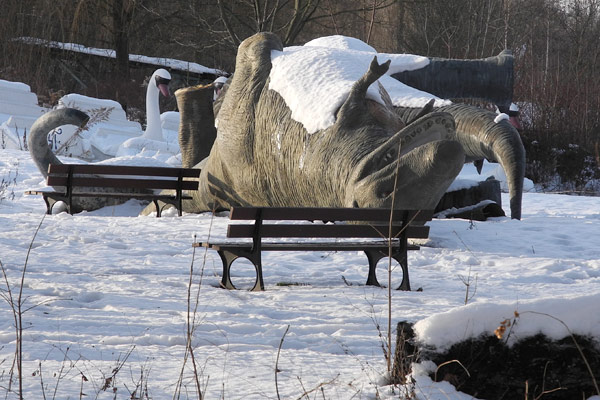
Berlin is a pretty cool city as it is, but throw in an abandoned amusement park and pretty soon you're bordering on uber-cool. Spree Park has been operating in one form or another since 1969 but over the last 20 years has developed from a festive place for German families to stroll through on a Sunday afternoon into an off-limits and eerie sub cultural icon.
Nestled amongst the vast Treptower Park, which among other things is famous for having hosted Albert Einstein’s first lecture on the theory of relativity in 1915, Spree Park has slowly become the most talked about element of the complex. Complete with fallen dinosaurs, dilapidated roller coaster tracks and the once iconic "Ferris Wheel of Berlin" there’s plenty to explore if you do make the trip over the security fence. Oh yeah, it’s private property and does have an on-site security guard. It's up to you...
Nestled amongst the vast Treptower Park, which among other things is famous for having hosted Albert Einstein’s first lecture on the theory of relativity in 1915, Spree Park has slowly become the most talked about element of the complex. Complete with fallen dinosaurs, dilapidated roller coaster tracks and the once iconic "Ferris Wheel of Berlin" there’s plenty to explore if you do make the trip over the security fence. Oh yeah, it’s private property and does have an on-site security guard. It's up to you...
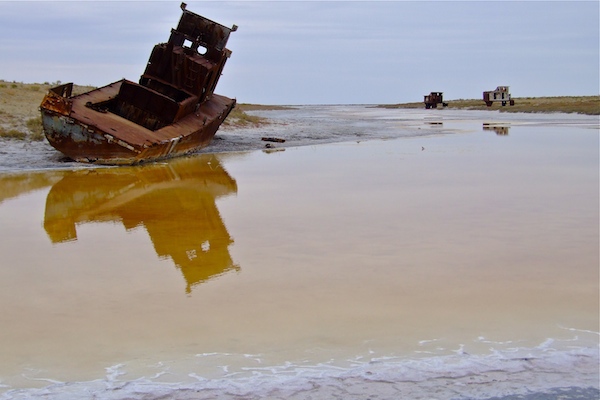
It can be difficult for us to physically see environmental damage. Temperatures rise, but we can't see it. Nuclear radiation spikes, but we can't see it. But on the border of Kazakhstan and Uzbekistan it is VERY easy to see the environmental impact man has had. The Aral Sea was once a bountiful fishing ground providing food and jobs not only for locals, but the entire country. However, during the Soviet era, the two main tributaries were blocked to irrigate fields of cotton. This caused the Aral Sea to shrink and shrink and shrink. So much so, that the formerly bustling port town of Aralsk now lies more than 100 km from the sea's shore. A short stroll out of town, travellers can see the rotting corpses of fishing boats that simply got stranded, like fish out of water. A truly bizarre sight.
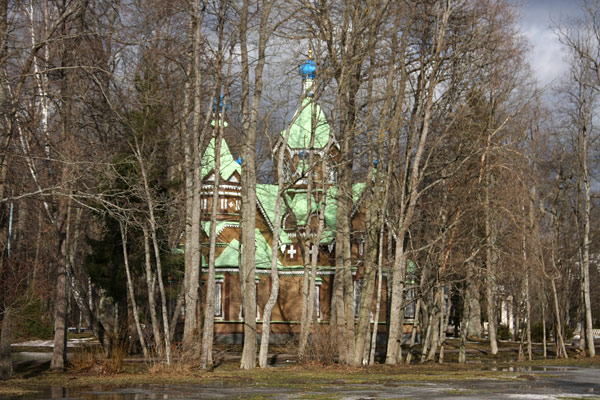
Back in the early 20th century, Kemeri was famous as a luxury resort town with health baths and sanatoriums. Today it's in oblivion, shrunken to a partly abandoned village - and a fascinating place. Traditional Latvian wooden houses and elegant churches stand in stark contrast to the sad debris of the heydays. An ongoing project try to resurrect the main hotel, but it has been stalled. It's such a bewildering sight to see all the crumbling buildings, one worse than the other, and then realise that people still live next door. Luckily, the network of scenic walking paths are also still here, leading over small bridges, passing tarnish pavilions and through the woods and bogs of Kemeri National Park. Though this is not recommended, some of the abandoned buildings are fully accessible and can turn into an adventure themselves.
1 2