

Burial customs

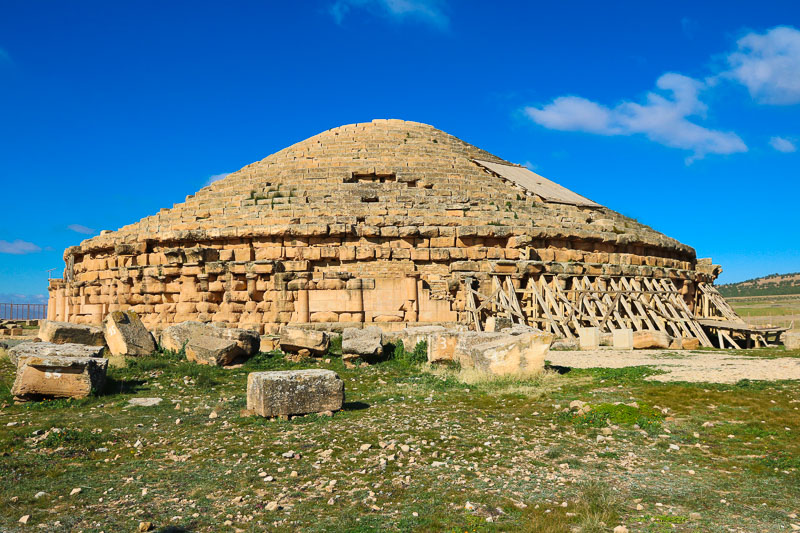
Not unlike the Royal Mausoleum of Mauretania near Tipaza, but this mausoleum is for the lesser known Numidian king Madghis, who probably lived between 300 and 200 BC. The round pyramid-shaped tomb is not in the best state, but there is a good chance that you will have it all to yourself.
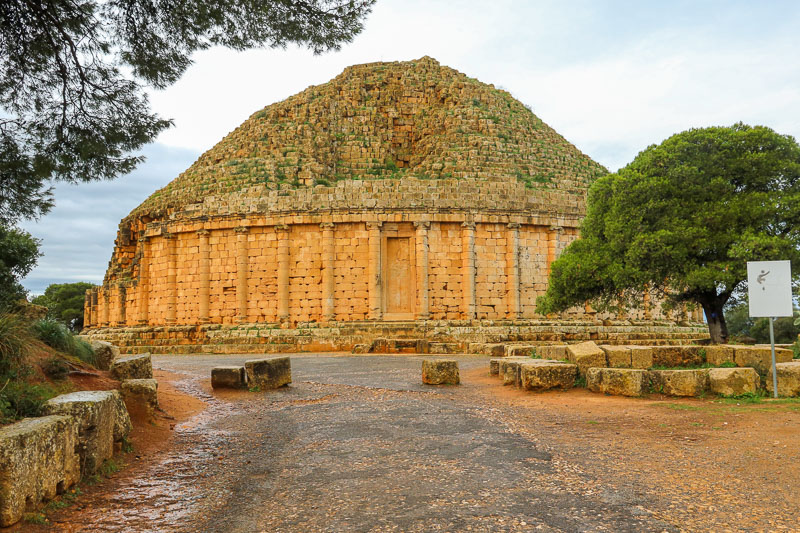
Princess Cleopatra Selene II was the only daughter of Cleopatra and Mark Antony. She married a Berber prince, Juba II, from modern-day Algeria, and together they were given Mauretania to rule, which they did quite successfully. She died sometimes around 6 BC, and her husband had then a mausoleum built. When Juba II died in 23 AD, he was buried inside the mausoleum too. The Royal Mausoleum is along with the two archaeological complexes of Roman ruins at Tipaza a UNESCO World Heritage site.
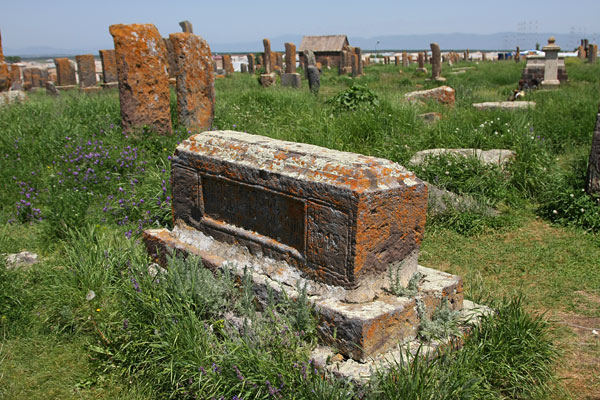
The Noraduz cemetery has the largest collection of cross stones, called khachkars. There should be almost a thousand cross stones (though we didn't count them) spread out over the green hill, all finely ornamented. The oldest cross stone dates back to the 13th century, though most are from the 16-17th centuries when the cross stone tradition boomed. A cross stone normally depicted, besides crosses, the life story of the deceased, what he/she did and how he/she died. So a cross stone for a fisherman will have a fish on it and if he died from a serpent bite, a carved snake will zigzag across the stone. There are also tombstones, again, with fine carvings, for example, one showing how a wedding party got raided by foreign warriors.
© John Smith
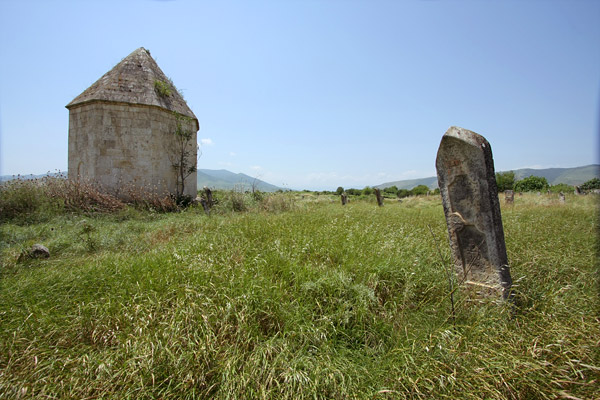
Along the North-South highway, you will see several ancient cemeteries with tombstones sticking up over the high grass. The tombstones have inscriptions on them, some in Armenian and some in Arabic. We don't know the story behind them, sorry.
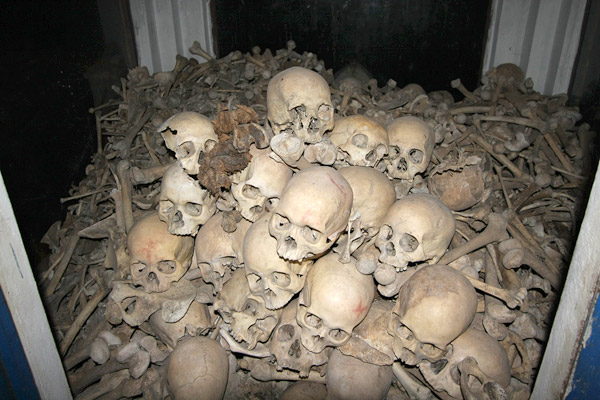
Like the Killing Fields, the Killing Caves at Phnom Sampeau are where the Khmer Rouge took their prisoners to kill them. There are three caves on the backside of the mountain of Phnom Sampeau, where this took place. The Khmer Rouge soldiers would either just push the victims over the edge of the skylight into the caves or cut their throats before throwing them in. It has been estimated that about 10.000 people were killed in these caves alone. Today, shrines, peaceful Buddha statues and cages with bones make out this grim memorial of the genocide committed by the Khmer Rouge. If you want some fresh air afterwards, walk to the top of the mountain, which is one big complex of temples. The views from there are astonishing.
© Louise Brønden
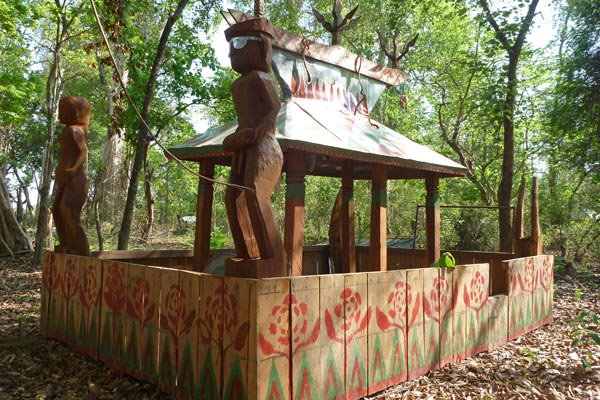
The ethnic minorities of northeast Cambodia, like the Tompuon people at Kachon village, bury their dead in some rather elaborate graves in the forest. The concrete tombs can have fences, wooden elephant tusks, thatched roof and the entrance is guarded by carved statues of the deceased (man and wife are buried at the same place) - some with very explicit genitals. The cranium of the buffalo that got sacrificed during the burial ceremony hangs at the front and the family of the deceased often places things that the dead can use in afterlife like bottles, pots, local whiskey, yes even sunglasses. Be sensitive when visiting a tribal cemetery, so you don't offend the locals nor the spirits.
Similar cemeteries can also be seen near Kon Tum in Vietnam.
Similar cemeteries can also be seen near Kon Tum in Vietnam.
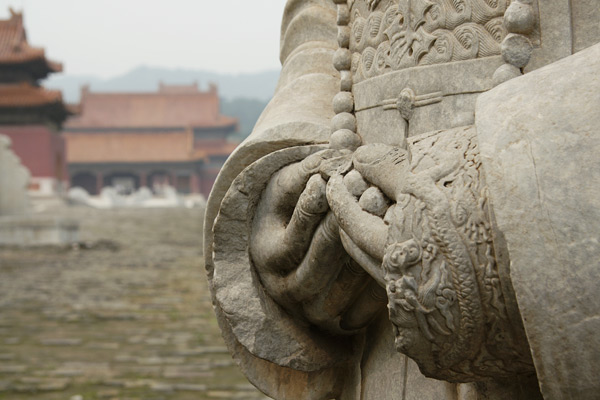
The East Qing Imperial Tombs contain 15 tombs hereof five for emperors from the Qing Dynasty along with a long list of empresses, princes, princesses and concubines, including the tomb of Empress Dowager Cixi (she is portrayed in the movie "The Last Emperor"). The largest tomb is also the first which dates back to 1663 and is for the first emperor, Shunzhi, of the Qing Dynasty. Though the complex has some fine elaborated tomb chambers which are open (e.g. the ones for Emperor Qian Long and Empress Dowager Cixi), the most impressive thing about the tombs is the whole layout which follows strict feng shui principles which incorporates spirit paths guarded by statues and the surrounding mountains.

Sky burial is a Tibetan custom for giving back the earthly remains after death, when the soul has left the body for reincarnation. The body is simply sliced open and offered to waiting vultures that rip the flesh from the bones within minutes. Afterwards, the bones, along with the skull and brain, are smashed to pieces with an axe and mixed with barley flour and again offered to the still waiting vultures. Besides being a mind blowing experience (and not for the faint hearted), it's also a very rare opportunity to get close to these monster birds of prey, some of them very rare (such as Black and Bearded vultures). Remember this is not a tourist attraction and an invitation should be obtained before attending. (The picture was taken with permission from the descendants).
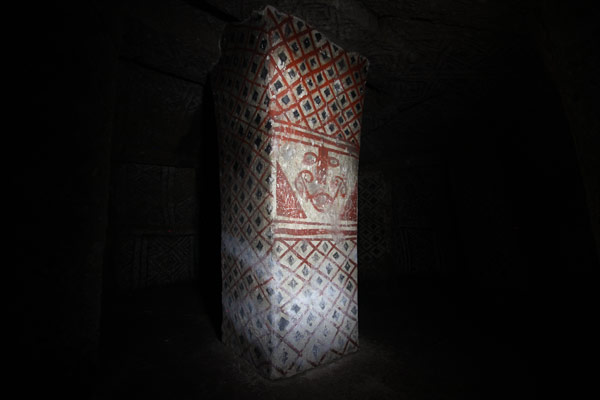
In the surrounding hills of the village of San Andres de Pisimbala are several groups of underground burial chambers, also known as Tierradentro. Not much is known about the ancient culture that left these behind, but it is believed that the tombs are from 6th to 9th centuries AD. The inside of the chambers were painted in bright geometric patterns and creatures, and to this day it can still be seen in the best preserved ones. A visit to all four sites (Segovia, El Duende, Alto de San Andres and El Aguacate) will at least require a day's walking in the beautiful mountains and will also include the site of El Tablon where mystical stone statues, similar to the ones at San Agustin, can be seen. It is the only place in the Americas where such tombs have been found, and a wonder why they are so seldomly visited.
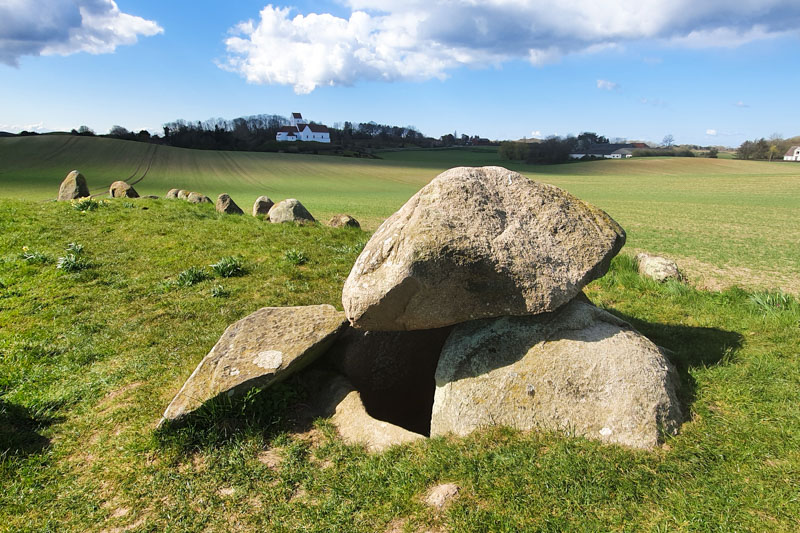
King Humble's Grave is a prehistoric long dolmen. It measures about 55 m long and 9 m wide with a single burial chamber on the top of the mound and is outlined by 77 curb stones (though we didn’t count). The name refers to a King Humble, who appears in local legends and probably lived around 300-400 AD. However, archaeological excavation has revealed more than 4000 years old human bones in the grave. Today the long dolmen is located on open farmland, a short walk through fields from the parking area, with views of the Church of Humble in the distance.