

Caves

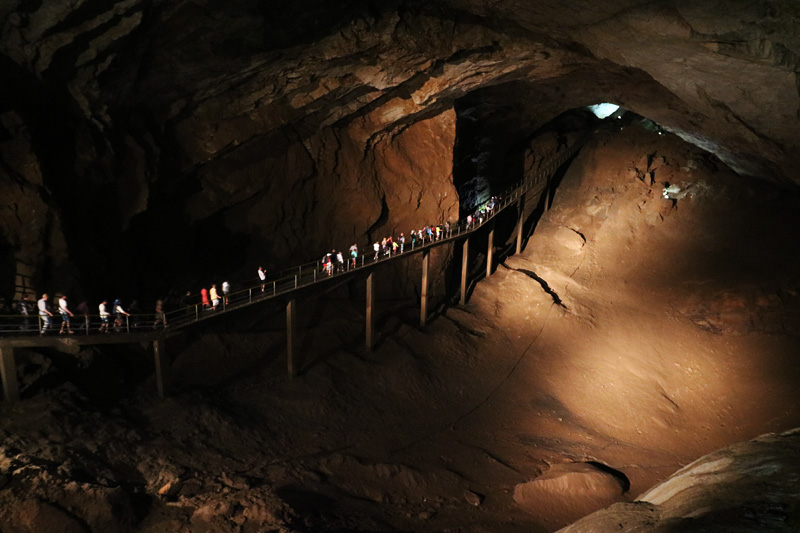
The cave in Akhali Atoni is recognized as one of the biggest in world. The main attraction is its sheer size, rather than the few stalagmites and stalactites. There are nine chambers measure up to 100 meters long and 40 to 60 meters high. You will enter and leave the cave system through an artificial tunnel in a small electric train. While inside the cave, you walk in guided groups (only in Russian) along paths and bridges. The guide do a lot of explanation, so the 1.4 km long journey last 1:15 hours. Bring a shirt, as the temperature below ground is 12° С.
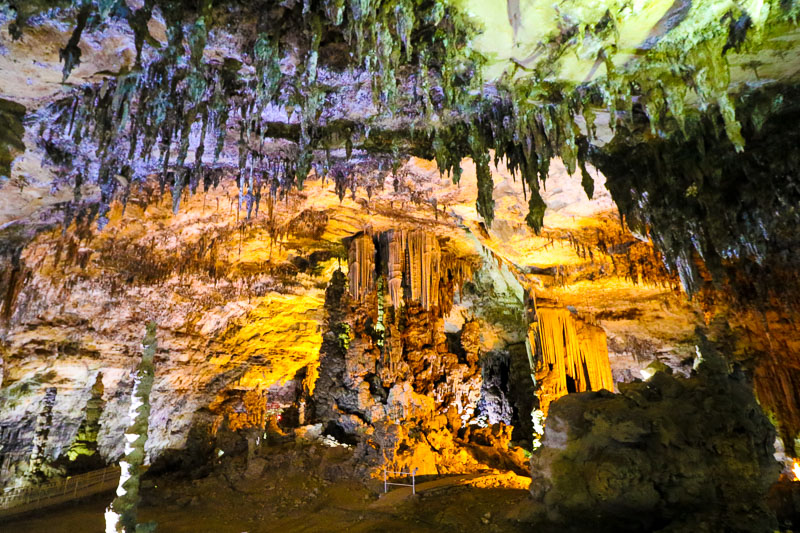
This cave lies about 17 km from Tlemcen on a hilltop. Don't be fooled by the kitsch family park at the entrance because the cave is impressive in both sizes of the chambers and stalagmites/stalactites. It's a show cave with coloured lights and a boardwalk. Unfortunately previous visitors have had trouble keeping their hands to themselves - though some of the damage might be from when mujahedeen used the cave during the war of independence.
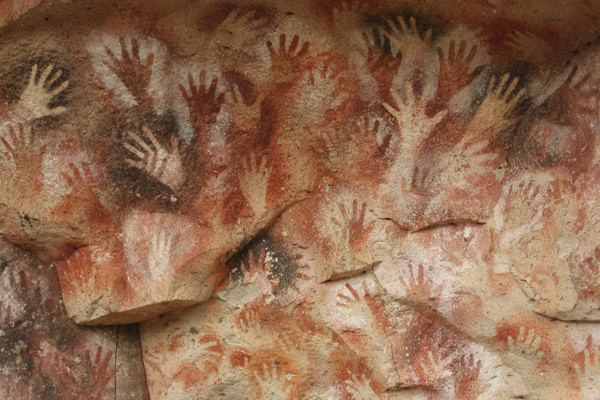
If you happen to be travelling on Ruta 40, consider a stop at these magnificent cave paintings, or better said, ancient stencils of hands. The well-preserved paintings are on a rock face and were made over 9000 years ago. Most likely, the hands were made by the Tehuelche people, also known as Patagons. They were known as very tall people which you can notice by the size of the hand prints. Most of the prints are of left hands, probably because the paint was sprayed using a bone tube which was held in their right hand. Apart from the hundreds of hands, there are also a few paintings of guanacos and some other animals.
© John Smith
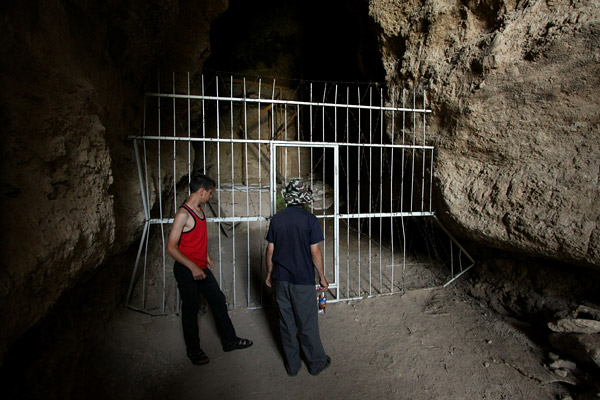
The hills above the village of Azokh have a string of caves. Apparently, the caves are connected through tunnels and can be explored with a good torch. But when we were there, the cave we visited had a fence and barbwire, but it might be different with the other caves. Go exploring, but beware of snakes and bats.
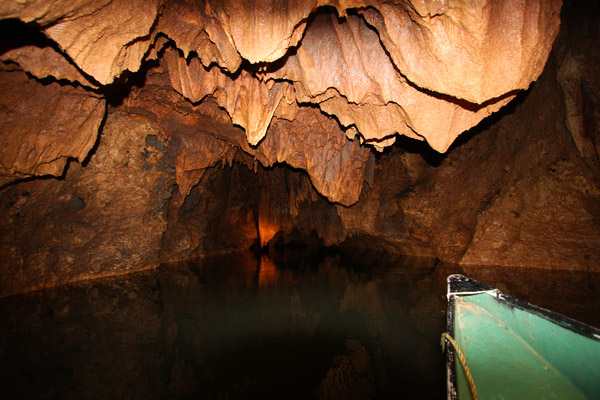
The Mayans believed that a cave was the pathway to the underworld, a connection to the Gods. The cave at Barton Creek is a wet cave (water is dripping from the roof and a creek flows trough it) and was therefore thought to belonged to the rain God, Chac. So to make him happy and get a good harvest, they sacrificed what Mayan Gods apparently wanted: humans. Today, the tour into the cave is done by canoe with one of the park rangers acting as a guide. Bits and pieces of Mayan artefacts (including a skull) have been laid out to be viewed from the canoe, but you don't get on land to see the actual sacrificing place where the bones are. If Mayan bones are more your thing, you might want to try the more expensive Actun Tunichil Muknal cave (ATM cave) further east which requires hiking, scrambling and swimming to get to.
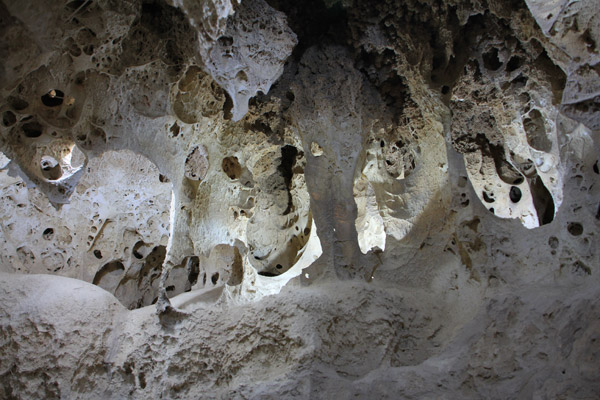
Only discovered in 2003 by two local men, Cueva Galaxia is a small cave but quite different from usual caves with stalagmites and stalactites. The cave has only a few small chambers with pretty ceilings that look more like web-like structures, kind of like deteriorated tree leaves - or like inverted corals - leave it up to your imagination!
In this small area just south of Salar de Uyuni there is also Devil’s Cave (Cueva del Diabolo) with sacred burial chambers. Around these caves and on the hill above the caves you get pretty views of the area. Furthermore is the area full of petrified cacti.
If you wonder what the ** is after the name of the Galaxy caves - it stands for the two men who discovered this site.
In this small area just south of Salar de Uyuni there is also Devil’s Cave (Cueva del Diabolo) with sacred burial chambers. Around these caves and on the hill above the caves you get pretty views of the area. Furthermore is the area full of petrified cacti.
If you wonder what the ** is after the name of the Galaxy caves - it stands for the two men who discovered this site.
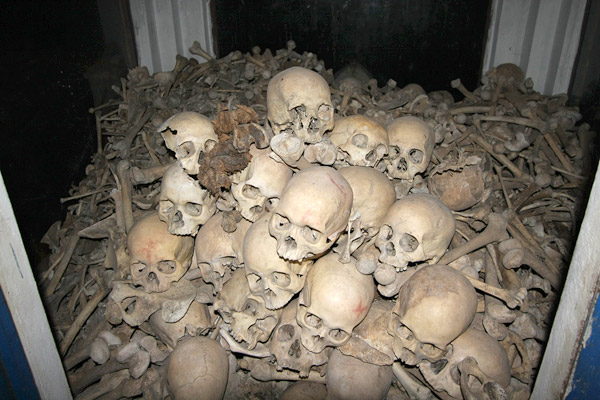
Like the Killing Fields, the Killing Caves at Phnom Sampeau are where the Khmer Rouge took their prisoners to kill them. There are three caves on the backside of the mountain of Phnom Sampeau, where this took place. The Khmer Rouge soldiers would either just push the victims over the edge of the skylight into the caves or cut their throats before throwing them in. It has been estimated that about 10.000 people were killed in these caves alone. Today, shrines, peaceful Buddha statues and cages with bones make out this grim memorial of the genocide committed by the Khmer Rouge. If you want some fresh air afterwards, walk to the top of the mountain, which is one big complex of temples. The views from there are astonishing.
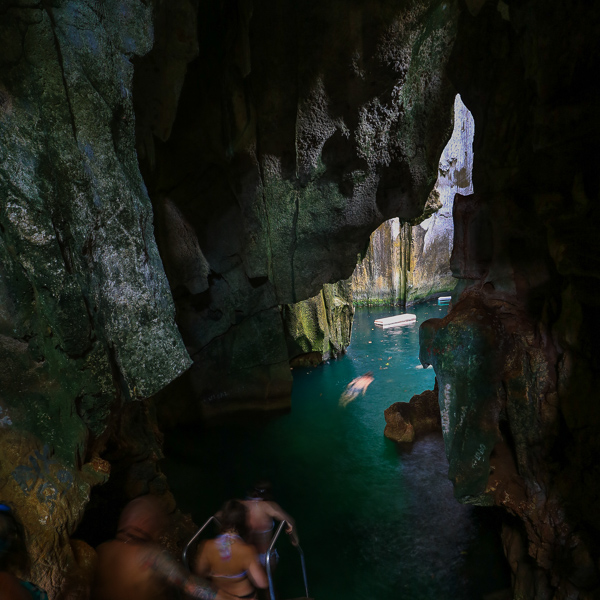
Limestone Sawa-i-Lau Island stands out amid the other Yasawa Islands, which are volcanic. Sawa-i-Lau houses two caves, both with coldish sea water. The first cave is easy accessible from a set of stairs. The cave roof is 15 m high and shafts of sunlight shines through a hole. You can swin in the cold water natural pool. The second cave is adjoined and accessible through a short dive through an underwater passage. It’s totally dark, so a torch is necessary. You have to swim the whole time, but there are rocks here and there to stand on. A scene of the movie The Blue Lagoon was apparently shot inside the first cave. The is cave owned by the village across the channel and these days it’s locked, so you need to go on a tour, but you will need the guide’s knowledge and waterproof torch anyway. In high season it can gets really crowded with several groups in the caves at the same time.
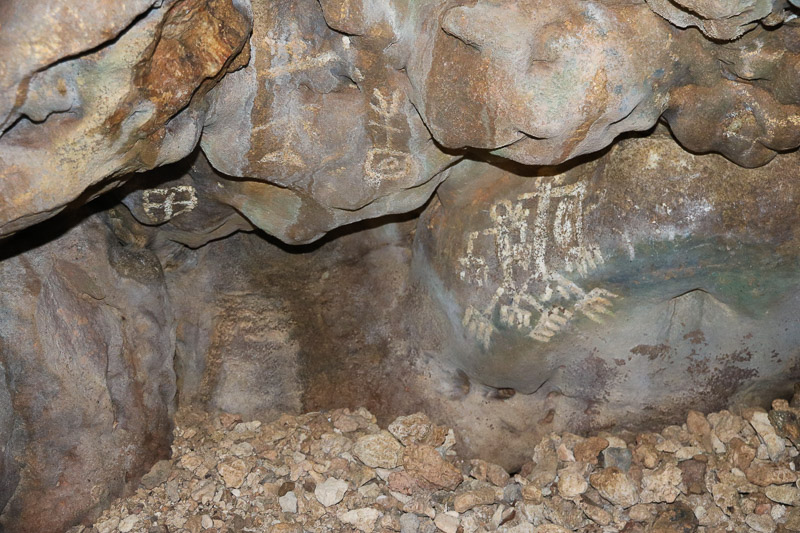
Gådao's Cave is named after an Chamorro legend chief and it's probably also him depicted on the petroglyphs. Look the legend up, as it's too long to be replicated here. To find the cave, park on the dirt road. There is a sign leading down a trail towards the sea. There is a cave-structure there, which you can walk through, this is however not Gådao's. Follow the path over the spiky limestone and Gådao's Cave will appear (there are two concrete steps). There is a third open cave (more of an overgang) after Gådao's with nice views. Again, just follow the path over the limestones. Only Gådao's has petroglyphs.
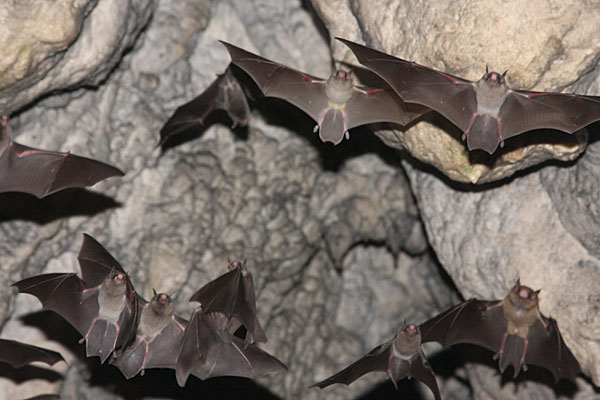
A deep cave with fairly impressive stalactites. The first section is lighted and deeper exploration is possible but the cave isn't really the attraction here, it is the bats. At dusk thousands of fruit bats (though we didn't counted) leave the cave to go hunt for food. They all exit at the mouth of the cave where it is possible to stand and experience the bat exodus from the inside of the cave. In the dark you can feel the animals navigating centimetres from your head but amazingly never collide with you (or each other). A flash from your camera will reveal how dense the air is with bats.