

Dinosaur places

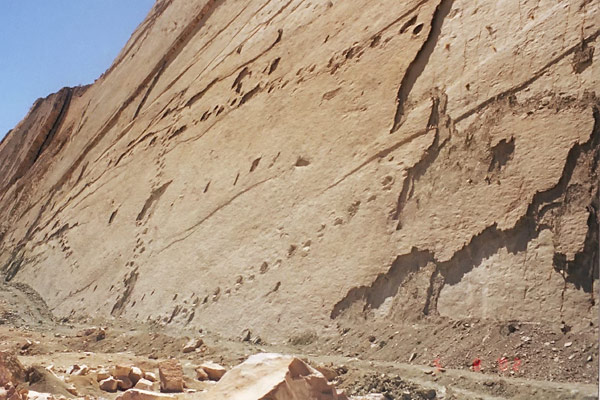
Dinosaur findings have a tendency to be in the strangest places and this is no exception. On an almost vertical slap of rock inside an active cement quarry is largest known collection of dinosaur tracks in the world. Thousands of dino footprints crisscross the now steep limestone wall creating more than 250 trackways made by six different kinds of dinosaurs in all sizes, including Tyrannosaurus Rex. You can catch the Dino truck to the site from the main square in Sucre.
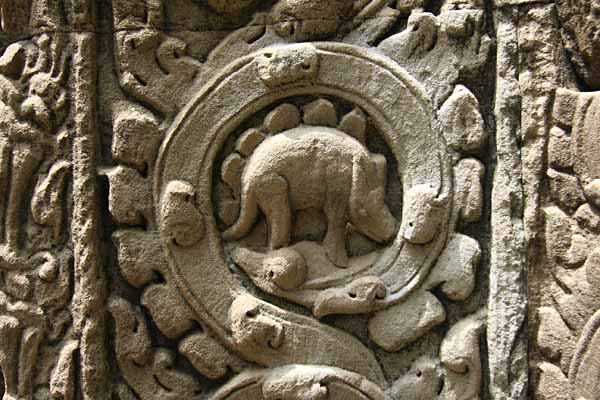
Carved on a pillar on the inside of the wall at the ancient Angkor temple Ta Prohm (built in the late 12th century), this strange animal stands out. Most schoolkids will recognise this as a stegosaurus, a dinosaur that has gone extinct a long time ago even by Angkor standards. There have been many speculations about it, and beside the biblical creation explanation and doubts about the carving's authenticity, the going belief is that it's a Sumatran rhinoceros depicted against jungle leaves (sorry to spoil the mystery). When done with the crypto-zoology, take a glance at the temple. Ta Prohm is famous as the Jungle Temple since the early restorations left its untouched with it walls crumpled by huge serpent-like roots of the towering silk cotton trees.
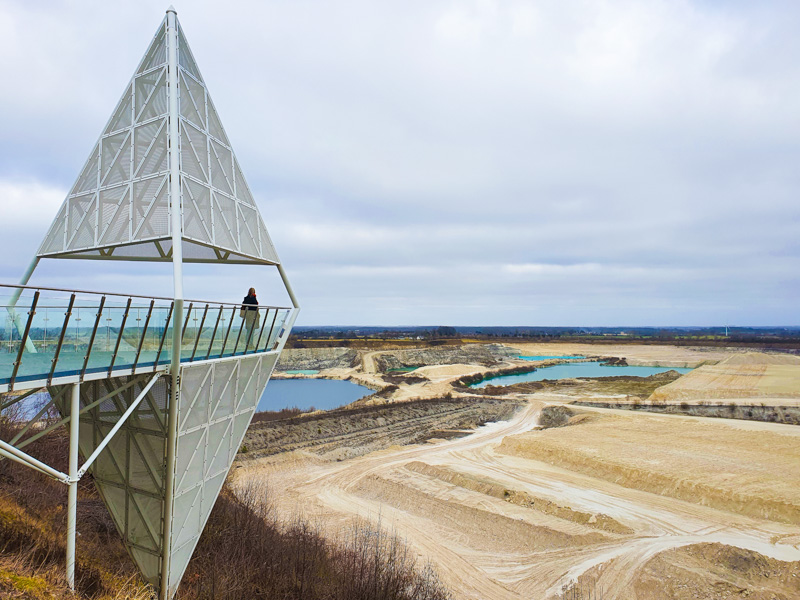
Faxe Limestone Quarry (Kalkbrud) is the largest man-made hole in Denmark and is a treasury of fossils. For 63 million years ago it was at the bottom of the prehistoric ocean, so the limestone is filled with fossils of corals, shark teeth, crab shields and mussel shells. The limestone here has been mined for more than 900 years. Today the giant open-pit is larger than 140 soccer fields, and is constantly growing, since the quarry is still active. Even though it’s a workplace, the quarry is open to the public with trails, viewing platforms and even a geological museum (which offers guided fossil hunt). You are welcome to bring a hammer and chisel to dig in the quarry and bring home any fossils you might find.
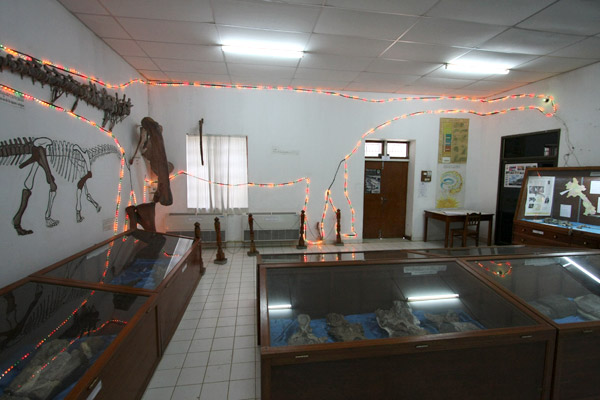
In the tranquil riverside town of Savannakhet lies this tiny Dinosaur museum. The palaeontological finds are all from the area and the one room exhibition is a very low key affair. A dinosaur is drawn in full size along three of the walls and outlined by Christmas lights. The curators are very friendly, though not speaking much English, and will pull out drawers to show you hidden stuff up close. You might even get a tour in the store room behind, where all the new finds are. Don't expect a lot of explanation, all signs are only in Lao and French. We like... bravo!
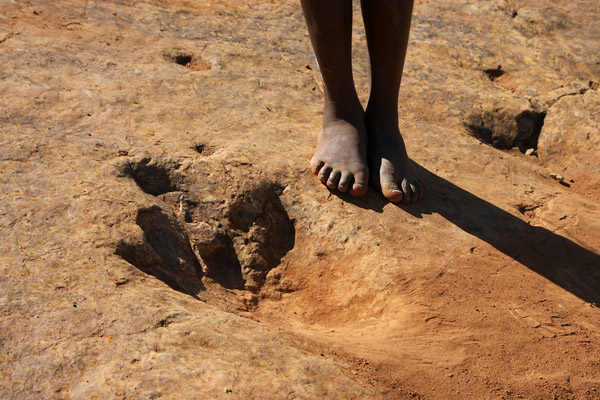
Dinosaur footprints are scattered all over Lesotho and there are a few near the village of Roma. They are located at the top of the mountain and are difficult to find by yourself, but, luckily, the local kids are happy to act as guides for a few maloti/rand. It takes about 30 minutes on foot from the village to reach the few footprints. They lie unprotected on a slab of rock and are eroded by weather and tear from the locals, so their condition is thereof. But it's cool to 'explore' something in the real world instead of a museum setup with fences and explanatory texts. The panoramic views from the footprints are equally amazing and worth the walk up, even if you don't give a hoot about a few dinosaur footprints.
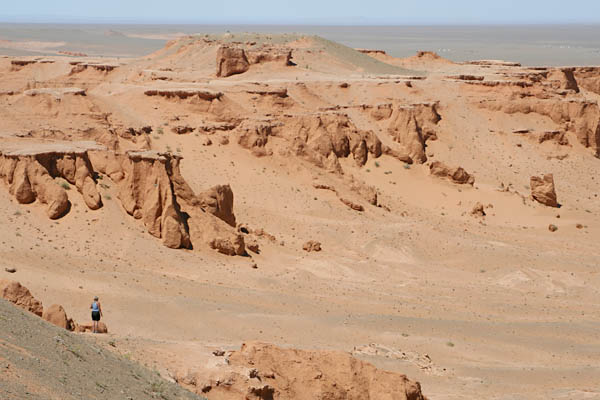
In the middle of the Gobi desert, where dust and stones rule, the flat plateau breaks off to a lower level. During sunrise and sunset the exposed cliffs give off an orange hue which gives the place its name. It was here in the 1920's that the American archaeologist Roy Chapman Andrews made the amazing discovery that dinosaurs were egg laying - and made some wrong assumptions that the newly found dinosaur specimen, the velociraptor, was an egg thief. You can still to this day walk around and find dinosaur bones and egg shells at the bottom of the cliffs. Close by (in Gobi terms) grow the rare Saxual trees. These wooden creatures are so dense that they cannot float in water... well, if there was any.
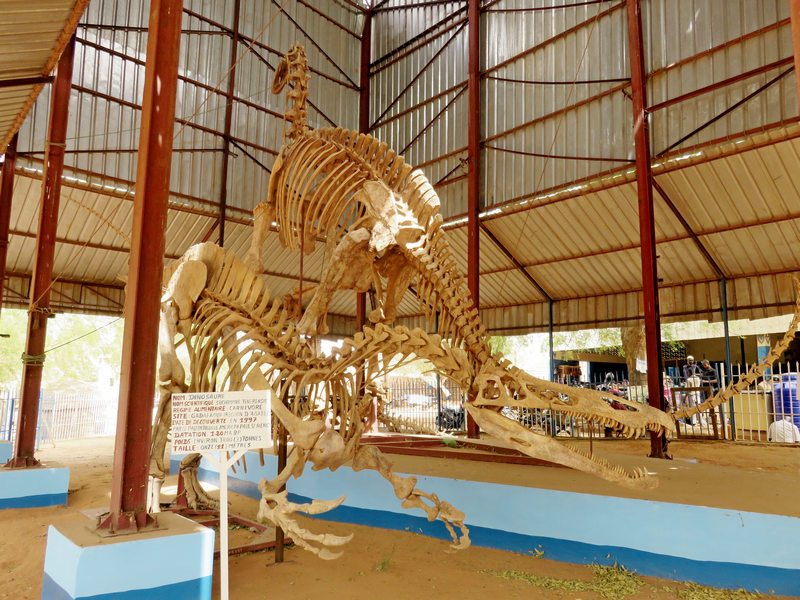
Here at GlobeSpots, we don't usually promote specific museums. However, when the museum in question is the very best in West Africa – with some distance – we're happy to make an exception. Built back in 1959, the Musée National du Niger occupies a large ground in central Niamey. It's so big and spread out over so many pavilions that it's shockingly easy to miss large parts of the exhibitions, simply by overlooking certain buildings. The museum includes everything from traditional dresses and music instruments, over archaeological finds to pavilions focused on the country's natural resources - the newest addition is a 2016-pavilion on the country's biggest export: uranium. Another highlight is three dinosaur skeletons found in the Sahara Desert. The grounds also include a zoo with some relative healthy looking animals (elsewhere in Africa zoo animals have starved to death), but some animals are kept in fairly small cages, and animal lovers might want to skip the zoo and spent their time at the exhibitions.