

Glaciers

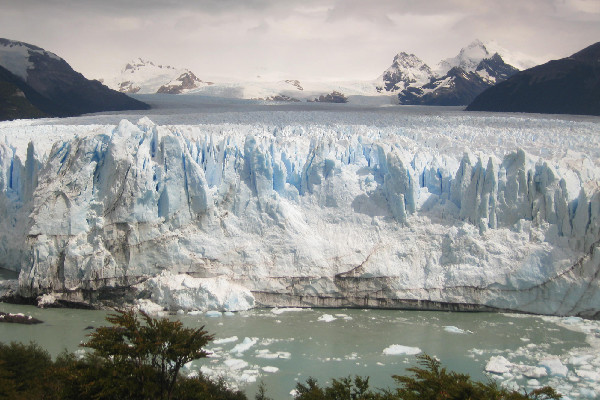
© Luke Kenyon
Braving the cold environment and the bitter wind of Southern Patagonia, the small town known as El Calafate is named after the small purple, edible berry found in the region. It is popular amongst hikers, walkers and four-wheel-drive enthusiasts (evident by the large amount of Land Rover Defenders) and due to its vicinity with the southern Andes, people flock to El Calafate to catch a glimpse of the giant Perito Moreno Glacier, which is one of the most active and accessible glaciers in the world. Fragments of the glacier brake off every hour creating a thunder through the valley and a popular sight with tourists standing at the ready with cameras rolling. The boardwalk system devised by the Argentines is first class allowing visitors to see the whole leading edge of the glacier from the safety of the opposing hillside.
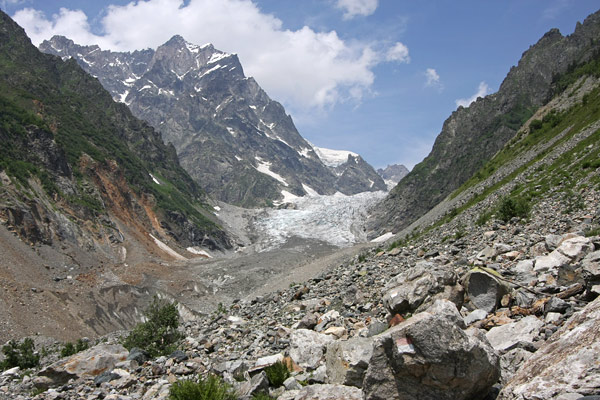
The trek up to glacier Chalati is the other fine day trek you can do from Mestia (the other is up to the cross at the view point). First, you need to cross the bridge behind the town square and follow the river, such that it will be on your left hand side, to the airport. This leg is the least interesting part of the trek, as it follows the road and can be quite dusty. Keep following the river and you will soon enter the green Mestiachala valley. Here, you will need to cross the raging river on a hanging bridge and follow the trail through the forest. There will be coloured marks on rocks to follow. The last section is over the rocky base right at the foot of the glacier (1815 m) where all the melting water is gushing out. The trek takes about eight hours round trip.
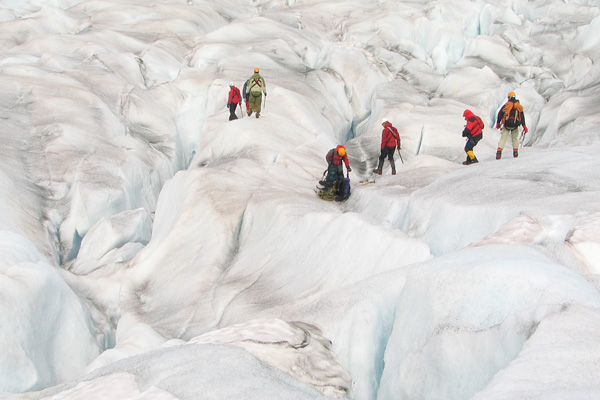
Glacier walking is a fun and adventurous way to get up close to what Greenland is so famous for, namely, ice. It requires the use of glacier boots with crampons, harness and ice axes and the technical know-how that goes with it. A skilled guide is necessary unless you are a group of experienced outdoor freaks, knowing how to do all the rescue operations in case someone falls into the many bottomless crevasses.
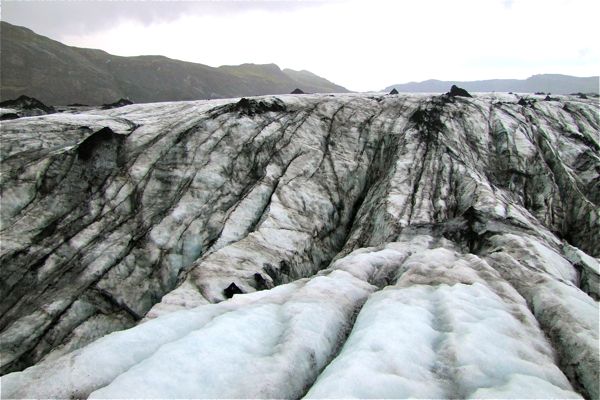
When you travel to Iceland, you should definitely also take advantage of walking on one of the many glaciers that you see when you drive around the varied landscape. It may be risky to walk on them alone, so it is recommended to take a glacier guide who can steer clear of known glacier cracks and the like. It is also a good idea to take the right equipment - i.e. crampons and ice ax. But it is an exciting and different feeling to walk on pure ice and see the black lava ash that has coloured the huge ice formations several hundred years ago - and "blue ice" in between the cracks, where the ice melts.
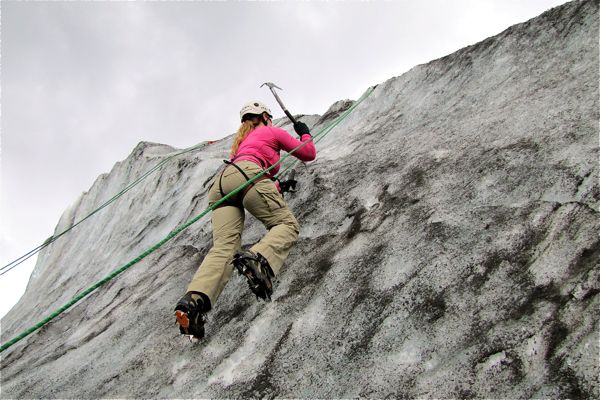
If you are hiking a glacier and you want to challenge yourself, ice climbing is an excellent opportunity. As with glacier hiking, it is important that the equipment is in order, so it requires both a guide, crampons, ice axes, helmets, harnesses and ropes - and fear of heights is probably not the best thing to suffer from .... The guide typically finds a suitable vertical wall of ice, where he fastens the hook and rope on top. Then, you will be strapped to one end of the rope, and the guide keeps a hold of the other end, all while you climb up the wall by hammering 2 ice axes, and your crampons into the ice and rappel back down. It can easily be done, even if you have not tried it before, and it requires more technique than strength, but it is pretty crazy!
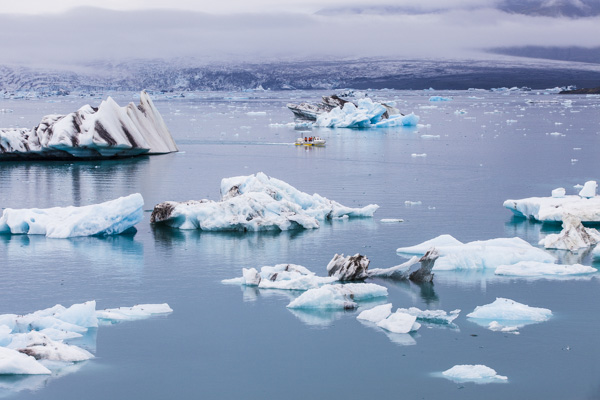
You’ve seen the photos and read the hype. But for once it is all true. Jökulsárlón really is a spectacular, must-see place. Growing in size every year as a result of the retreating Breiðamerkurjökull glacier, this glacial lagoon is full of pieces of ice ranging from pick-one-up-to-pose-for-a-photograph to bigger-than-a-two-story-house. Some of it is blue (if it has only recently been exposed to air), some of it transparent and some black with ash, sand and gravel. More is added all the time, and if you are close enough you may hear the loud cracks of a piece of the glacier breaking off and falling into the water. If the tide is right, walk across the road to the black sand beach and watch little icebergs wash up onto the shore, creating beautiful patterns of blue, white and black. While climbing up on one of the nearby hills provides great views of Jökulsárlón, you really need to get into a boat to appreciate the scale of it, and weaving between pieces of glacier certainly isn’t something most people get to experience very often. The downside? During summer, Jökulsárlón is starting to feel a bit like Disneyland; scores of buses and hundreds upon hundreds of visitors do not exactly convey a sense of serenity. But never mind – it is still one of the coolest places you will ever visit, in Iceland or anywhere else.
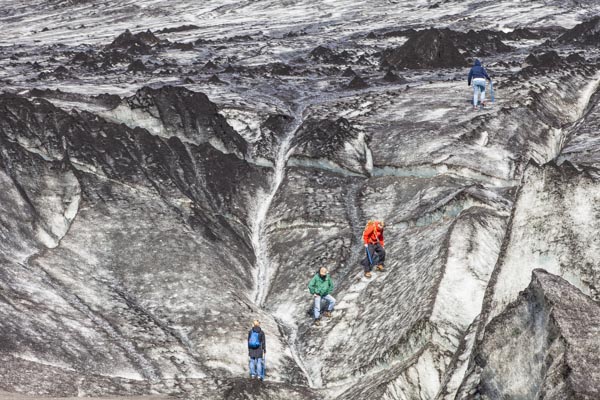
Mýrdalsjökull is one of Iceland’s biggest glaciers, although much smaller than Vatnajökull, and its relative proximity to Reykjavik makes it a popular destination for adventure tours. This is particularly true for the Sólheimajökull glacier tongue, which is where most of the glacier hiking, ice climbing, snowmobiling and other activities take place. Beneath Mýrdalsjökull lurks Katla, an active volcano that usually erupts every 40 to 80 years and is now very overdue – the last eruption was in 1918. Parts of the glacier are visible from the Ring Road, although you won’t get a chance to appreciate the scale of it unless you get up close and personal.
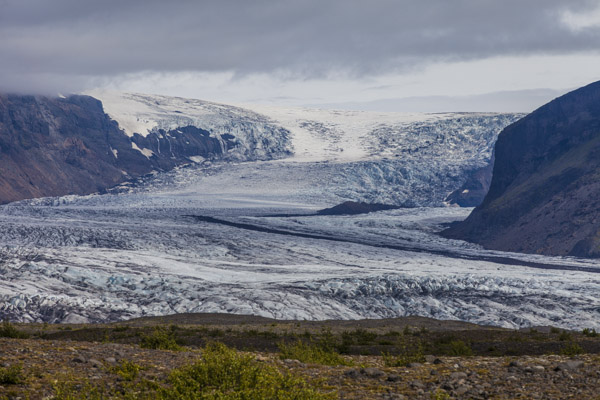
Vatnajökull glacier is (by volume) Europe’s largest, and Vatnajökull national park is one of only three in Iceland. The park covers 13% of Iceland’s surface area, and is the largest in Europe outside of Russia. The icecap itself is enormous, and can be seen from the Ring Road over a distance of more than 200 km. Skaftafell is the gateway to the southern section of the park – if you want to reach the north you will need a pretty serious 4WD – as well as containing many of its highlights and housing most of the adventure companies. There are waterfalls and birch trees, rivers and ice sculptures, and this is the best place in Iceland to do longer glacier hikes. While these organised activities are understandably popular, Vatnajökull is also a place where it is possible to get away from everyone and everything for as long as you want, going on multi-day hikes in one of Iceland’s the wildest places. If you want to see what happens to the outermost parts of the ice, visit one of the glacial lagoons just off the Ring Road.
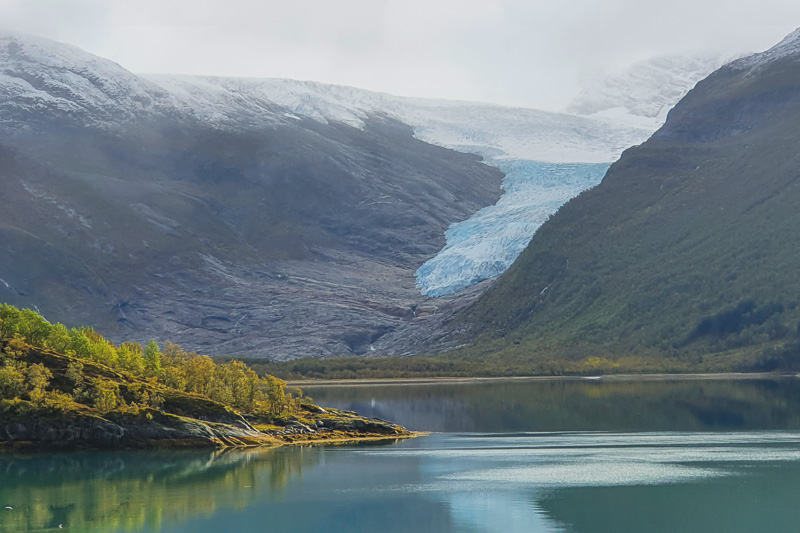
Svartisen (meaning "The Black Ice" in Norwegian) is the collective term for two glaciers located in the Saltfjellet–Svartisen National Park. One of the outlet glaciers, Engenbreen, can even be seen from the road Fv17. However, it's possible to get up close by taking a seasonal boat across Holand Fjord and hike up to the ice cap (about 60 min one way).