

Local markets

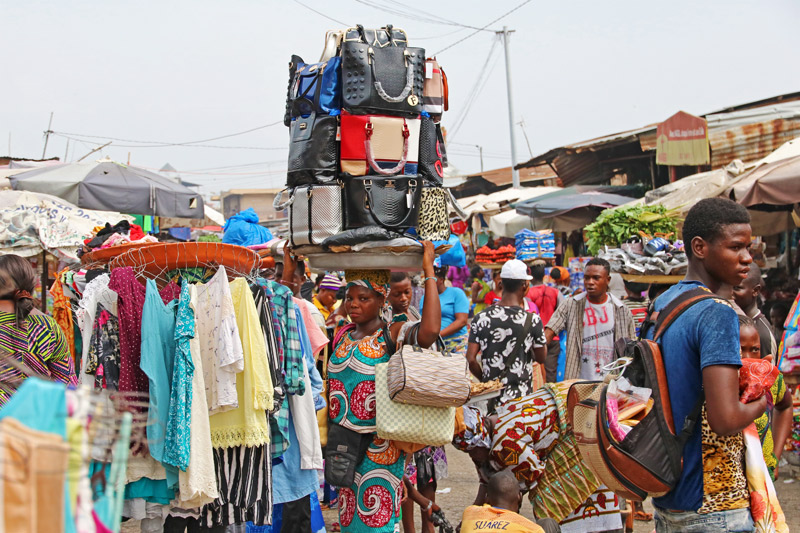
People in Benin are really chilled. Actually, they're so easygoing that you can walk around the large crowded central market and the only confrontations will be a polite bonjour. The centre of the market is the concrete box near the waterfront. From there the market spreads out in every direction. Each kind of goods have their own section, though there are lanes where you can pretty much find everything. As this being voodoo land, there is a small fetish corner with monkey skulls and dried snakes north east between the box and the waterfront. Expect to pay for a photo of people, particularly at the fetish market.
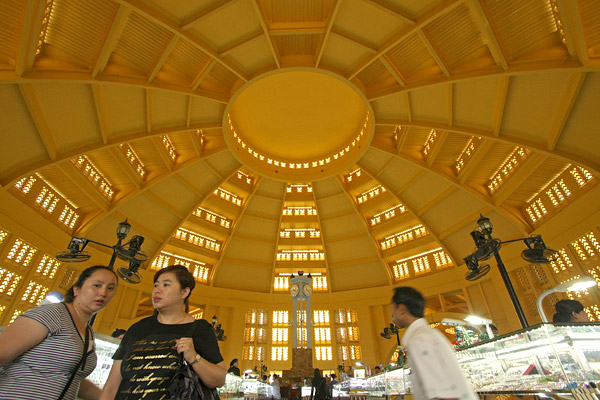
The Central Market is that easily recognisable grand yellow Art Deco building with the huge dome. It was built in 1937 during the French colonial time and had the biggest dome (45 m in diameter) in Asia at the time. In Khmer, the market is called Psar Thmei which actually means "New Market", the "central" name refers to its location - no reason to get confused here. There are four wings in addition to the main hall, along with outer stalls all the way around. Tourist related stuff are mostly found at the outside stalls, while the inside is tempting locals with jewellery, fashion and eletronic goods.
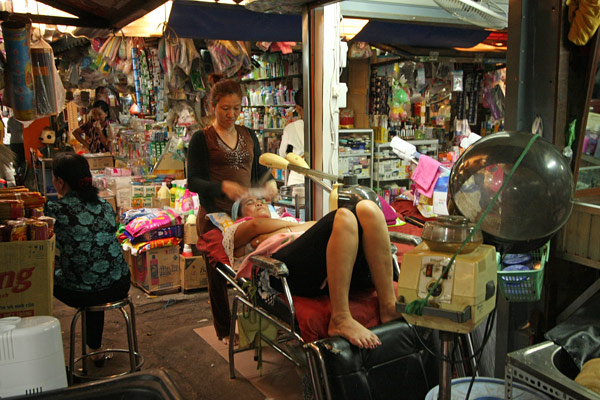
If you thought the Russian Market was dense and cramped, try to visit the Old Market. Underneath low hanging plastic canopies in narrow lanes that even the Khmers have to wriggle through, you can go shopping for hair extensions (real hair), padded push-up panties (yes, to make your bum look bigger) and shiny stuff in every shape, as well as the usual things like fruit, fish and motorcycle parts. As you can guess, this market caters mostly for locals, even though it is close to the tourist stretch at the river front. More the reason to have a look and laugh with the locals here.
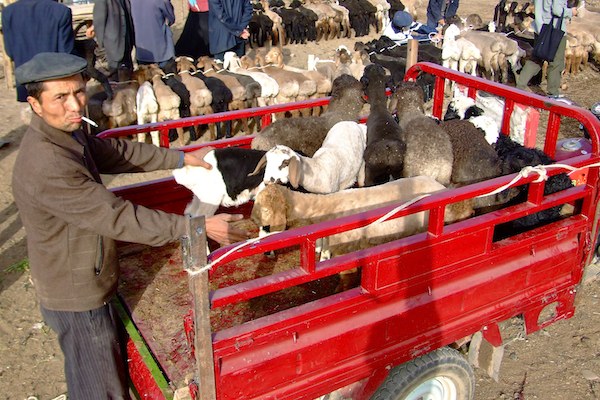
There are a few legendary markets around the world. The Grand Bazar in Turkey... Merkato in Ethiopia... but few have the allure of the Sunday livestock market on the outskirts of Kashgar. Every week, buyers and sellers and onlookers flock (no pun intended) to an otherwise empty lot to check out the local products. Sheep, goats, horses, camels and nearly everything else in between are up for grabs. Bargaining is hard. And whether it's for breeding, or even better afternoon meal, animals are quickly sold, bought and shipped off to who knows where. The chance to have a nice meal on the grounds is great too. And the meat could not be any fresher!!
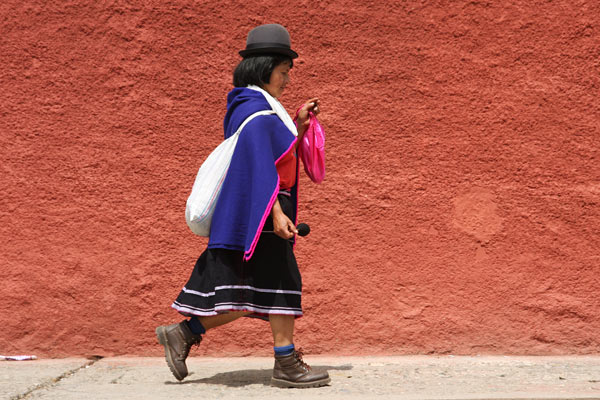
Every Tuesday, the small village of Silvia holds its weekly market. Buses loaded with Guambiano Indians and sacks of potatoes in every colour and shape arrive early to return equally loaded in the afternoon. The Indians are dressed in their finest, which just happens to be the same for all. Ankle boots, deep blue scarf, bowler hat and wraparound skirt, and that includes the men too. It is a great mix of trading and get together at the plaza for catching up on the latest gossip. It is just one of those lovely places that Colombia is so full of, but again not many visitors come here (luckily).
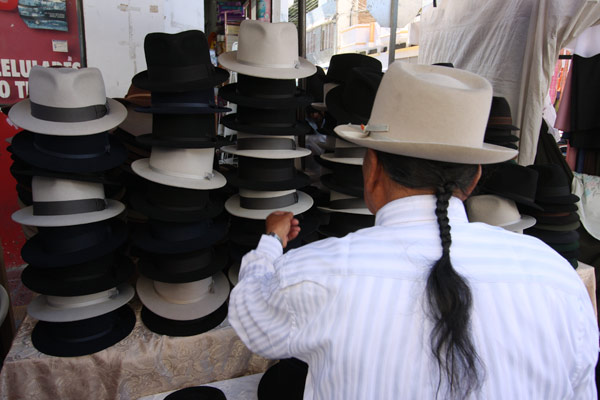
The huge Saturday market in delightful Otavalo is popular with locals as well gringos. The town square is packed with small stalls offering an massive range of knitted and weaved souvenirs in all colours of the rainbow, some more authentic looking than others. Down the side streets more local goods are sold by the beautiful dressed indigenous people. Both the men and women still wear their traditional clothes, which for women is a white embroidered blouse and a folded scarf on the head, and for the men white trousers and shirt. Both have long hair that is plaited and hanging down their back.
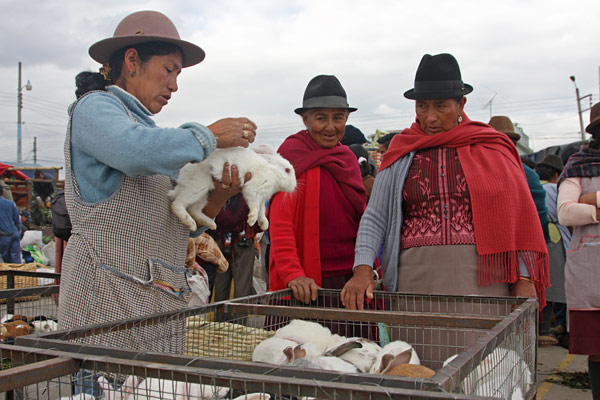
Every Thursday the town of Saquisilí turn into one giant market. Actually it is several markets that are spread over the town. Indigenous people from remote villages in the surrounding hills come in to sell their goods, whether it is a goat, old shoes or a bag full of guinea pigs... and they are not sold as pets. The people are covered under colorful ponchos and felt hats sporting a fashionable peacock feather. It is a wonderful messy and rowdy affair, that starts early and phase out around midday. While Otavalo market is for tourists, this is the real deal.
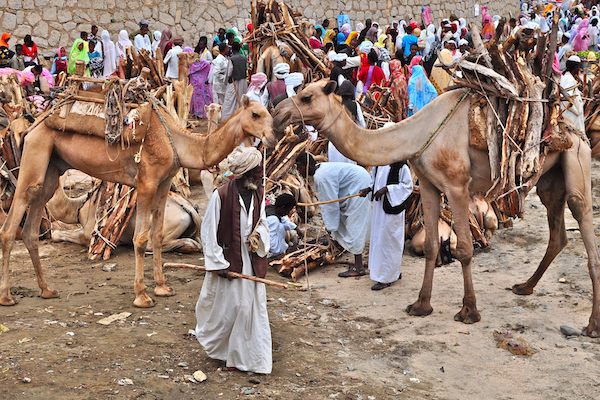
Eritrea is hardly teeming with major attractions and sites to distract the checklist ticking tourist. But what it lacks in architectural grandeur, it more than make up for in the authentic culture department. Several hours north of the capital, in the regional town of Keren, something magical happens every Monday. In a dry riverbed, a market springs forth from the dust. And from the surrounding countryside come a seemingly endless stream of villagers, with camels in tow, attempting to sell their wares. The sights, sounds and smells are exactly what a village market should be. There is no Disney-fying for the tourist masses, there simply aren't any. Just you, some camels and a lot of staring locals.
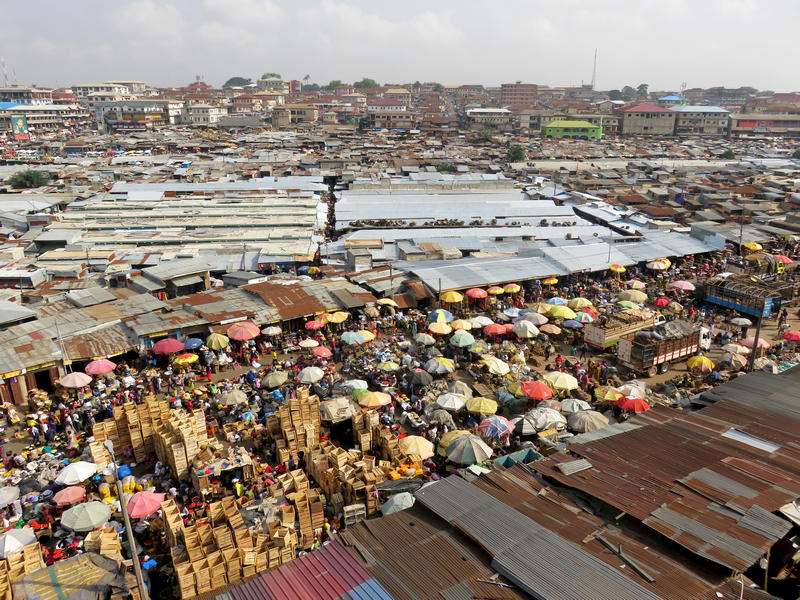
With more than 11,000 stalls and shops, Kumasi's Central Market is known as the largest in West Africa (though we haven't been able to find out which one is the biggest in all of Africa). It's insanely chaotic as you approach the outskirts of the market, but as you venture deeper in along the cramped alleyways, the more calm and relax it gets. Losing yourself for hours is part of the fun, and it's particular pleasant due to the surprising lack of hassle. Kente cloth is probably the most popular merchandise, but really, there's not much you can't get here, like smoked rodents. However, if your want something specific or if you're looking for a more comprehensive introduction to the market, you could ally yourself with a guide. If for nothing else, simply to have a chance of finding what you're looking for in the first place.
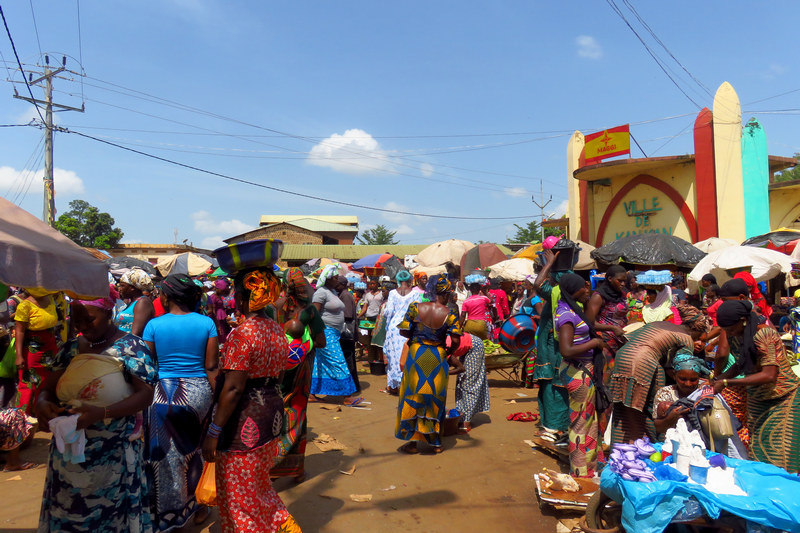
The largest and most important town in eastern Guinea, Kankan, is a lively market and university town. The climate here is also significantly hotter and dustier than in the rest of the country. Entering the town, the sight of mango tree flanked boulevards is almost surprising, but they soon give way to the more organised chaos in the city centre's markets. The markets' real draw is its many marabouts – considered some of the most powerful in West Africa. Marabouts, or traditional medicine men, can for a reasonable fee, prescribe both supernatural inscriptions and healing potions aiding against everything from bad luck to colds. They can be difficult to find, but the market streets west of the Grand Mosque would not be a bad place to ask for directions.