

National Parks in Africa

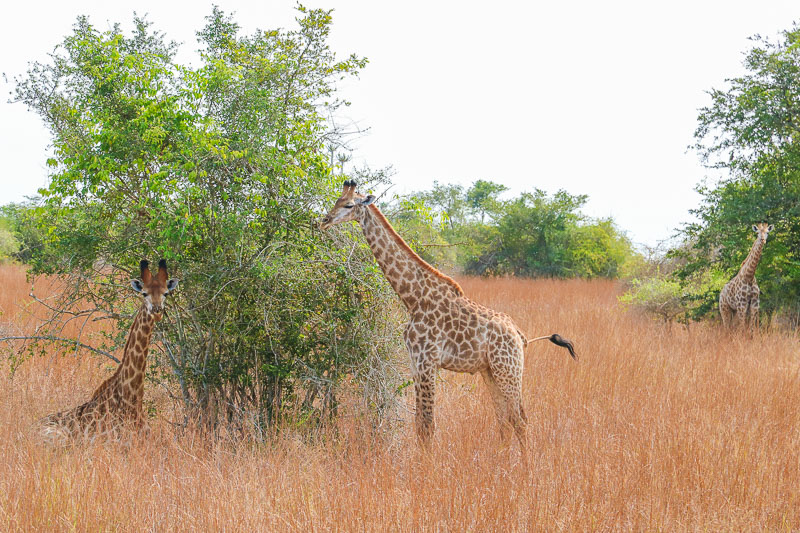
Nobody will put Kissama (Quiçama) National Park on the list of the top national parks in Africa, but it's the best in Angola and that's still something. After more than 25 years of civil war with wide-scale poaching there were hardly any wild animals left in Angola, so large game animals have been reintroduced to Kissama National Park - and with good results. Today the park is home for elephants, giraffes, zebras, kudos, wildebeests and many more - but no predators bigger than civet and mongoose. You can stay at the park, but a day trip from Luanda is also possible.
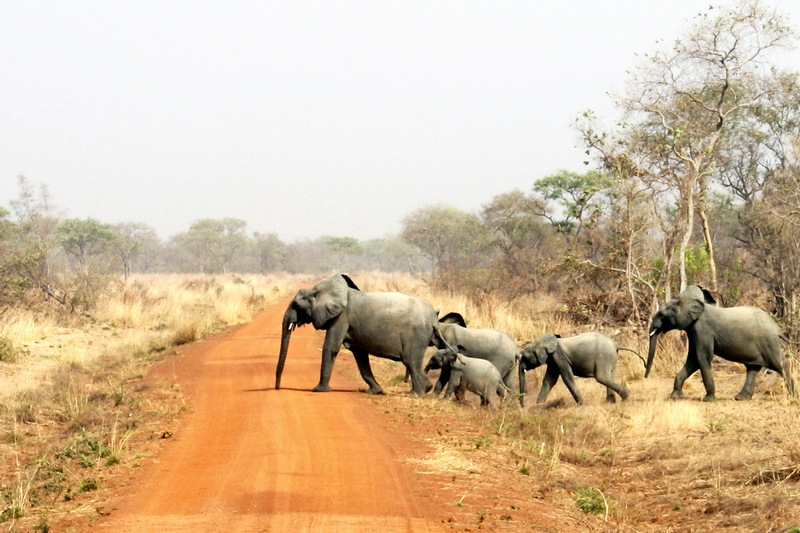
Parc National de la Pendjari is arguably the most magnificent national park in West Africa – it boasts the largest remaining intact ecosystem in the region. The rugged mountains and wooded savannah is a sight in its own right, but visitors are pretty much guaranteed to see elephants, buffalos, hippos and a vast number of antelopes here. Elusive West African lions and the critically endangered Northwest African cheetah also roam the park. However, to spot any of these predators, superhuman persistence and luck are needed. Only a couple of dozen lions are left in the park and when the cheetahs were last counted, back in 2008, only 5–13 individuals called Pendjari home. As with many of West Africa’s national parks infrastructure is limited and hiring a guide is highly recommended. It can be done at the entrance or at the better hotels in Natitingou. Pendjari National Park was added to the existing UNESCO World Heritage site of Parc National du W in 2017, which now constitutes the vast transnational W-Arly-Pendjari (WAP) complex, spread across Benin, Burkina Faso and Niger.
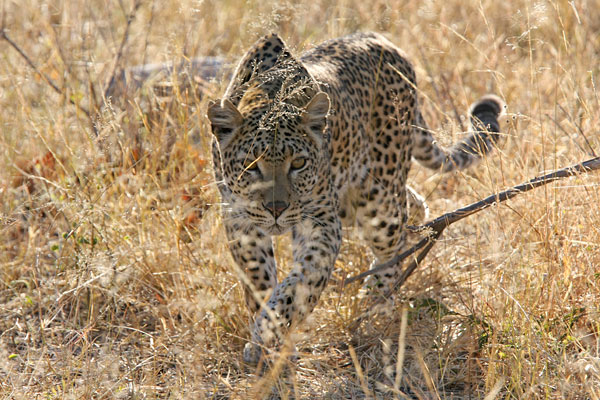
In terms of both variety and diversity, Chobe Naitional Park is just ridiculously good. It's divided into four distinct sections, where Chobe riverfront is the most popular - partly because the density of animals is great here and partly because of its proximity to Victoria Falls (in Zimbabwe and Zambia). Chobe is famous for its large elephant herds, which you can get terrifyingly close to. But warthog, hippo, zebra, giraffe and different species of antelopes, including lechwe and sable, are all among the usual game - but there are no rhinos. There is a good chance to see lions and, with a bit of luck, even a hunting leopard or cheetah. Chobe River makes out the park's natural boundary to north and is great for some midday river safari when the animals come down to drink - this is particularly good during dry season (May through October). But for the best chances to see some predators, you can't beat morning and to some extent evening drives - and who wants to miss the wonders of the red African sun setting behind a herd of elephants!
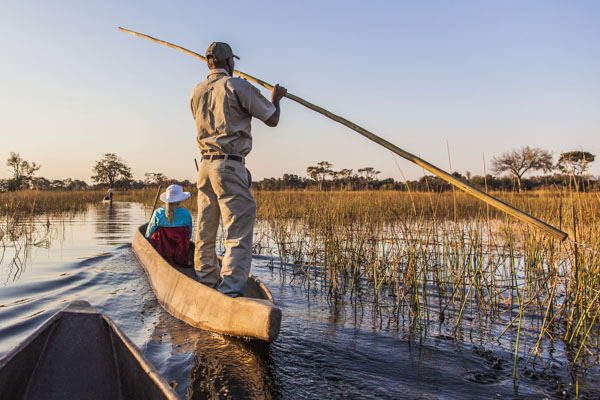
There are many different ways of viewing wildlife, but none really come close to gliding along silently in a makoro dugout canoe. Makoros are used by local people of the Okavango Delta to fish and traverse channels, although as a tourist you may end up with a fibre-glass version rather than a traditional wooden one. Travelling by makoro is a magical experience. The silence is almost complete, and unlike walking safaris it is possible to get (sometimes disconcertingly) close to wildlife, all of which will appear enormous from half a metre above the water surface. But with or without wildlife, this is without a doubt one of the most memorable and special ways of experiencing the unique environment that is the Okavango Delta. Just watch out for those hippos!
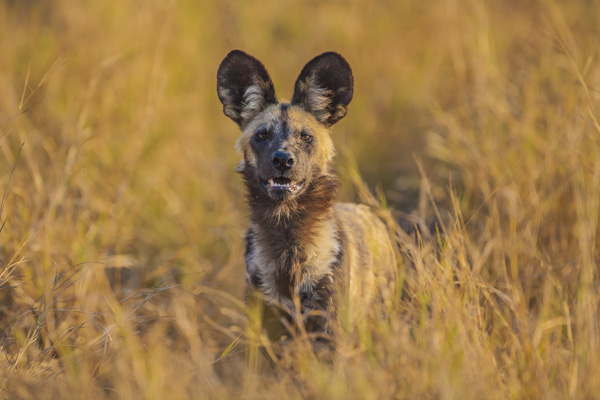
The Okavango Delta is a place of wonder – it is as simple as that. The myriad of waterways that weave their way through the otherwise unforgiving Kalahari provides sanctuary for a plethora of animals, from the Big Five and the rare African wild dogs to countless species of birds. The experience changes depending on your mode of transport – safari vehicle, plane, makoro canoe or on foot – and the seasonal variations are equally significant. The Okavango Delta is home to vast populations of elephants and is a great place to spot predators of all kinds, but it is also a unique habitat, and an Africa that is difficult to find anywhere else. Watch a herd of buffalo make their way across the water from one island to the next, or a clan of hyenas lounging on one of the many small airstrips, as you enjoy the many canals, swamps and islands that make up this stunning inland delta.
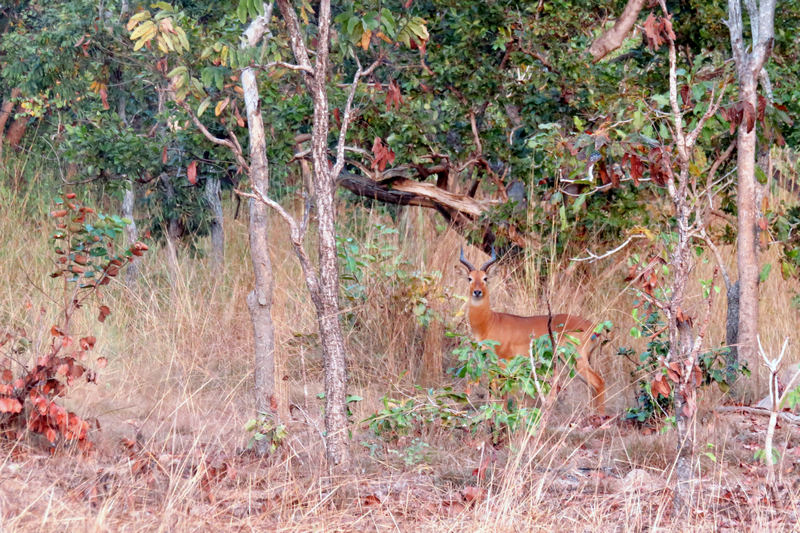
11,500 km2 of plain, savanna and rainforest bisected by the Comoé River, with inselbergs on its northern rim reaching 600 metres in height. In other words, Comoé National Park has a lot to offer. A lot, except tourist infrastructure, that is. This means that most of the park is strictly do-it-yourself. However, there's hope should you lack your own 4x4, tent and provisions. A research station in the southern part of the park, near the village of Kakpin, can help organise pirogue trips on the river, and a lodge in Kafolo, on the park's northern fringes, arranges safari drives. As for animals, the park is home to hippos, elephants, lions and African wild dogs, but due to poaching in the 90s chances are that you'll have to settle for the bird life, antelopes and maybe the park's dwarf crocodiles if you're sailing the river. The park is a UNESCO World Heritage Site due to its plant diversity, rather than its animals.
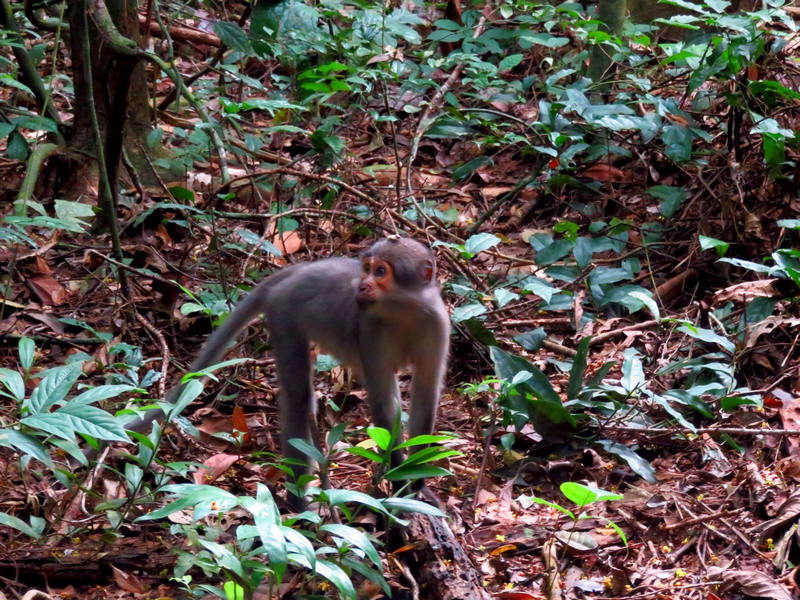
The only primary forest left in West Africa. That neatly sums up why Taï National Park has earned an inscription on UNESCO's list of World Heritage Sites. Nowhere else in the region is a forest where humans haven't logged or introduced new plants – such as coffee or cocoa trees – on such a scale that the original Eco-system has remained intact. Today, a French-run research and conservation NGO administrates visits to the park. A campsite in the middle of the forest ensures easy access to ranger-guided walks to see flora and fauna, which includes mangabey and red colobus monkeys as well as some very elusive pygmy hippos. Here are also chimpanzees, but these will not be ready for tourist visits until 2019, at the earliest. As a bonus, the NGO is also able to arrange other activities, including homestays in the villages surrounding Taï.
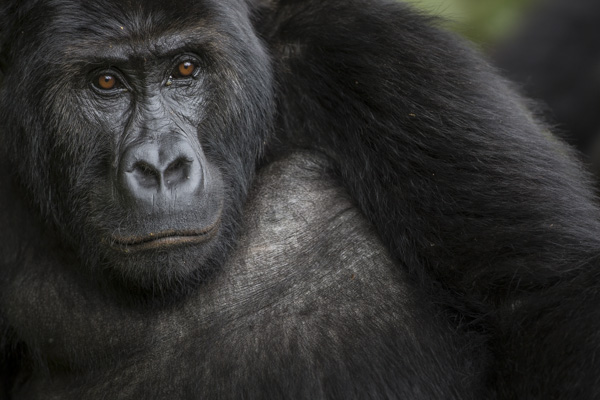
Most people – even those who have gorilla tracking on their bucket lists – have never heard of Kahuzi-Biega. It’s a real shame, because it’s a beautiful park. Most of it is closed to visitors due to security concerns, but the area around park headquarters is open and safe. This is the only place to get close and personal with eastern lowland gorillas, with terrain varying from thick forest to tea plantations. A nearby primate sanctuary houses chimpanzees and monkeys rescued from captivity, and is an interesting afternoon diversion. Park headquarters are a great place to watch the sun rise, and as this coincides with various ranger exercises and the raising of the Congolese flag, getting up early is well worth the effort. The park is accessed through Bukavu, a lively, messy town on the southern shores of Lake Kivu.
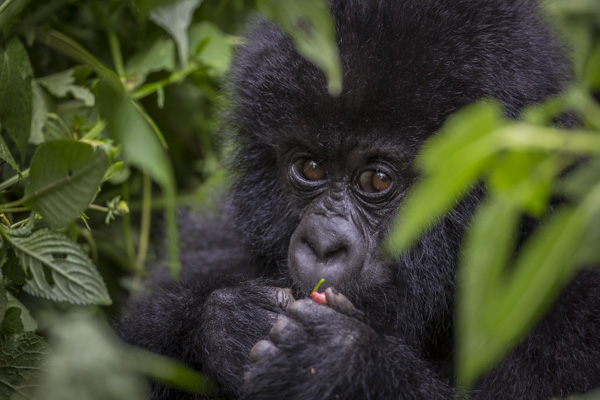
Africa’s oldest and most biodiverse national park, Virunga is a true gem – albeit one with a violent recent history. Most of the park is still off-limits to tourists due to rebel activity and illegal charcoal burning, but its mountainous heart is once again open to visitors. The main drawcard here is the park’s mountain gorillas, although the recent habituation of a troop of chimpanzees is a great bonus, as is the glowing lava lake of Mt Nyiragongo. A visit to Virunga is not for the faint-hearted – the terrain is rough, the roads rougher, and this is unchartered territory for any form of mainstream tourism – but that is also part of its charm. Also worth a visit is Senkwekwe, a mountain gorilla orphanage at park headquarters, and its sad but beautiful twin graveyards: one for its murdered gorillas, the other for the rangers that gave their lives to protect them.
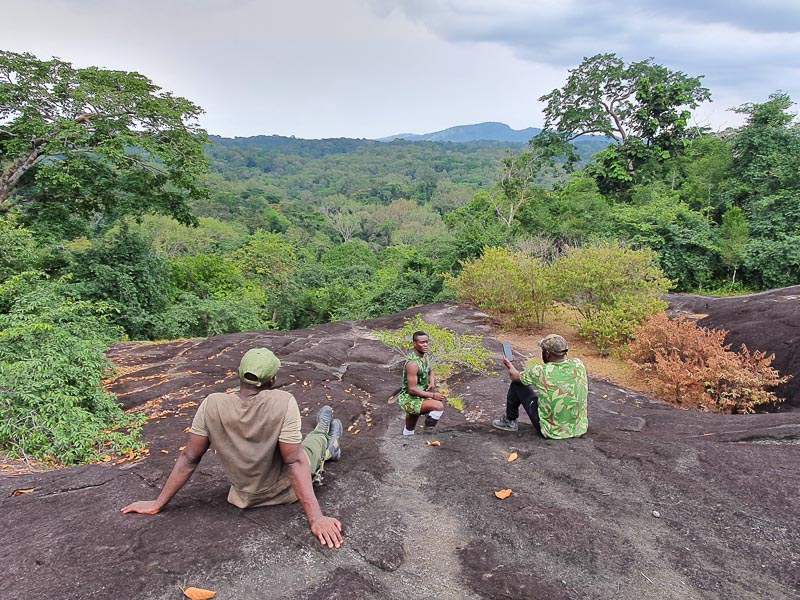
10 % of Gabon is covered by national parks (the highest in the world) and the Reserve de la Lopé is one of Gabon's hidden jewels. There are usually two options for spotting animals. Either a safari drive from the headquarters, where you might see elephants and buffaloes or the monkey/ape trek (lowlands gorillas, mandrills and other monkeys), which requires a 90 minutes adventurous 4x4 drive into the jungle. It's a far less organized experience than the counterparts in Uganda, Rwanda and even D.R.C., where they have a good idea where the gorillas are. In Lope it's a bit more hit and miss, but there is a good chance that you will have to yourself. The road to Lope NP is spectacular, as it passes through rain forest and patches of savannah, but the last 100 km is on a dusty dirt road, so be prepared for a bumpy ride. A more popular option is the train from Libreville, which arrives in Lope in the middle of the night.