

Amazing temples

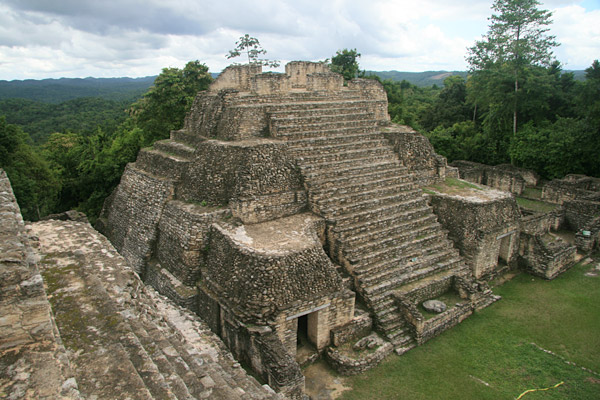
This must be the hidden jewel of Belize. Tucked away in the lush borderland to Guatemala are these astonishing Mayan ruins. The main pyramid, Caana, is towering the dense jungle and apparently is, with its height of 43 metres, still the tallest building in Belize. There are amazing stone carvings along with ball courts and tombs. The ruins are so difficult to get to that hardly anyone knows them, even less visits them. The only way is by a horrendous dirt road which luckily has a couple of great side trips (like "Rio on Pools" and "Big Rock Falls"), so half the adventure is getting here. So go now before the road gets sealed and puts Caracol on the tourist map.
Note: Locals recommend you join the armed escort from the military camp (located 35 km before the ruins) for the last leg of the journey, since random robberies have occurred in the past.
Note: Locals recommend you join the armed escort from the military camp (located 35 km before the ruins) for the last leg of the journey, since random robberies have occurred in the past.
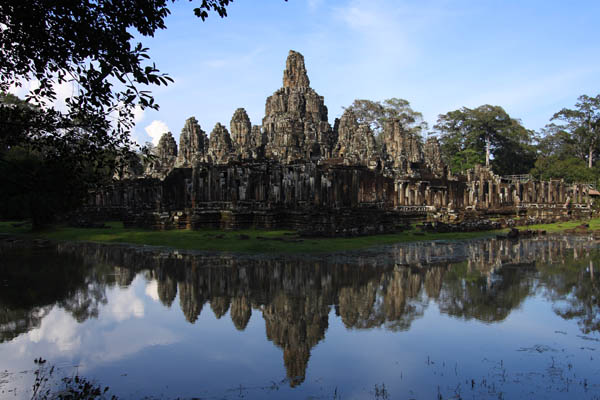
Once covered by the jungle and rarely visited, the temple area of Angkor is now part of the beaten track in Southeast Asia, but for a good reason. These magnificent temples were once the centre of the mighty Khmer kingdom (ninth century to the fifteenth century A.D.) and the main temple Angkor Wat is considered the world's largest religious complex. Remember to read up on Hindu mythology to get a chance to understand its outstanding bas-reliefs or just be impressed by the grand scale. Split your explore time equally between the big ones; Angkor Wat, Ta Prohm, and Bayon (picture) and the minor ones; Preah Khan, Neak Pean, and Preah Ko, which lack in scale but win in tranquillity. If your time permits, add some sites that are a drive out of the way, like Banteay Srei, Kbal Spean and Beng Mealea.
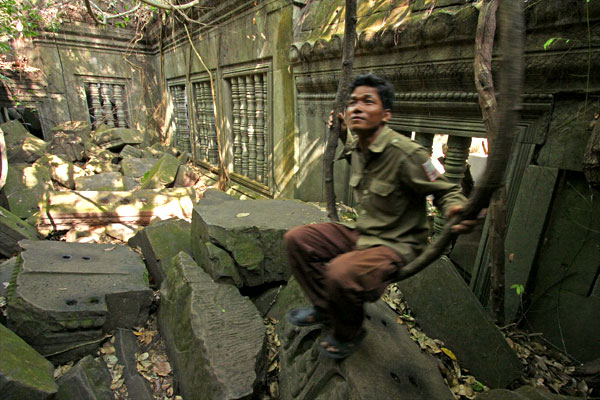
Cambodia's treasure of ancient temples goes beyond the group at Angkor. The mystical temple of Beng Mealea is one of those. Built in the Angkorian period, 40 km from Angkor Wat on an ancient royal highway, it was among the biggest temples. Today, it is a magical ruin that has been hidden under the jungle carpet until recently. Giant serpent-like roots are slowly crushing the walls, while a web of smaller roots are holding the place together. You have to crawl over fine carved sandstone blocks, duck under fallen pillars, and hang in vines to get through the giant maze of closed courtyards, dark chambers and rising towers. Though there are boardwalks at some sections, it is a raw experience to explore this hidden jewel. This jungle temple makes Ta Prohm, the famous jungle temple at Angkor, look like a groomed little brother.
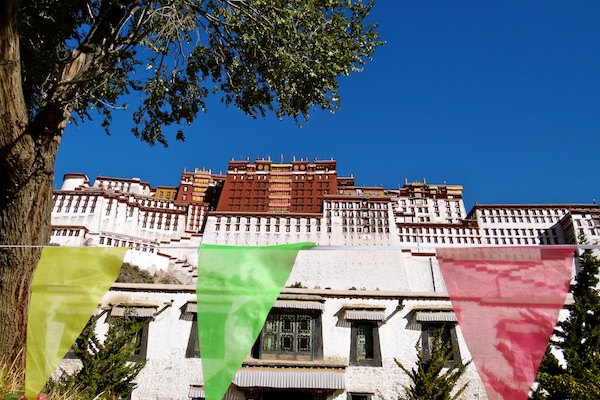
The Potala Palace is Lhasa's special landmark towering high on a hill overlooking the entire city and with mountains in the background. Lhasa, and in particular the palace, is for Buddhists what Mecca is for Muslims. 14 Dalai Lamas have inhabited and ruled the palace, and besides a lot of religious figures, you can see several Lamas' coffins plated with gold- and precious stones on site. The palace is now a museum, and although the current Dalai Lama fled to India in 1959, when China invaded Tibet, there is still a sacred presence of history when visiting the site. You have to climb quite a few stairs (and 180 meters) to reach the hallowed halls, and time is limited once inside the chambers of the Lamas.
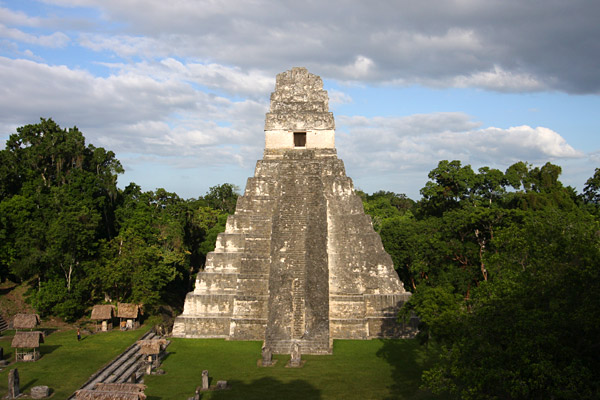
Peeking over the canopy of the jungle are these outstanding Maya temples. Their constructions are steeper and taller than any other Maya sites making them a truly impressive sight. As if that was not enough, their location deep in the jungle offers surprisingly good chances to see some fairly exotic wildlife, like toucans, monkeys or just curious Coatis. Temples are still being excavated while more lie hidden under the jungle carpet as small hills just waiting to tell another story from the lost Mayan world. Without the towering temples (up to 61 meters) as landmarks it would be easy to get seriously lost in the maze of jungle trails, but a trip to the top will give a little perspective. These Maya ruins are more than a been-there-done-that sight, they will for sure knock your flip-flops of.
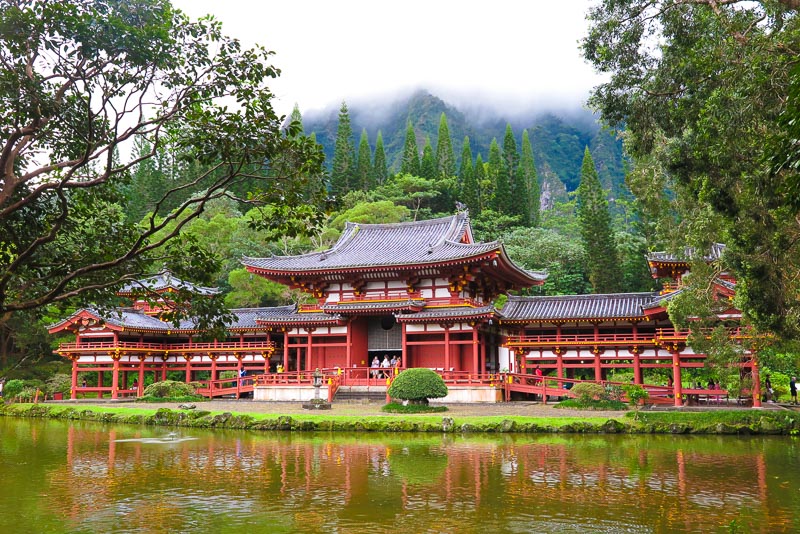
The Byodo-In is a smaller-scale replica of the original Byodo-In Temple in Kyoto and is built entirely without nails. It was constructed in 1968 to commemorate the 100 year anniversary of Hawaii's first Japanese immigrants. It's a non-practicing temple with a gorgeous setting at the foot of the Koolau mountains. The garden ponds swarm with with large schools of koi, some nearly one hundred years old.
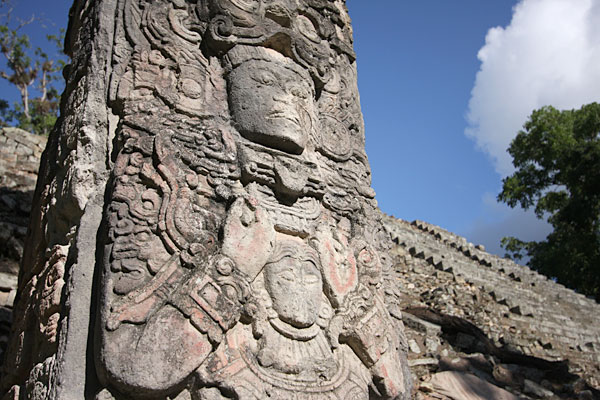
One of the greatest and most powerful Mayan kingdom through times has left some grand temple complexes close to the Guatemalan border. It located among soft hills and big shady trees. The temples are constructed in a low fashion with many remarkable ornamental details. The main thing here are the hundreds of hieroglyphs and sculptures which is unique to Copan. Furthermore the archaeologists have cleverly excavated one of the temples from the inside to uncover the fact that temples were often built over previous existing temples. If you are a bit ruin-out and need a break, you can have a chat with the squawky macaws in the treetops at the entrance.
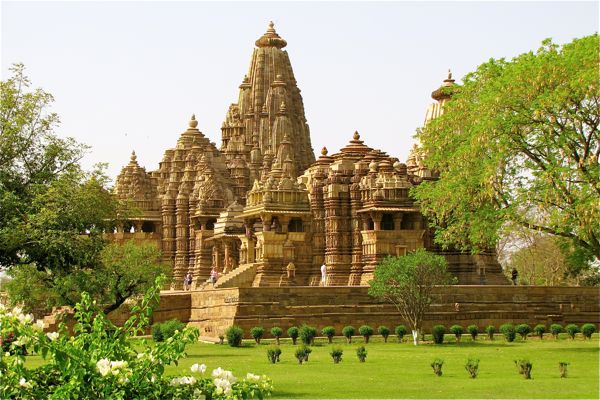
In the town of Khajuraho, in the state of Madhya Pradesh, a number of ancient Hindu temples are located. They are regarded as some of India's "Seven Wonders" and are also on the list of UNESCO’s World Heritage Sites. The temples were built around 1000 years ago and from the original approx. 80 temples, 25 are left. They are located in 3 different parts of an area of 20 square kilometers, and they can easily be seen in a single day. Besides being impressively well preserved, the temples are also known for their extremely erotic carved figures. Back then, there were obviously no sexual positions, persons or animals, you could not throw yourself at... No wonder that this is the land of the "Kama Sutra"!
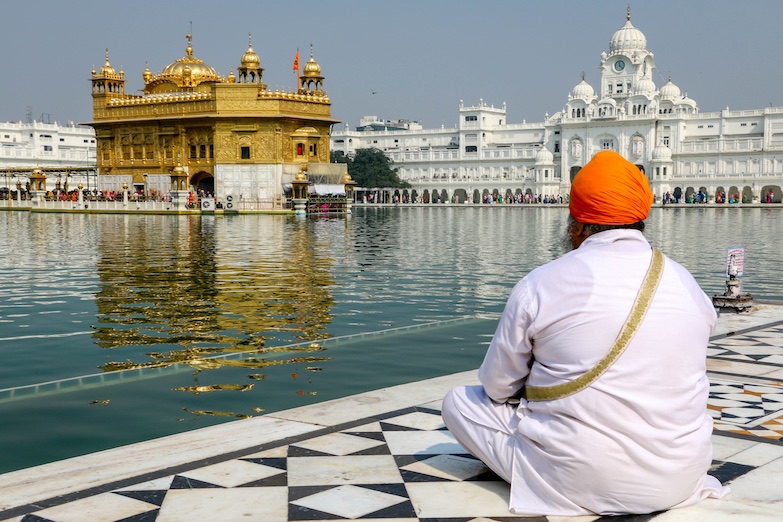
Christians have St. Peter's Basilica. Muslims have the Kaaba. So what about Sikhs? Well, in the northern state of Punjab in the holy city of Amritsar, lies the stunning Golden Temple. The centre of the Sikh religion, it is a centre of pilgrimage and tourism alike. As if the golden facade was not enough, the entire building is surrounding by a reflecting pool used for the faithful to wash away their sins. Constant chants, prayers and song fill the air. The clang of pots and pans echo through the massive feeding halls. And there's even a museum in the complex. This is certainly the one-stop-shop for insight into the 9th target religion in the world.
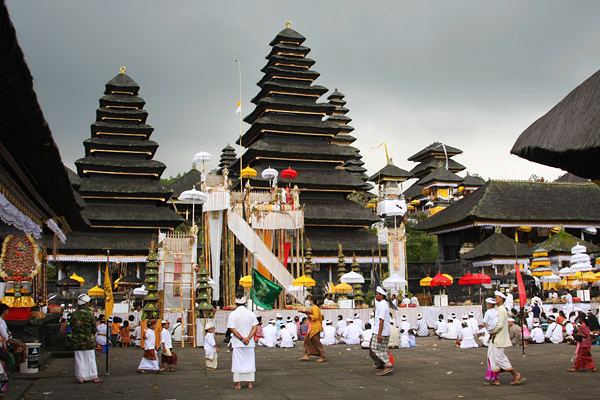
Pura Besakih is the most important and mind-blowing Hindu temple of all temples on Bali. It is actually a temple complex consisting of 22 different temples and is the one that is pictured in travel brochures and postcards, so it doesn't become more Balinese-iconic than this. The main temple, Pura Penataran Agung, has the usual row of shrines, but many with multi-roofs making the main square look really imposing. Pura Besakih sits on the slope of the highest mountain on Bali, Mt. Agung (3140 m) which is an active volcano, and was close to be destroyed during the 1963 eruption when lava flows missed the temples by literally a few meters.
As with any other temples in Bali, try to visit if there is a ceremony going on when it all comes alive - and it doesn't get more grand than at Besakih. At quiet times, it can turn into a bit of a tourist trap with persistent local guides and imaginary fees. To escape the hassle, try to park as high up as possible next to the temples.
As with any other temples in Bali, try to visit if there is a ceremony going on when it all comes alive - and it doesn't get more grand than at Besakih. At quiet times, it can turn into a bit of a tourist trap with persistent local guides and imaginary fees. To escape the hassle, try to park as high up as possible next to the temples.