

Tibetan monasteries

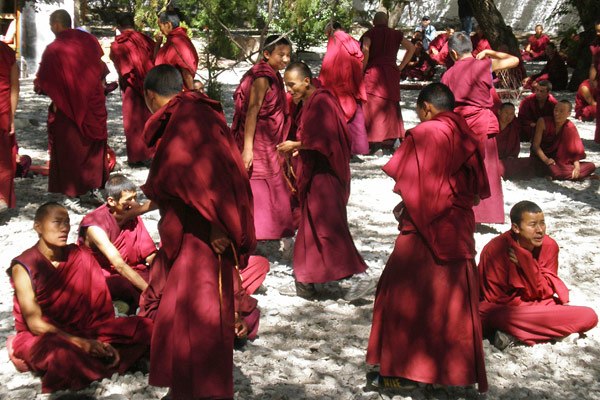
Time spent travelling in Tibet guarantees you will emerge with interesting insights into the rituals of Buddhism. Some of them can be quite confronting such as the prostrating pilgrims you'll see along the roads, who may be years into their pilgrimage. While others, like the monks at the Sera monastery seem a lot more positive. At first you'll be unsure of exactly what they are doing! Are they acting? Are they fighting? Are they dancing? Well, apparently they're debating. However, we are not exactly sure how a discussion about Buddhist scriptures benefits from all the wild hand slapping and gesticulating that goes on in Tibet's Sera Monastery. Regardless of why, it makes for an entertaining way to spend an afternoon.
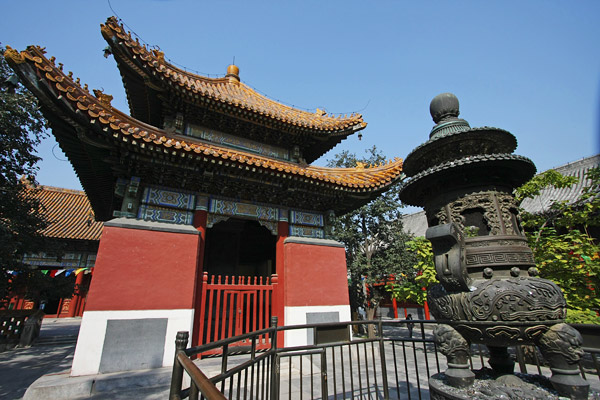
If you are curious about Tibetan Buddhism or want relive the sounds, smells and sights from your Tibetan trip, visit the Lama Temple. It is the largest Buddhist temple in Beijing and an important one too. It was built in 1694 during the Qing Dynasty and survived the culture revolution by being protected by Prime Minister Zhou Enlai - or so it's said. Lama Temple is a full and functional Buddhist lamasery with monks and revolving prayer wheels. There are five main halls, who all have different purposes and Buddha statues. The final hall houses a 26 m (18 m above ground) tall wooden Buddha statue that has been carved from a single trunk of sandalwood. Though many non-Buddhist tourists visit the temple, it still has an authentic feel.
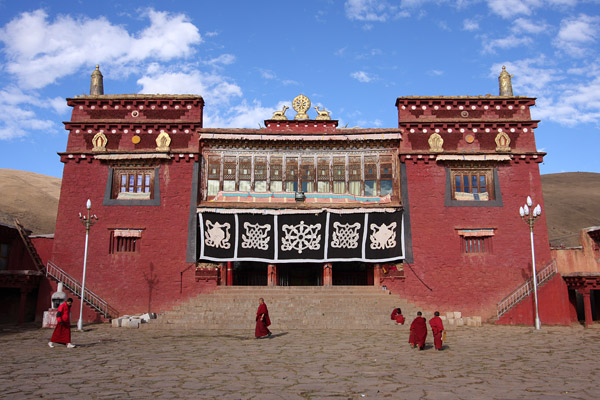
Litang is the next Tibetan town coming from Kangding on the Southern Sichuan-Tibetan route. The road trip from Kangding to Litang is long, but offers amazing views over snowcapped mountains and vast grassland, and can be quite breathtaking, literally since the elevation of Litang is 4000 m (400 m higher than Lhasa). The first impression of Litang might be a bit rough and uninviting, but the Tibetan culture is strong here so please endure. In the cold morning, hordes of yaks are led through the dusty streets, which during the day will be filled with tough looking Tibetans in fur vests and monks draped in red robes. Old ladies with prayer wheels soak up the warm sun on benches along the path leading up to the town's large monastery, Ganden Thubchen Choekhorling, which was founded in 1580 by the 3rd Dalai Lama. Tibetan sky burial (where corpses are fed to vultures) is still practiced on the slopes outside town.
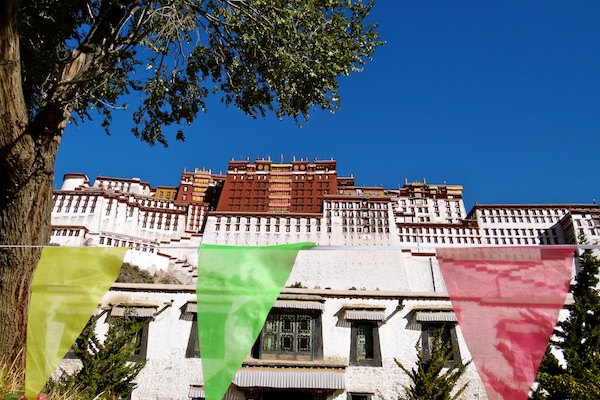
The Potala Palace is Lhasa's special landmark towering high on a hill overlooking the entire city and with mountains in the background. Lhasa, and in particular the palace, is for Buddhists what Mecca is for Muslims. 14 Dalai Lamas have inhabited and ruled the palace, and besides a lot of religious figures, you can see several Lamas' coffins plated with gold- and precious stones on site. The palace is now a museum, and although the current Dalai Lama fled to India in 1959, when China invaded Tibet, there is still a sacred presence of history when visiting the site. You have to climb quite a few stairs (and 180 meters) to reach the hallowed halls, and time is limited once inside the chambers of the Lamas.
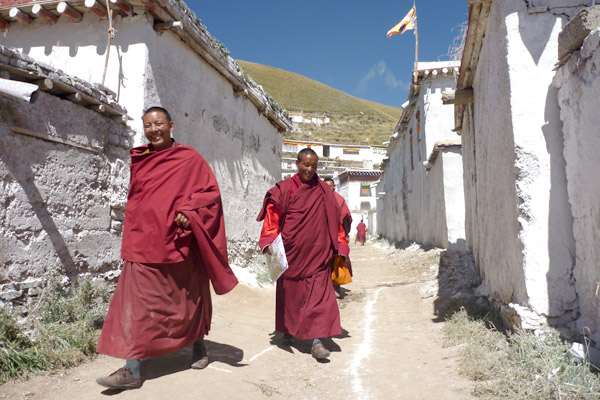
Serxu monastery (Serxu Gompa) lies 30 km outside the drab town of Serxu (Serxu Xian), in the most northwestern part of Sichuan. It is a big Tibetan monastery surrounded by rows of prayer wheels and a maze of adobe houses for the red cloaked monks, who count to more than a thousand. Across the river, a small cluster of dusty shops makes out the rest of the monastery town. Here, weather beaten Tibetans with gold teeth swag down the street (for there is only one street) in wide brim hats and homemade sunglasses. It is a fascinating place full of character and edge.
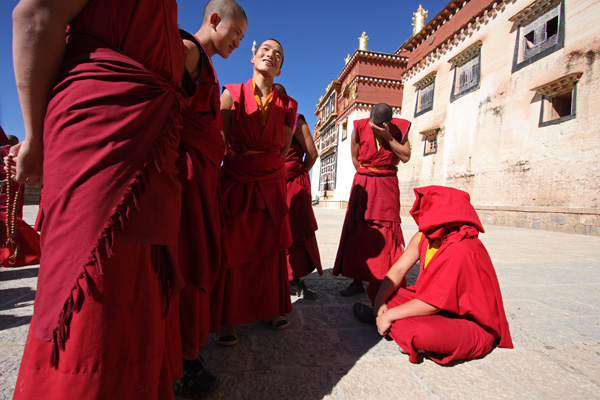
Sumtseling Monastery is the largest Tibetan Buddhist monastery in Yunnan province. Initiated more than 300 years ago by the fifth Dalai Lama, it is sometimes referred to as the Little Potala Palace. It was heavily damaged during the Culture Revolution, but subsequently rebuilt in the 1980s. Today it's again a massive Buddhism complex with more than 600 monks living and studying there. In the morning you can sometimes catch the debating lessons outside on the square, where the novices in lotus position are tested in their ability to answer philosophical questions delivered in a clapping manner by their friends. It's not in the province of Tibet (TAR), so no special permission is needed to go here.
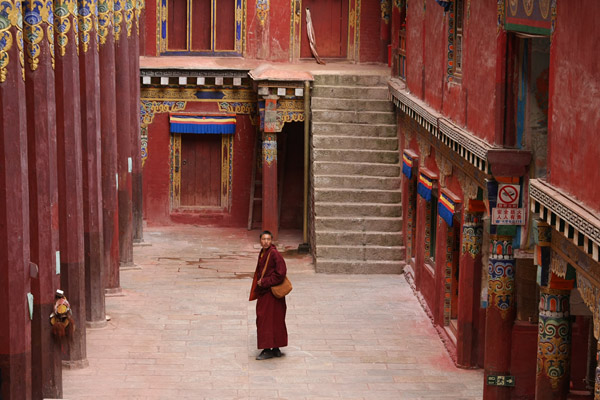
In Dege, the last town before Tibet province, lies the red-walled printing monastery Bakong. It is a sacred place where pilgrims supposedly circle the outer walls a thousand times. Inside, Tibetan scriptures are printed by hand and put to dry, as they have been done for centuries. The store rooms are filled from floor to ceiling with almost 300,000 engraved woodblocks with Tibetan texts. You can watch the printing process in the printing hall, where printers in almost trance turn out pages at an incredible speed. The majority of the Tibetan monasteries still get their textbooks from this printing monastery, and it is considered as one of the most important cultural center for Tibetans along with Potala Palads and Sakya monastery, both in Tibet.
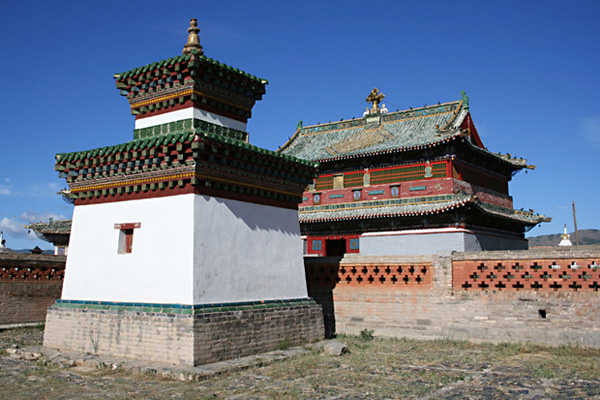
You shouldn't think so, but Mongolia is a great place to experience Tibetan Buddhism. This monastery was Mongolia's first and built in 1586 with stones from the once mighty capital, Karakorum, of the Mongolian kingdom. Destroyed and abandoned several times, the latest under the power of the Stalinist dictator Choibalsan in the 1930's, today, the temples are again buzzing with the monk's prayers. A mandatory stop on every Mongolian trip.