

Tibetan places outside Tibet Autonomous Region (TAR)
1 2

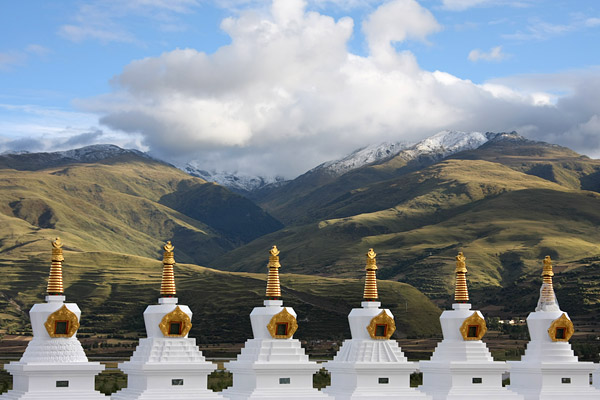
The Tibetan trading town of Ganzi (alt. 3350 m) might not seem as the most charming place in western Sichuan, but, away from the dusty and noisy main road, things get interesting. The old Tibetan quarter, with its narrow alleys and adobe walls with dry yak dung, is begging to be explored and so are the couple of Buddhist monasteries in the outskirt of town. From here there are amazing views over the valley and the rising mountain range. There is a fairly big market with all sorts of vegetables, that seem impossible to grow in these regions. The majority of shops cater for Tibetans and other people in the need of a big knife or a yak fur coat.
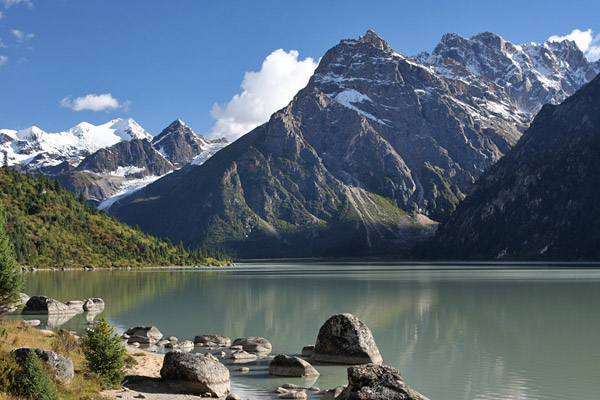
Yihun Lhatso is a holy alpine lake located at 4010 m at the foot of the mountain Cholan Shan (6168 m). It is picture-perfect with a milky turquoise color with a gorgeous backdrop of rigged mountains crowned with snow. Along the shore, boulders have Tibetan mantras, like om pani padme um, carved into them and there are colorful prayer flags hanging down from the pine trees and even a stupa. The trail, used by yaks, on the east side of the lake will take you to the far end, where the views are even more breath taking - and it is not just because of the high altitude. This place is seriously pretty, and you will very likely have it all for yourself, beside the yaks.
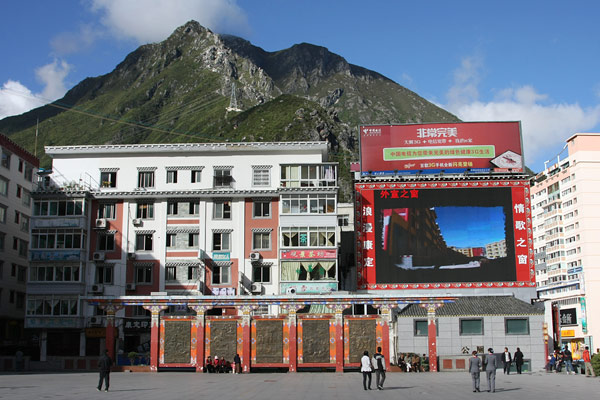
This is where main China ends and the Tibetan Wild West begins. The town is beautifully located along a river at the bottom of a canyon with steep mountain sides. The town itself is not among the prettiest and it is hard to tell whether it is Chinese turned Tibetan, with a bit of Tibetan architecture thrown in for pleasing local tourists, or it was once a Tibetan town turned Chinese (the latter is the truth). It functions as a getaway point for both the northern and southern overland routes into the Tibetan province (TAR), which both can be broken off into great journeys of the Tibetan areas outside TAR, which are rich in Tibetan culture and do not need special travel permits.
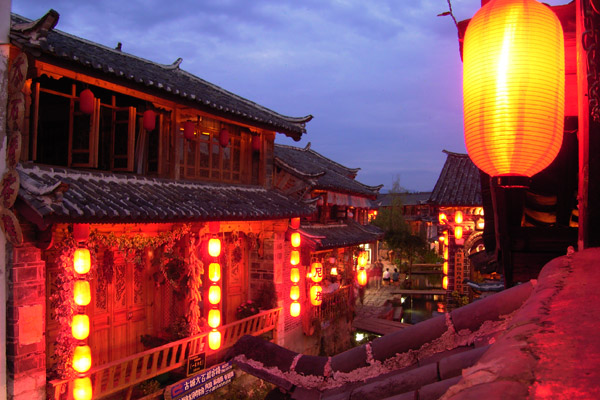
The Naxi people, who inhabit the region around Lijiang, is a branch of the Tibetan people. They are famous for their script, which is the only hieroglyph script still in use today. The old town of Lijiang is charming at first sight, but is a tarted up version of the original one which got heavily damaged during an earthquake in 1996. The layout is a maze of cobbled streets, narrow canals and wooden shops catering mainly for the Chinese tourists. For make no mistake, Lijiang is Chinese tourist territory and others will often found it too groomed, crowded and tacky. Luckily, you can always explore the countryside or keep going north to Shangri-la and Western Sichuan for the real deal.
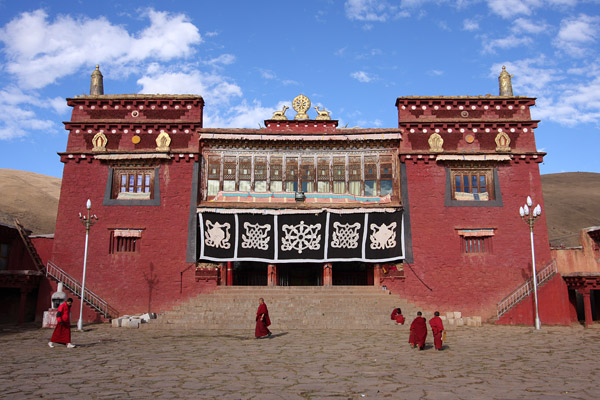
Litang is the next Tibetan town coming from Kangding on the Southern Sichuan-Tibetan route. The road trip from Kangding to Litang is long, but offers amazing views over snowcapped mountains and vast grassland, and can be quite breathtaking, literally since the elevation of Litang is 4000 m (400 m higher than Lhasa). The first impression of Litang might be a bit rough and uninviting, but the Tibetan culture is strong here so please endure. In the cold morning, hordes of yaks are led through the dusty streets, which during the day will be filled with tough looking Tibetans in fur vests and monks draped in red robes. Old ladies with prayer wheels soak up the warm sun on benches along the path leading up to the town's large monastery, Ganden Thubchen Choekhorling, which was founded in 1580 by the 3rd Dalai Lama. Tibetan sky burial (where corpses are fed to vultures) is still practiced on the slopes outside town.
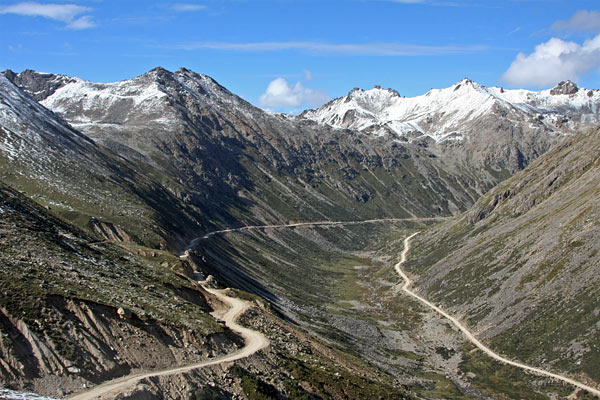
The bus journey from Manigango to the Dega, close to the Tibetan border, must rank as one of the most beautiful road trips in the whole of China. Setting out from the small Tibetan wild west town of Manigango, you will first pass the serene mountain lake of Yilhun Lhatso at the foot of Chola Shan (6168 m) and neighbouring snow caped peaks, before slowly ascending the hairpin road to the mountain pass at 5050 m (though our altimeter showed only 4850 m). There are chances to sight both vultures and marmots – and the occasional overturned truck having gone over the edge and crashed down the mountainside. When reaching the pass, locals will (if they are not too carsick) throw colored prayer notes out of the bus windows. From here, the road descends into a beautiful narrow valley carved out by a still flowing river. You will pass by small Tibetan villages, Buddhist stupas and monasteries with prayer flags going in all directions, before arriving (hopefully) safely in Dege.
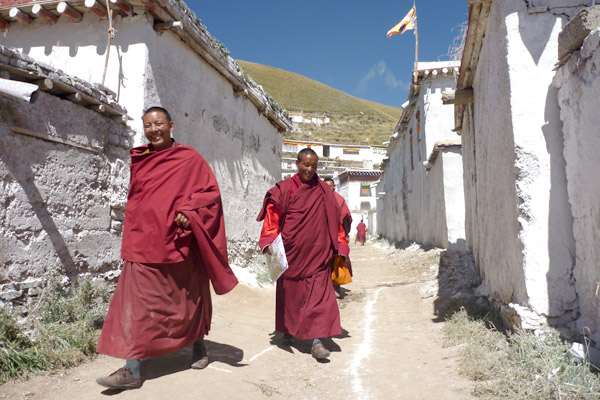
Serxu monastery (Serxu Gompa) lies 30 km outside the drab town of Serxu (Serxu Xian), in the most northwestern part of Sichuan. It is a big Tibetan monastery surrounded by rows of prayer wheels and a maze of adobe houses for the red cloaked monks, who count to more than a thousand. Across the river, a small cluster of dusty shops makes out the rest of the monastery town. Here, weather beaten Tibetans with gold teeth swag down the street (for there is only one street) in wide brim hats and homemade sunglasses. It is a fascinating place full of character and edge.
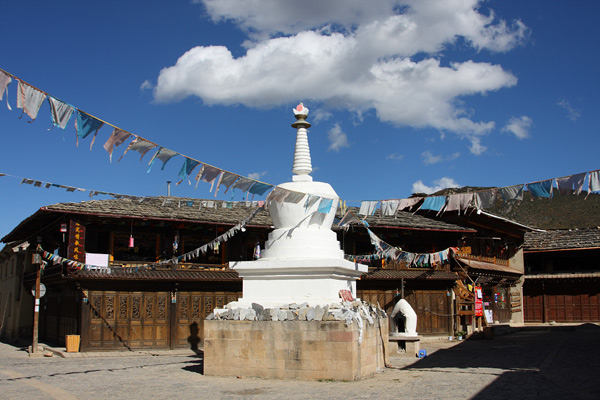
To boost it's tourist potential, the small Tibetan village of Zhongdian changed its name to more fame-sounding Shangri-la (and got a new airport). The old town is surprisingly charming with real flavours of Tibet with traditional Tibetan houses, prayer flags hanging down from stupas and town squares with group dance in the evening. Everywhere you go, you will be offered yak butter tea. There are elaborated Buddhist temples in and around Shangri-la, including the biggest prayer wheel in the world and the huge temple complex of Gandan Sumtseling Gompa. Shangri-la does draw a fair amount of tourists just as the authorities had planned, but is nothing compared to Lijiang and Dali.
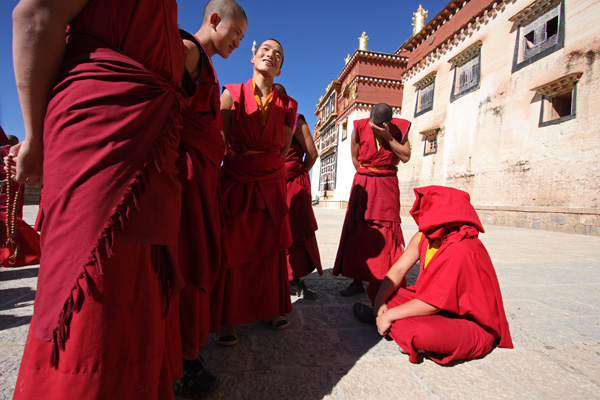
Sumtseling Monastery is the largest Tibetan Buddhist monastery in Yunnan province. Initiated more than 300 years ago by the fifth Dalai Lama, it is sometimes referred to as the Little Potala Palace. It was heavily damaged during the Culture Revolution, but subsequently rebuilt in the 1980s. Today it's again a massive Buddhism complex with more than 600 monks living and studying there. In the morning you can sometimes catch the debating lessons outside on the square, where the novices in lotus position are tested in their ability to answer philosophical questions delivered in a clapping manner by their friends. It's not in the province of Tibet (TAR), so no special permission is needed to go here.
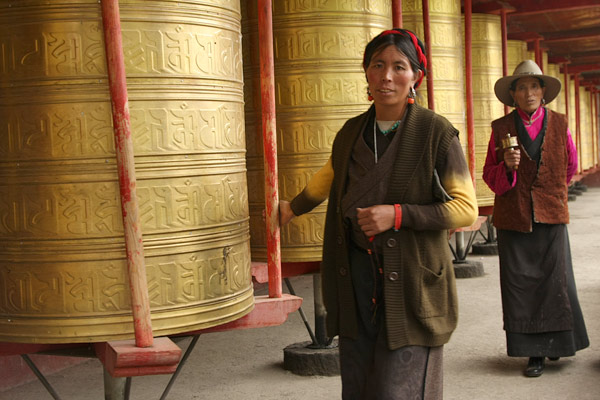
Tagong (alt. 3700 m) is a small rough Tibetan town located at a bend of the northern Sichuan-Tibetan highway ("highway" should be interpreted in the most lightly way). It lies at the foot of hills adorned with colourful prayer flags with scenic snow covered mountains in the distance. Lovely Tibetan houses built of rocks and giant timber make up this small settlement along with the town's monastery, which dates back to the seventeenth-century. Along the dusty street, long haired Tibetan guys dressed in traditional chubas (Tibetan cloaks) race by on motorcycles, while old ladies swirl their prayer wheels. Horse treks should apparently be excellent on the grasslands outside of town.
1 2