

UNESCO World Heritage Sites in Africa

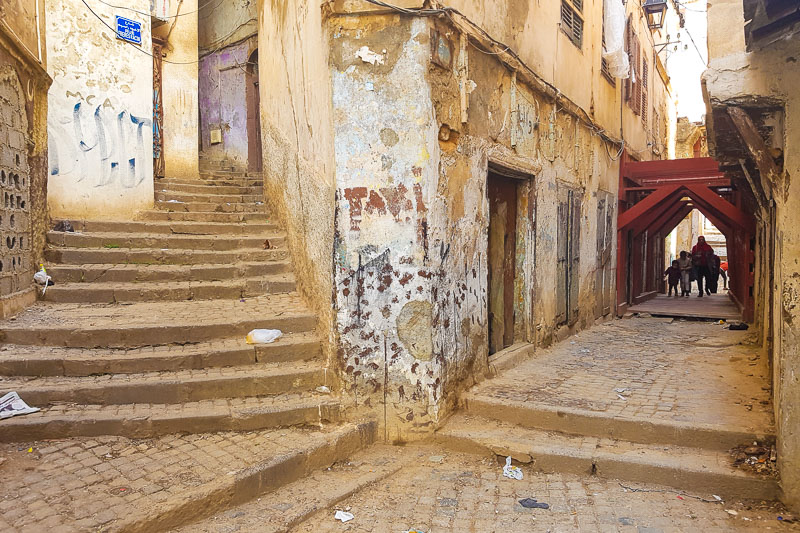
The oldest part of Algiers is the Casbah, which has become a UNESCO World Heritage site. It's an ancient quarter built on a hillside, which originally was a citadel with quarters clustered around. The Casbah had many mosques and Ottoman palaces, but many were destroyed during the French occupation, as the Casbah was used as a hideout for the insurgence. Today, big parts of the Casbah are in disrepair and risk of collapse, but it's still wonderful to get lost in the maze of steep and narrow lanes.
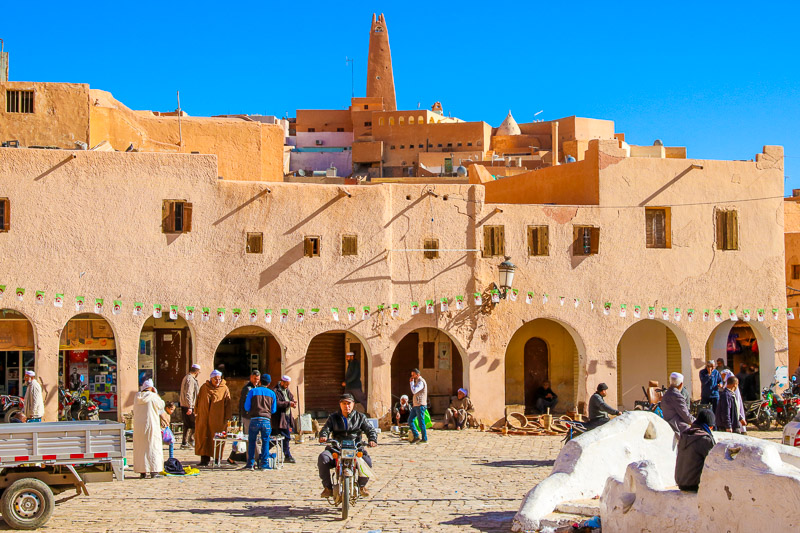
The five ancient ksars (fortified villages) Ghardaia, El Atteuf, Bounoura, Melika, and Beni Isguen in the M'zab Valley are listed as one UNESCO World Heritage site. Today the five villages have sprawled into each other, but the original ksars still exists with city gates and narrow lanes. Life here is still very traditional and many married women cover themselves entirely in a white cloth with only a tiny hole to peek through. In an understandable effort to preserve their ancient culture, you need to have a guide to walk around inside the actually ksars, where photographing also is restricted. However, the modern part outside the ksars can be explored on your own. The biggest and most famous of the villages is Ghardaia, but try to see as many of the others as possible, as they all have their own characteristics. Ghardaia for its old mosque, Beni Isguen for the auction market, and El Atteuf for the original marketplace, mausoleum and cemetery. If time, take a look at the palm groves and ancient irrigation tunnels.
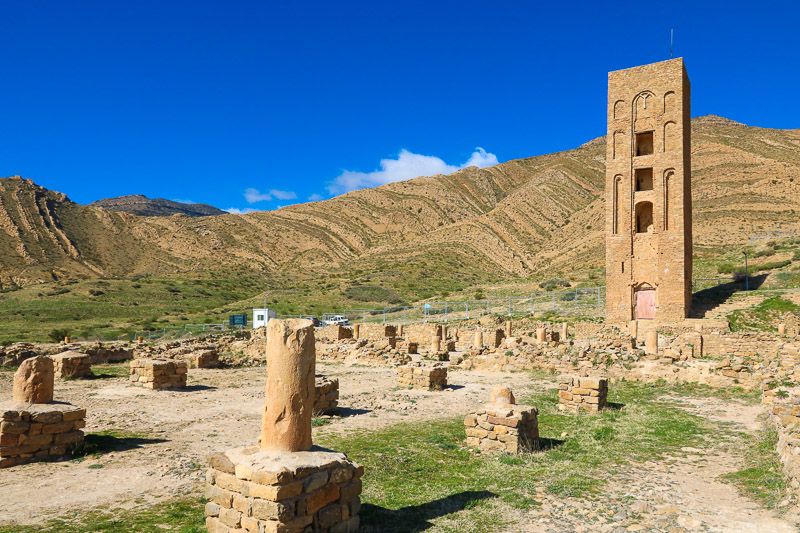
This UNESCO World Heritage site is the leftovers from a 11th century capital city of a Muslim dynasty called Hammadid. They had chosen this stunning location in the mountains at a height of 1000 m above sea level for their first capital. It was a fortified Muslim city, which only existed for 145 years before it was demolished. Not much has survived besides the minaret and some walls, but the journey through the extraordinary beautiful mountain scenery makes it worth your while - particularly by taking the twisted road from Ouled Addi Guebala.
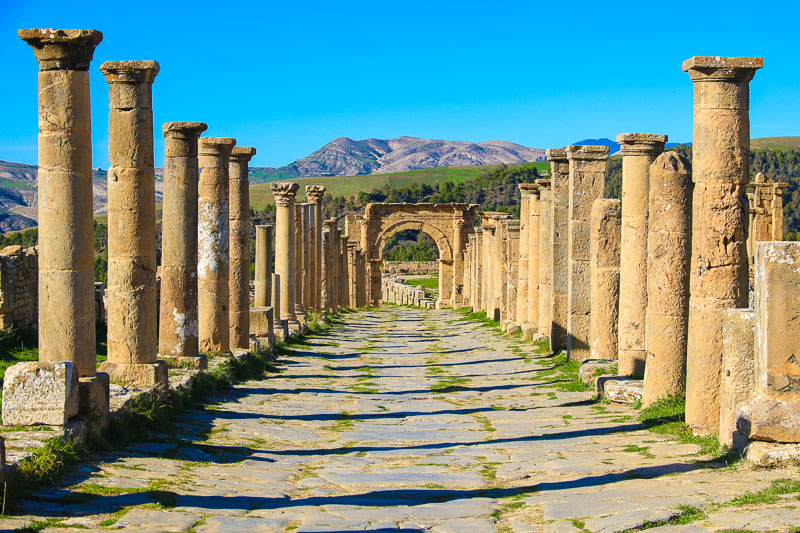
The three most famous Roman ruins in Algeria are Tipaza, Timgad and Djemila. Like the other two, Djemila is also a UNESCO World Heritage site. Stunning set in a green valley with views to mountains. The ruins are well preserved with elaborate houses, temples, baths, public latrine, and marketplace with columns of marble. The grand 3000-seat theatre is nearly complete, apparently without any reconstruction. As you stroll down the elegant cardo maximus between the rows of columns, it's easy to let your imagination wander. Visit also the small museum on site, as it has all the exquisite mosaic floors from the baths and houses.
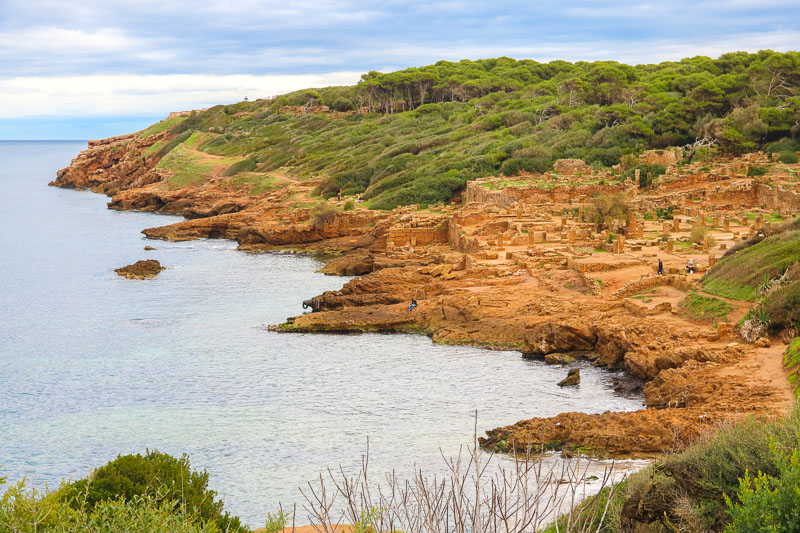
There are two complexes of Roman ruins near the town of Tipaza (with a "z") along with a mausoleum for Cleopatra's daughter. The main archaeological park is this one, right inside Tipaza. It's set spectacular on the coastline among shady olive trees. It's a vast area of Roman ruins holds both theatre, amphitheater, bath and even the remains of a basilica. The park has many secluded corners, which are popular with young couples on dates.
Tipaza (site 1 & 2) is among the top 3 Roman ruins in Algeria (along with Djemila and Timgad) and is a UNESCO World Heritage site.
Tipaza (site 1 & 2) is among the top 3 Roman ruins in Algeria (along with Djemila and Timgad) and is a UNESCO World Heritage site.
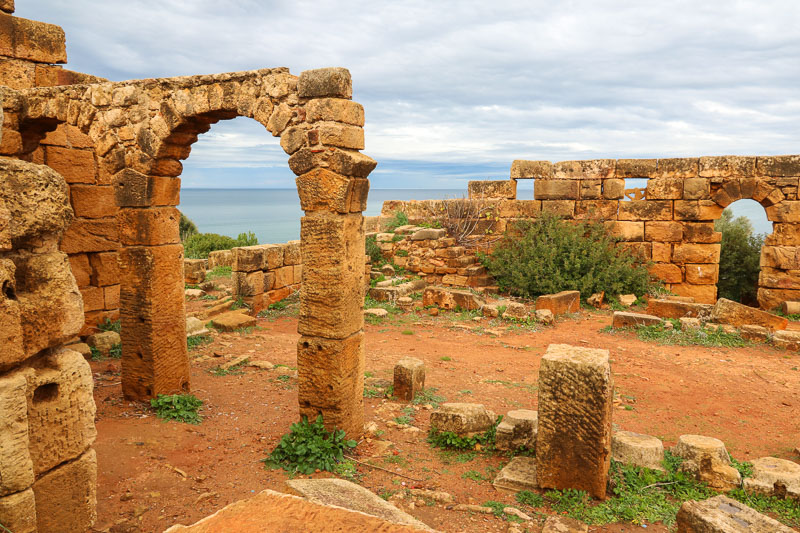
Tipasa Archaeological Site actually consists of three sites; the Royal Mausoleum of Mauretania, the Roman ruins in the town of Tipaza (with a "z"), and then this complex of Roman ruins outside Tipaza. It's smaller than the other site and the vegetation is a bit more wild, but it gives a sense of exploration. Also this site is located right on the coastline with amazing views of both the Mediterranean Sea and Tipaza town with its mountain backdrop.
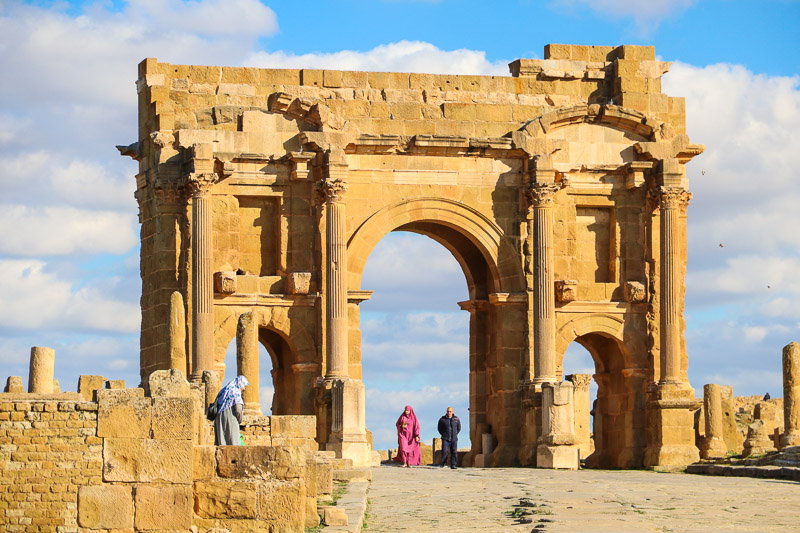
Algeria is littered with Roman ruins, but some are more impressive than others. Timgad is in the absolute top 3 along with Djemila and Tipaza. The site is huge and packed with foundation of buildings. The grid plan of streets paved with large rectangular limestone slabs are so well preserved, it gives you a realistic idea of how it must have been during the Roman Empire. The city was actually covered by sand after the 7th century AD, which is the principal reason why Timgad is in such a good shape. The crown jewels of the site are the 3,500-seat theater, Trajan's Arch, and the Capitol Temple, which has approximately the same size as the Pantheon in Rome - however, only two columns stand in full size today. The small museum at the entrance have many of the fine mosaics on display. Of course Timgad is a UNESCO World Heritage site.
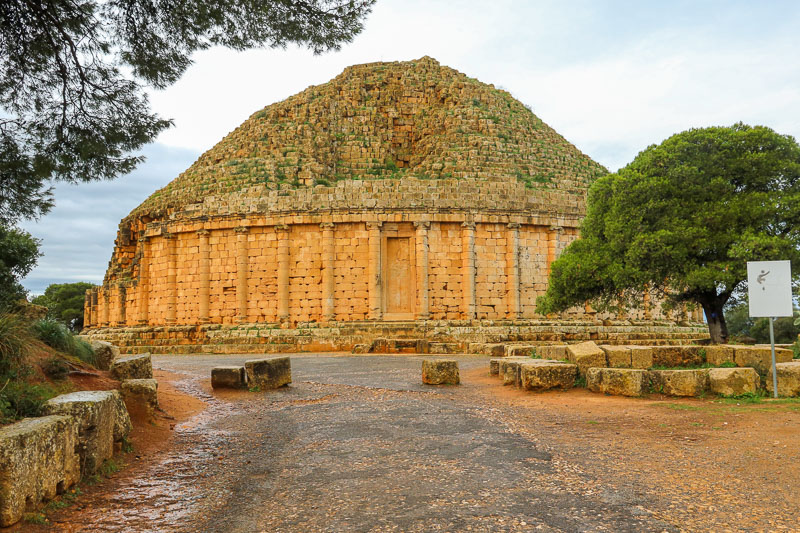
Princess Cleopatra Selene II was the only daughter of Cleopatra and Mark Antony. She married a Berber prince, Juba II, from modern-day Algeria, and together they were given Mauretania to rule, which they did quite successfully. She died sometimes around 6 BC, and her husband had then a mausoleum built. When Juba II died in 23 AD, he was buried inside the mausoleum too. The Royal Mausoleum is along with the two archaeological complexes of Roman ruins at Tipaza a UNESCO World Heritage site.
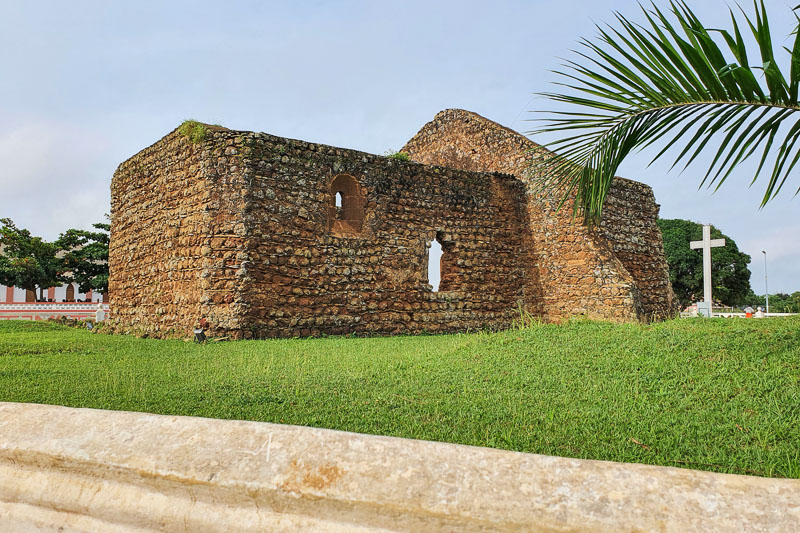
The town of Mbanza Kongo was once the capital of the Kingdom of Kongo, one of the largest states in Southern Africa during the Middle Ages. Later at the end of the 15th century Portuguese missionaries arrived and built the first Catholic church in Central Africa. The church was later extended to a cathedral known as the Cathedral of the Holy Saviour of Congo (in Portuguese Catedral de São Salvador de Congo). The present day ruins are no bigger than a two-story house, but there is also the graveyard of the kings, along with a small, but impressive, museum with artifacts from the old Kingdom. Mbanza Kongo was declared a UNESCO World Heritage site in 2017.
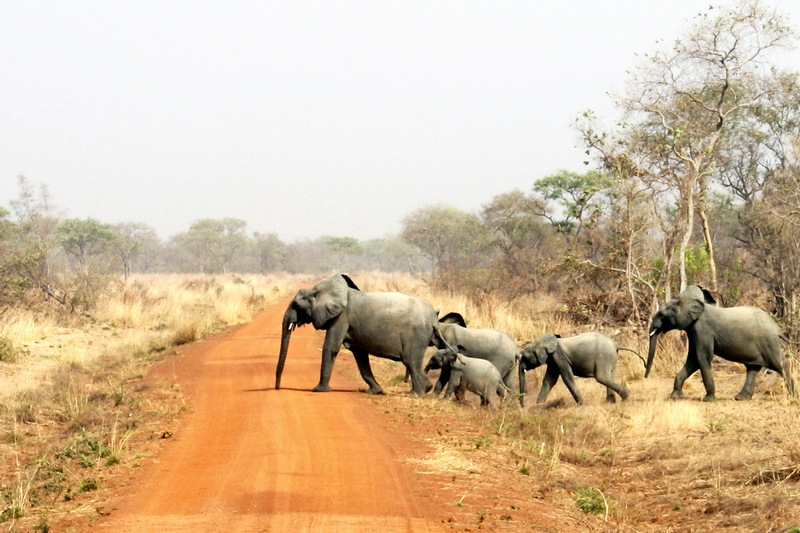
Parc National de la Pendjari is arguably the most magnificent national park in West Africa – it boasts the largest remaining intact ecosystem in the region. The rugged mountains and wooded savannah is a sight in its own right, but visitors are pretty much guaranteed to see elephants, buffalos, hippos and a vast number of antelopes here. Elusive West African lions and the critically endangered Northwest African cheetah also roam the park. However, to spot any of these predators, superhuman persistence and luck are needed. Only a couple of dozen lions are left in the park and when the cheetahs were last counted, back in 2008, only 5–13 individuals called Pendjari home. As with many of West Africa’s national parks infrastructure is limited and hiring a guide is highly recommended. It can be done at the entrance or at the better hotels in Natitingou. Pendjari National Park was added to the existing UNESCO World Heritage site of Parc National du W in 2017, which now constitutes the vast transnational W-Arly-Pendjari (WAP) complex, spread across Benin, Burkina Faso and Niger.