

Historical places in Africa

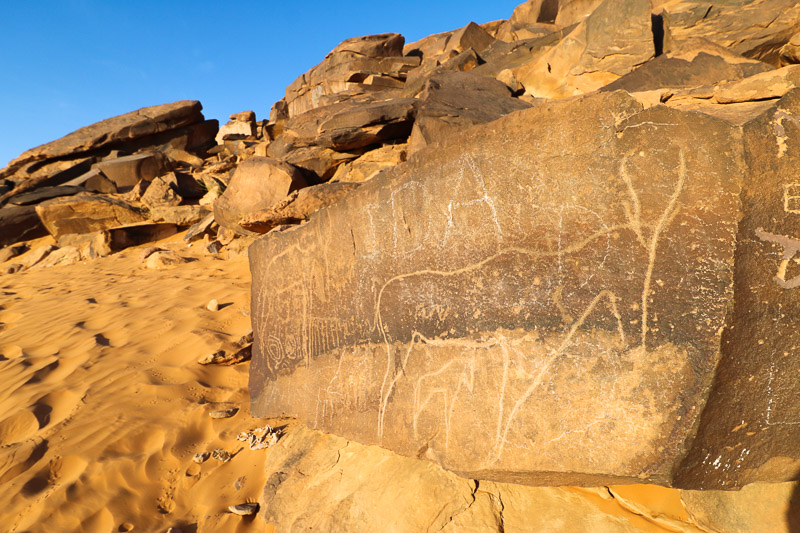
15 km outside Taghit, where the road ends, is a collection of petroglyphs. They are carved on boulders and exposed, so they are easy to find. The figures are animals of many kinds. Unfortunately the site has been damaged over the years with graffiti.
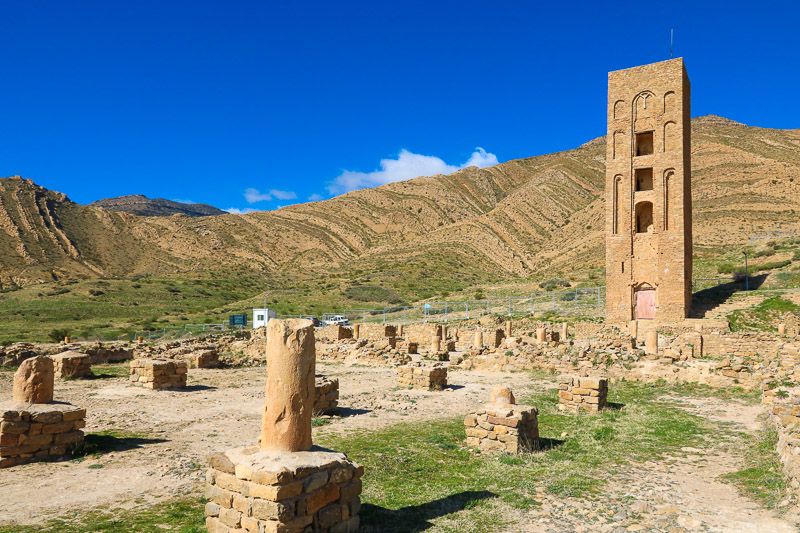
This UNESCO World Heritage site is the leftovers from a 11th century capital city of a Muslim dynasty called Hammadid. They had chosen this stunning location in the mountains at a height of 1000 m above sea level for their first capital. It was a fortified Muslim city, which only existed for 145 years before it was demolished. Not much has survived besides the minaret and some walls, but the journey through the extraordinary beautiful mountain scenery makes it worth your while - particularly by taking the twisted road from Ouled Addi Guebala.
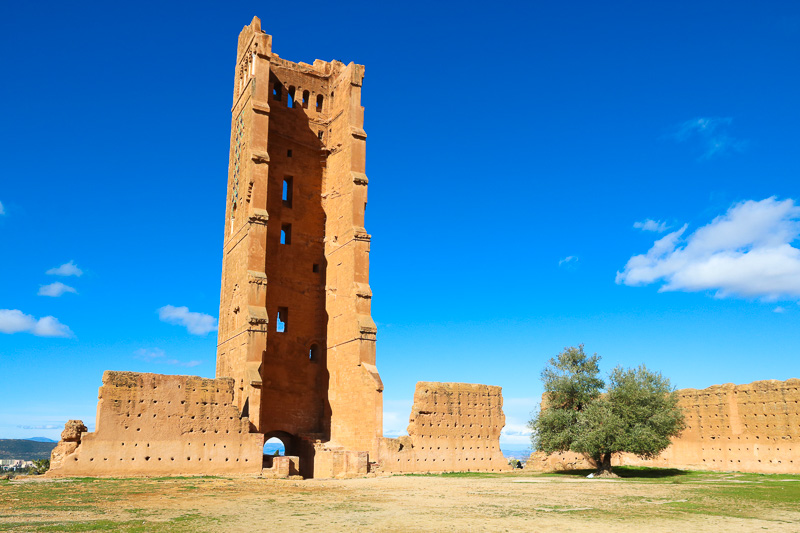
The Mansourah was a settlement founded as a fortified military camp for a siege of Tlemcen in 1306 AD. It was complete with houses, palace and mosque. The massive mosque got rebuilt around 1335 and had a 38 meters tall minaret added. Today only sections of the 12 meters high walls stand along with the still impressive minaret, which is missing one of the sides entirely.
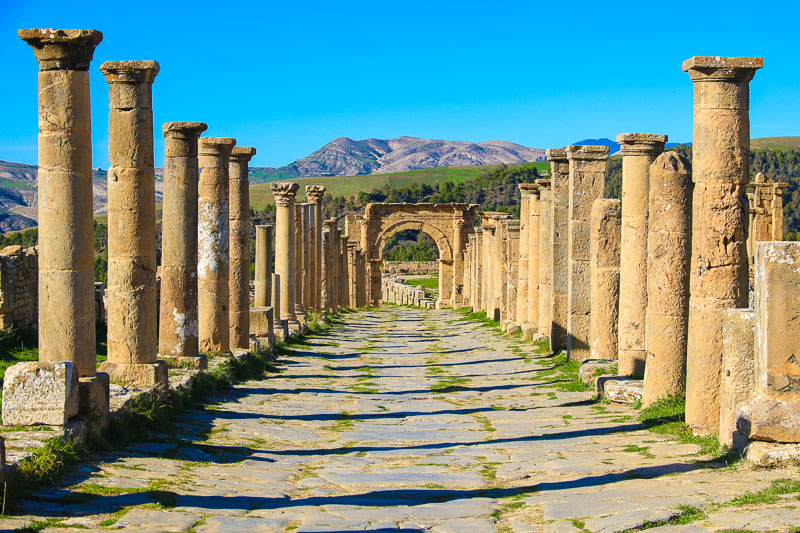
The three most famous Roman ruins in Algeria are Tipaza, Timgad and Djemila. Like the other two, Djemila is also a UNESCO World Heritage site. Stunning set in a green valley with views to mountains. The ruins are well preserved with elaborate houses, temples, baths, public latrine, and marketplace with columns of marble. The grand 3000-seat theatre is nearly complete, apparently without any reconstruction. As you stroll down the elegant cardo maximus between the rows of columns, it's easy to let your imagination wander. Visit also the small museum on site, as it has all the exquisite mosaic floors from the baths and houses.
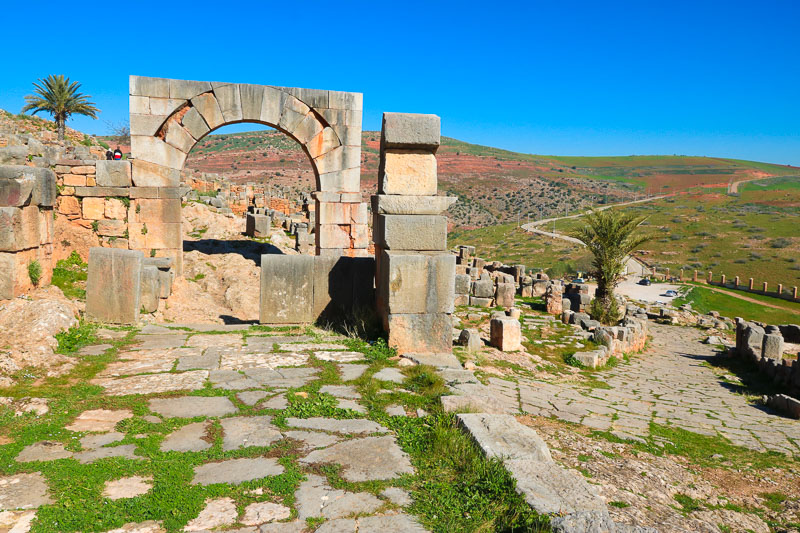
There are many Roman ruins in Algeria, some are UNESCO World Heritage sites, others are not. Tiddis are not, but that doesn't make it any less interesting. Tiddis sits dramatically on the barren mountain slope. The pathways are steep and winding, which are unusual for Roman cities, but those probably predate the Roman Empire back to when Tiddis was a Berber settlement. There are a few fine Roman arches, but otherwise the weather beaten ruins aren't as impressive as some of the other (UNESCO enlisted) Roman ruins. However, the remarkable location with the extensive views over the valley makes Tiddis stand out.
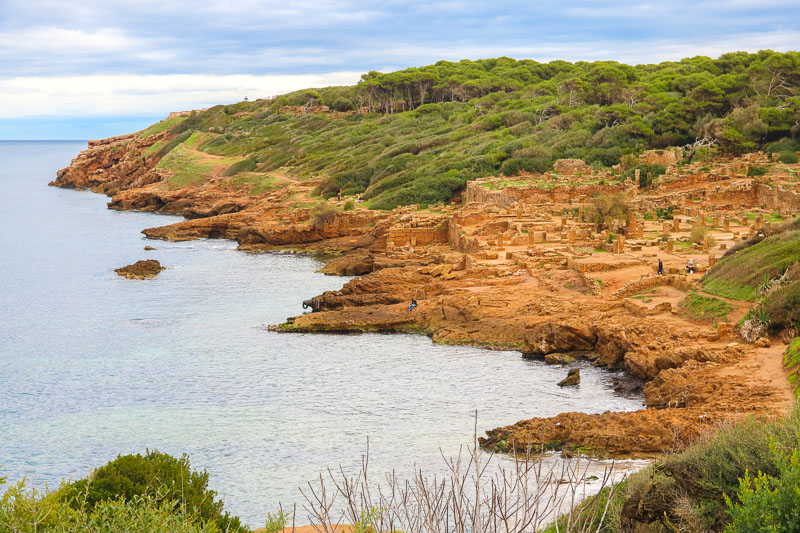
There are two complexes of Roman ruins near the town of Tipaza (with a "z") along with a mausoleum for Cleopatra's daughter. The main archaeological park is this one, right inside Tipaza. It's set spectacular on the coastline among shady olive trees. It's a vast area of Roman ruins holds both theatre, amphitheater, bath and even the remains of a basilica. The park has many secluded corners, which are popular with young couples on dates.
Tipaza (site 1 & 2) is among the top 3 Roman ruins in Algeria (along with Djemila and Timgad) and is a UNESCO World Heritage site.
Tipaza (site 1 & 2) is among the top 3 Roman ruins in Algeria (along with Djemila and Timgad) and is a UNESCO World Heritage site.
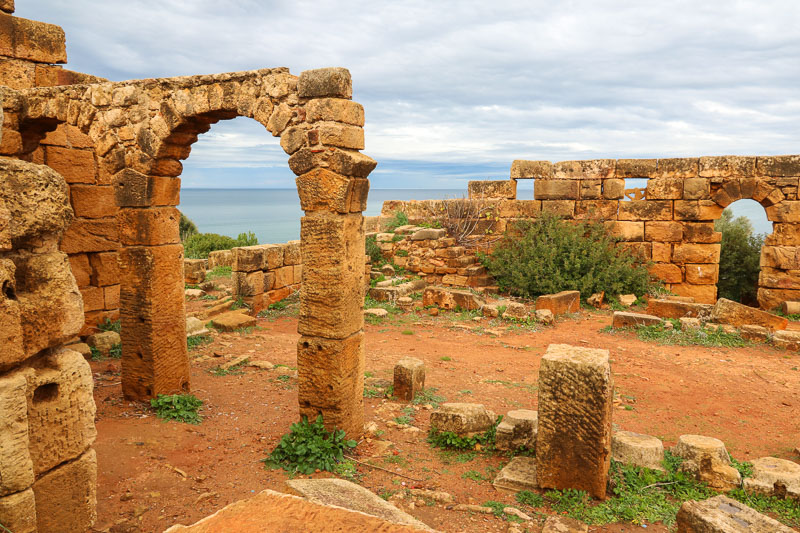
Tipasa Archaeological Site actually consists of three sites; the Royal Mausoleum of Mauretania, the Roman ruins in the town of Tipaza (with a "z"), and then this complex of Roman ruins outside Tipaza. It's smaller than the other site and the vegetation is a bit more wild, but it gives a sense of exploration. Also this site is located right on the coastline with amazing views of both the Mediterranean Sea and Tipaza town with its mountain backdrop.
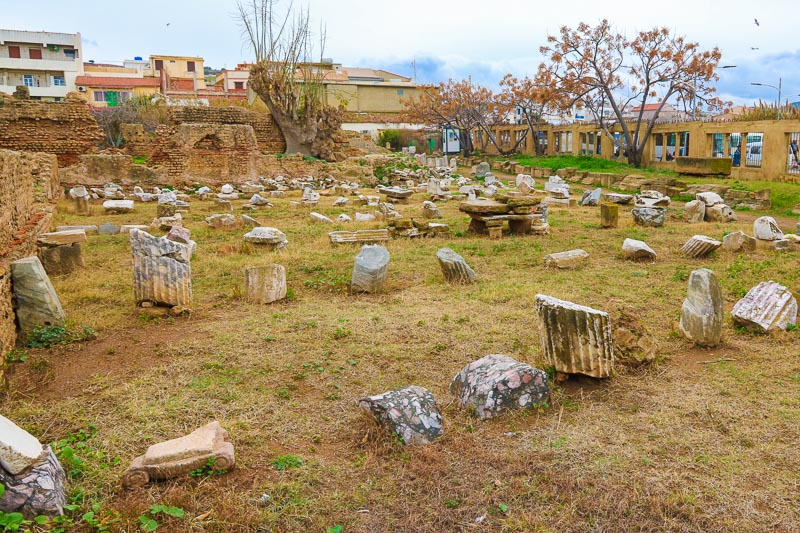
After a visit to the splendid Romain Ruins of Tipaza, you might get disappointed with the ones in Cherchell. The site is rather small and located right smack in the middle of the bustling seaside town of Cherchell, so it lacks the spectacular settings of the ones at Tipasa. It's an enclosed area filled with ruins, where smaller artifacts are laid out in rows on the ground. However, the Archaeological museum a walk away have a fine selection.
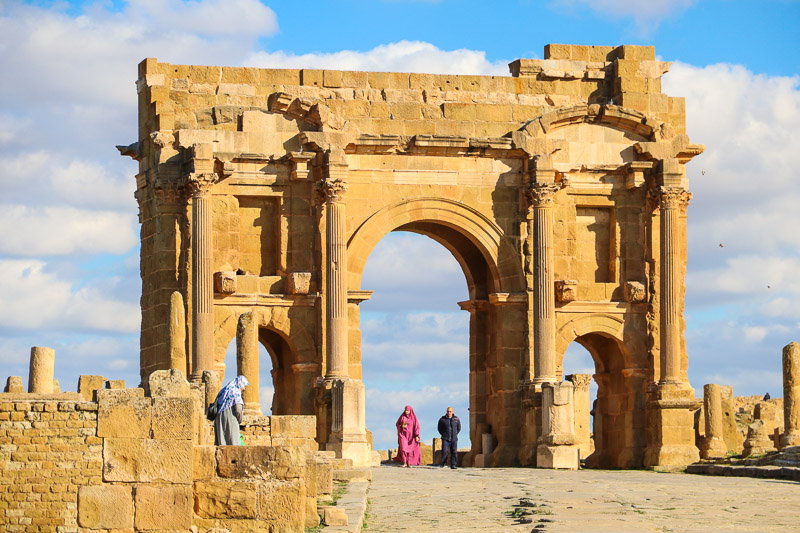
Algeria is littered with Roman ruins, but some are more impressive than others. Timgad is in the absolute top 3 along with Djemila and Tipaza. The site is huge and packed with foundation of buildings. The grid plan of streets paved with large rectangular limestone slabs are so well preserved, it gives you a realistic idea of how it must have been during the Roman Empire. The city was actually covered by sand after the 7th century AD, which is the principal reason why Timgad is in such a good shape. The crown jewels of the site are the 3,500-seat theater, Trajan's Arch, and the Capitol Temple, which has approximately the same size as the Pantheon in Rome - however, only two columns stand in full size today. The small museum at the entrance have many of the fine mosaics on display. Of course Timgad is a UNESCO World Heritage site.
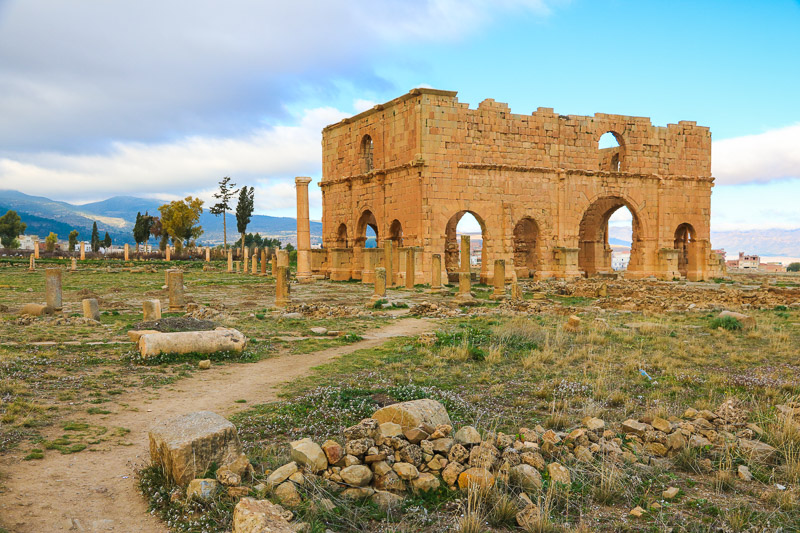
These Roman ruins is some of the lesser-known in Algeria. The town was founded by the Roman military around 125 AD and once served as the capital of Roman Numidia. Today the ruin of the so-called praetorium dominates the site, but there are also temples, baths, arches, aqueducts, and an amphitheater, which could hold up to 12,000 spectators. Over time the site has been victim of quarrying, where stones were removed and reused for building the modern village and the prison nextdoor. There is no entrance fee and it's best to access the site from the main road, not the village.