

Cultural places in Asia

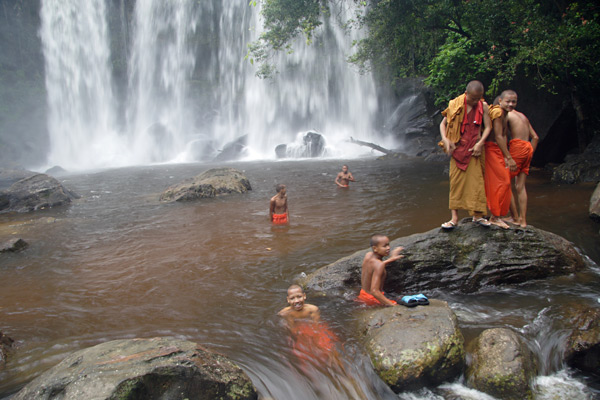
Phnom Kulen (487 m) is a refreshing side trip from touristy Siem Reap. A sacred mountain with a wat housing a huge reclining Buddha carved out of the top of a huge boulder. The place also doubles as a recreational area for Khmer families, who come here to relax and enjoy themselves. Under the nearby waterfall, you can splash around with the locals and wash some of the dust off from the rough ride coming here. Combine the trip with a visit to Kbal Spean (the River of Thousands Lingas) and Banteay Srei, a hindu temple with some of the best Angkor carvings.
© Louise Brønden
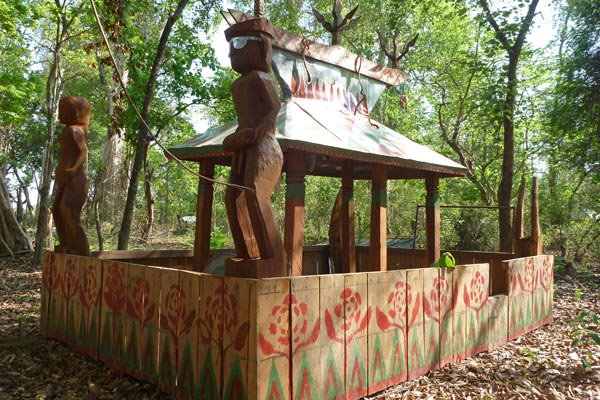
The ethnic minorities of northeast Cambodia, like the Tompuon people at Kachon village, bury their dead in some rather elaborate graves in the forest. The concrete tombs can have fences, wooden elephant tusks, thatched roof and the entrance is guarded by carved statues of the deceased (man and wife are buried at the same place) - some with very explicit genitals. The cranium of the buffalo that got sacrificed during the burial ceremony hangs at the front and the family of the deceased often places things that the dead can use in afterlife like bottles, pots, local whiskey, yes even sunglasses. Be sensitive when visiting a tribal cemetery, so you don't offend the locals nor the spirits.
Similar cemeteries can also be seen near Kon Tum in Vietnam.
Similar cemeteries can also be seen near Kon Tum in Vietnam.
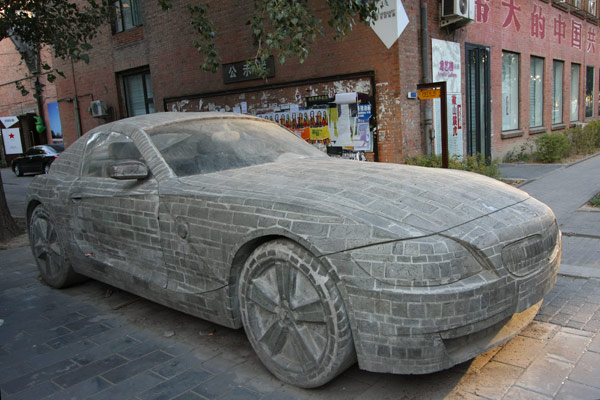
An old factory area turned post-industrial arty with all kinds of crazy studios, contemporary art galleries, über-chic coffee shops and now even fancy restaurants and clubs. You could spend days here, just wander from one art exhibition to the next. The art community has gone from underground to well-established these days with international exhibitions. The art installations even expand into the streets, where you will be met by grotesque sculptures and everyday items in unusual ways - we like the life size sports car made in bricks.
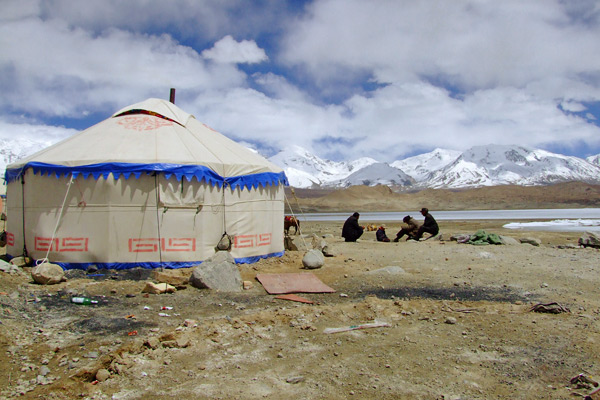
Some travellers might think they have China all figured out after a couple weeks of travel. Mannerisms, appearances, food and even language might seem to blend all into one. But that all changes with a visit to Xinjiang province. The far western province seems like a totally different planet when compared to the rest of the country. The predominantly Uighur population speaks a language closer to Turkish than Chinese. They're also mostly Muslim. And along with their Central Asian brethren, hospitality is paramount. The opportunity to stay in a Yurt (nomadic tent) on the edge of a beautiful lake while playing a Komuz (traditional guitar) is a Chinese experience most people never even imagine.
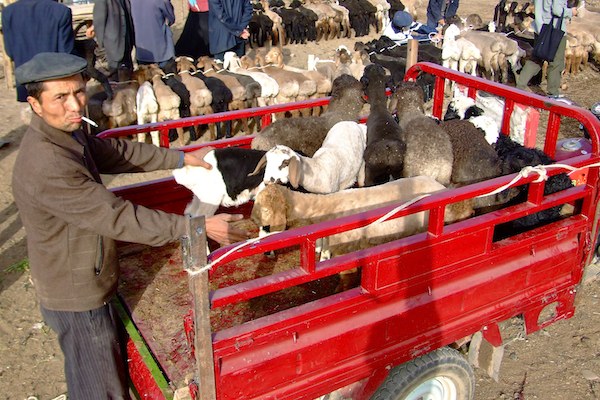
There are a few legendary markets around the world. The Grand Bazar in Turkey... Merkato in Ethiopia... but few have the allure of the Sunday livestock market on the outskirts of Kashgar. Every week, buyers and sellers and onlookers flock (no pun intended) to an otherwise empty lot to check out the local products. Sheep, goats, horses, camels and nearly everything else in between are up for grabs. Bargaining is hard. And whether it's for breeding, or even better afternoon meal, animals are quickly sold, bought and shipped off to who knows where. The chance to have a nice meal on the grounds is great too. And the meat could not be any fresher!!
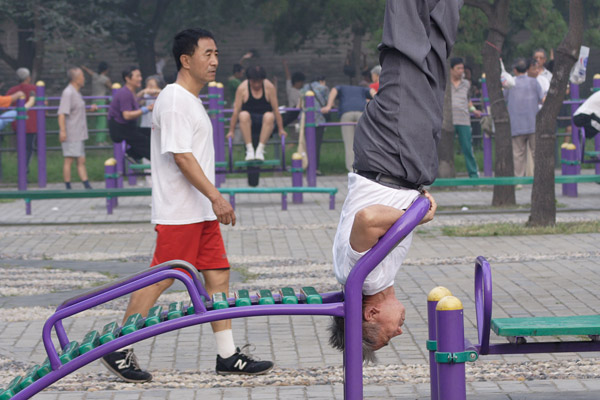
If you want to start the day in real Chinese manners, go for some morning exercise. Though this is done all over Beijing, no place is better than the park of Temple of Heaven, Tiantan. In every corner, morning fresh Chinese do Tai Chi, sword dance, fan dance, Chinese yo-yo, jogging and weird stretches. A corner of the park is even equipped with colourful public machines and you are welcome to join in, but it might be downright dangerous to copy what some of these elderly Chinese are capable of.

Sky burial is a Tibetan custom for giving back the earthly remains after death, when the soul has left the body for reincarnation. The body is simply sliced open and offered to waiting vultures that rip the flesh from the bones within minutes. Afterwards, the bones, along with the skull and brain, are smashed to pieces with an axe and mixed with barley flour and again offered to the still waiting vultures. Besides being a mind blowing experience (and not for the faint hearted), it's also a very rare opportunity to get close to these monster birds of prey, some of them very rare (such as Black and Bearded vultures). Remember this is not a tourist attraction and an invitation should be obtained before attending. (The picture was taken with permission from the descendants).
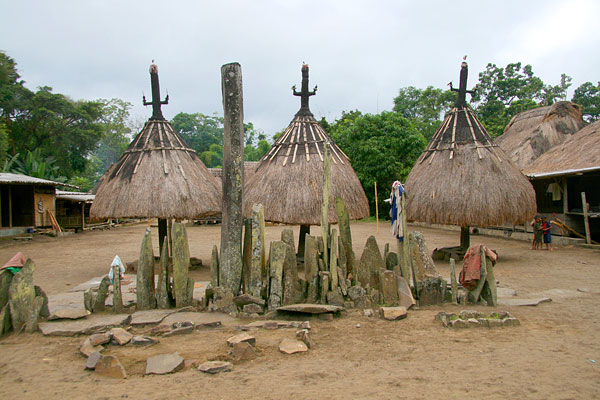
In the highlands at the foot of volcano Inerie, around Bajawa town, the people of Ngada lives. Though some Ngada villages are fairly modern, traditional ones still exist. The wooden houses are high roofed facing each other in two rows along an open courtyard with several ancestral structures. The ngadhu, a carved pole with an umbrella-like thatched roof, and the bhaga, a small spirit house, always come in pairs. The good spirited Ngadas are betel nut chewing and machete wearing, and very welcoming. The pretty village of Bena is probably the most famous, but also the one that sometimes receives busloads of tourists. Other villages, like Bea, hardly see anyone and can be more rewarding regarding traditional life. If you are lucky, you might bump into a ceremony with a traditional pig or buffalo sacrificing. It is best to bring a guide from Bajawa to translate and make sure you don't commit some cultural suicide.
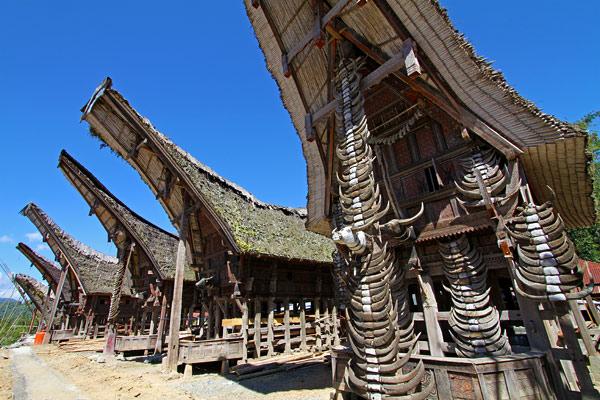
Tana Toraja is a region of exceptional beauty and soaked in the rich Toraja culture. The pretty countryside is a patchwork of mountains, terraced rice paddy fields, and small villages with rows of traditional Torajan houses with boat-shaped roof. Since death plays a central role in the Toraja culture, many of the region's sights have something to do with that. There are cave graves, hanging coffins, "baby in a tree" grave, and the very bloody Torajan funerals, where pigs and buffaloes are slaughtered in great numbers. Strangely – or should we say luckily – the Toraja people don't mind uninvited guests to these mind blowing events, as long as you act accordingly (wear dark and bring a gift). The main town in Tana Toraja is Rantepao and where most travellers base themselves, while exploring the region, but there are homestays throughout the region. It is recommended to hire a guide for the graves can be hard to find, and they know when and where the funerals are and what to bring.
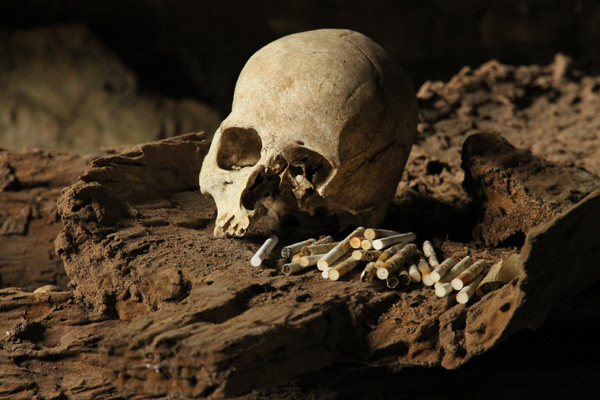
The Toraja people have several ways to get buried. Babies can get buried inside a trunk of a particularly chosen tree. Grown ups can get a house grave in a more normal looking mausoleum made of concrete and tiles. A more fascinating burial tradition are the cave graves, where a small cave is hollowed out of a boulder and mounted with small door and maybe guarded by tau-tau statues who looks like the deceased. This kind of graves are still in use today. Previously they also hang the coffins inside natural caves. There a family could have a hanging coffin and restuff it every time a family member passed away. Though this tradition has more or less eased out, there are still a lot of hanging coffins left in the Tana Toraja region, some not dating more than 20 years back.