

Food and Drinks in Asia
1 2

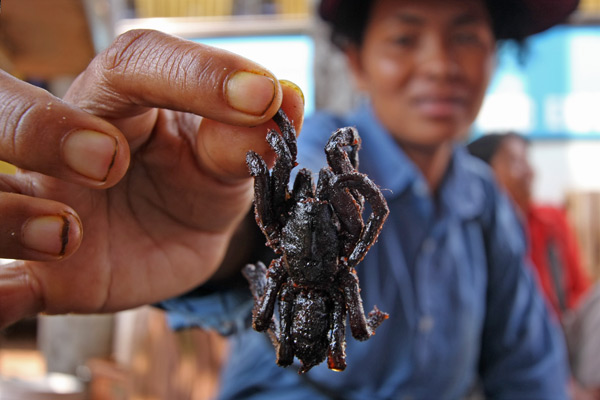
A traditional snack in Cambodia is fried insects. Anything goes, but big hairy spiders seem extraordinarily popular. The small village of Skun on the highway 6A, between Phnom Penh and Siem Reap, is renowned for its deep-fried tarantulas, along with grasshoppers, crickets and beetles. The place has become so popular that even tour buses stop here now. So what does a tarantula taste like? The hairy legs are just crispy, but the big abdomen is full of gooey, yummy guts. Just squeeze and enjoy.
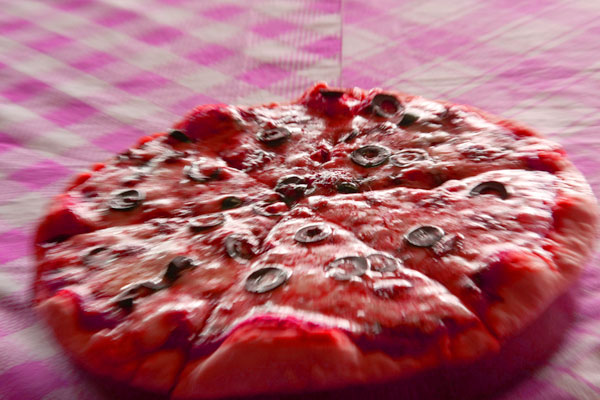
In Cambodia, it is possible to have your pizza served "happy". It is an unique Cambodian cuisine and means your ordinary pizza will be garnished with a bit - sometimes a lot - of "happy herbs". Yes, this means ganja/marijuana/pot/weed, whatever you call it. In the good old days (1990s) when Cambodia was the Wild East, every pizza place served happy pizzas, but, nowadays, due to Cambodia's more strict drug policy (yes, "happy herbs" are also illegal in Cambodia) "happy" might only be a buzz word on the menu used instead of "delicious" or "yummy". So if you don't want to have anything to do with drugs omit "happy" food. However, if you do want to get stoned, ask whether "happy" really is that happy. Other food items can of course also be upgraded to "happy" like the equally famous happy shake.
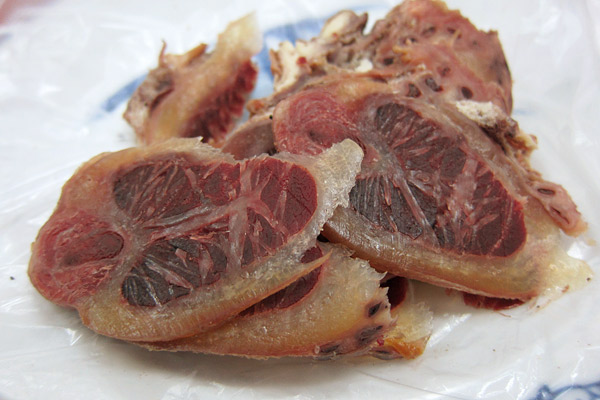
Donkey meat is considered a delicacy by the Chinese. It is sold in dedicated donkey restaurants, which are easily recognisable by the donkey on their signs. The most popular dish is probably the "donkey burger", a bread with chopped donkey stuffing that is sold for a few kuais. Chinese men though tend to go for a bit more delicate part of the donkey, namely the penis. The monster will be sliced into mouth fitting pieces and served on a plate. The slices are sometimes referred to as "donkey coin money" and can be a bit pricy, but luckily you don't have to buy the whole willy.
We have of course tried it and can only... eh, recommend it. Bon appetit!
We have of course tried it and can only... eh, recommend it. Bon appetit!
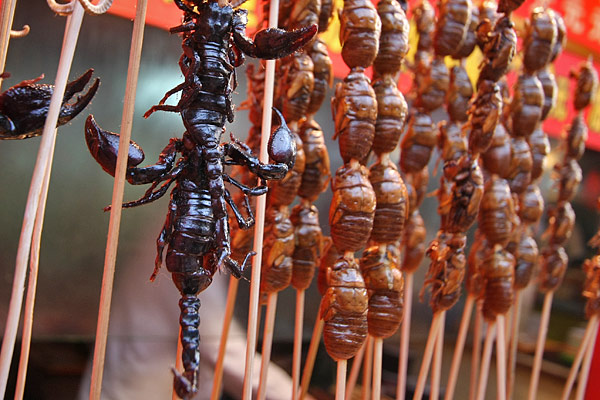
Small food stalls fill the narrow so-called "snack alley" that springs from the shopping street of Wangfujing. Here you find the usual snacks that Chinese just love, like BBQ sticks, pig stomach and candied fruit, but the main attraction are the exotic sticks. We are talking insects, worms and, even weirder, seahorses and starfish. The big black scorpions go down well, but we did not try the dry-looking starfish!!!
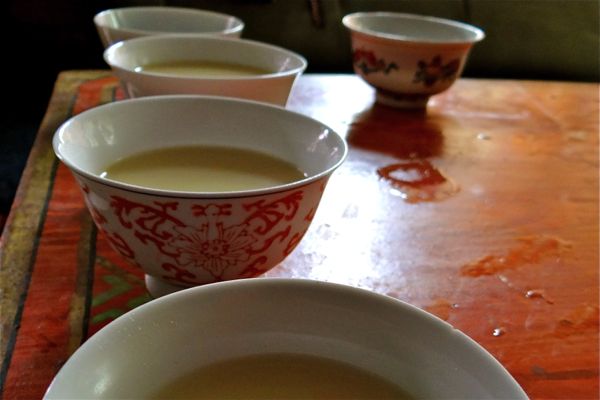
Yak butter tea is available all over Tibet. If you visit a local Tibetan family, you can be sure that they will offer you this drink. The tea is very very rich, since based on butter, and is definitely not to everyone’s taste. Tibetans drink yak butter tea regularly and because it’s very rich in calories, it’s a good drink for high altitudes. Since based on butter, the tea is obviously also very greasy, which actually makes it a good cure for chapped lips, which is why Tibetans never need to use lip balm.
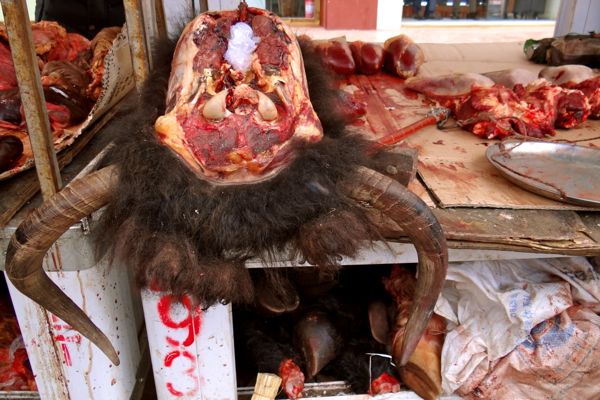
Many places in Tibet you see yaks grassing along the roads and on mountain sides. They are everywhere, also on the menu. You can get yak soup, yak stew, yak dumplings, etc.
Yak meat is sold in market places and at butchers, where every part of the animal is for sale; head, intestines, organs, you name it. When you see the meat lying or hanging around the streets, you kind of try to supplant that that’s probably also where restaurants get their meat from.
Yak meat is sold in market places and at butchers, where every part of the animal is for sale; head, intestines, organs, you name it. When you see the meat lying or hanging around the streets, you kind of try to supplant that that’s probably also where restaurants get their meat from.
© Sarah Hishan
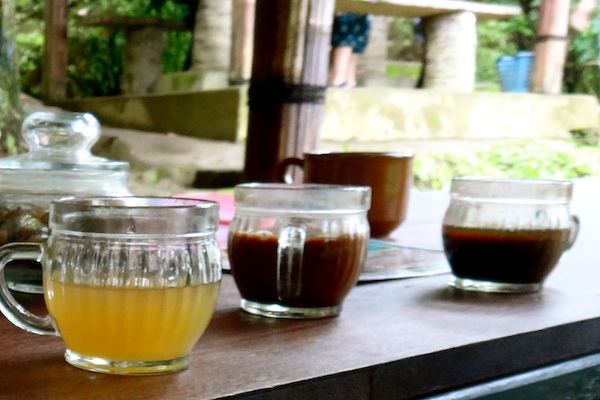
Bali isn’t all about temples and beaches, it could stun your taste buds too. Luwak coffee is a rich, smooth coffee with an earthy, unique undertone and what an undertone it is... the secret? The Asian Palm civet. It spends its nights consuming the finest and ripest coffee berries while local farmers spend their mornings eagerly collecting the beans from their droppings and top grade coffee results. Yes, you'll be drinking from coffee beans defecated by another mammal. But produced in the villages of Bali, Luwak coffee is the most expensive and rare coffee in the world and also quite literally, consuming it may be a one of a kind way to take this compelling island home with you. Almost all farms produce other types of coffee and tea including the distinctive Bali and Ginseng coffee in addition to Ginger and Lemongrass teas. This may be reason enough to visit a coffee plantation, but the little huts with scenic views and the free coffee tastings that almost all farms boast adds to the experience.
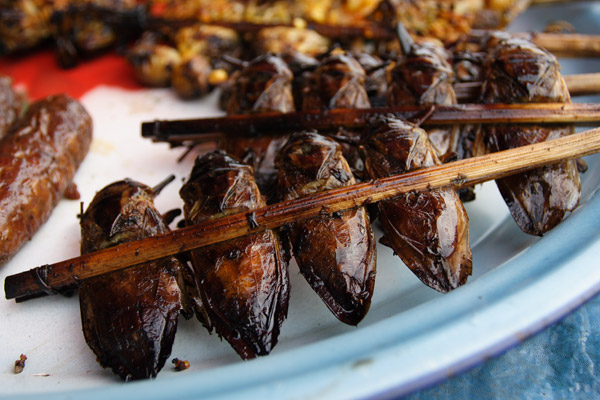
The Lao people eat pretty much anything, so why not giant water bugs? The Latin name for these insects is Belostomatidae and they can reach up to a monster size of 9 cm. The locals love them and you can probably get used to the gooey bits that explode in your mouth when chewing them.
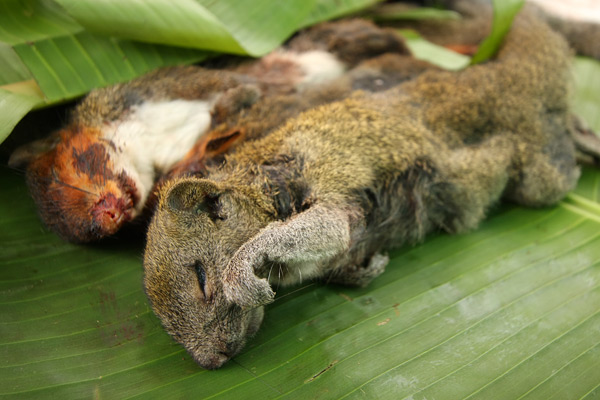
It seems that anything that can be shot down with a slingshot is considered a delicacy in Laos. Most local markets in northern Laos have a few vendors selling freshly killed jungle animals, like squirrels, forest rats, mouse-deers and other jungle rodents, along with smoked bats and colourful birds. There might even be a few live animals hidden in a basket somewhere. The hunters normally use either a slingshot or a home-made shotgun that uses ammo made of UXO (unexploded ordnance), war leftovers from the heavy bombing of Laos during the Vietnam War. Though jungle meat is a part of Lao food culture for some ethnic minorities, we strongly discourage you to try it.
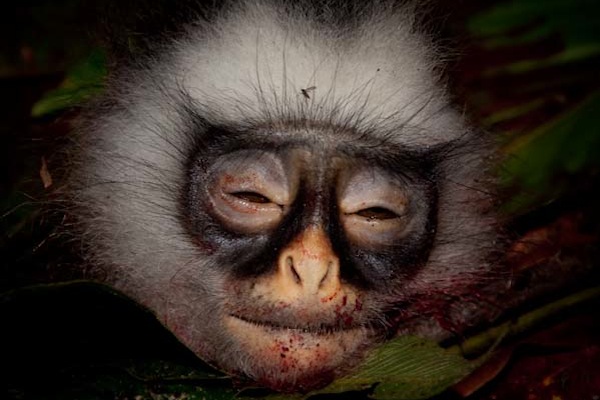
If you like monkeys, this might not be for you... but one of the main meat sources for indigenous groups throughout Sarawak is monkey. There are many different species (nine, to be more precise) to choose from for a traditional jungle meal, but it really depends on what the hunters catch. They can prepare it in many ways, and each way tastes unique - yes, even delicious. If in a small village, keep in mind that dinner is whatever the hunters catch, and in Borneo there are a lot of options of things to hunt!
1 2