

Buildings and Architecture in Europe

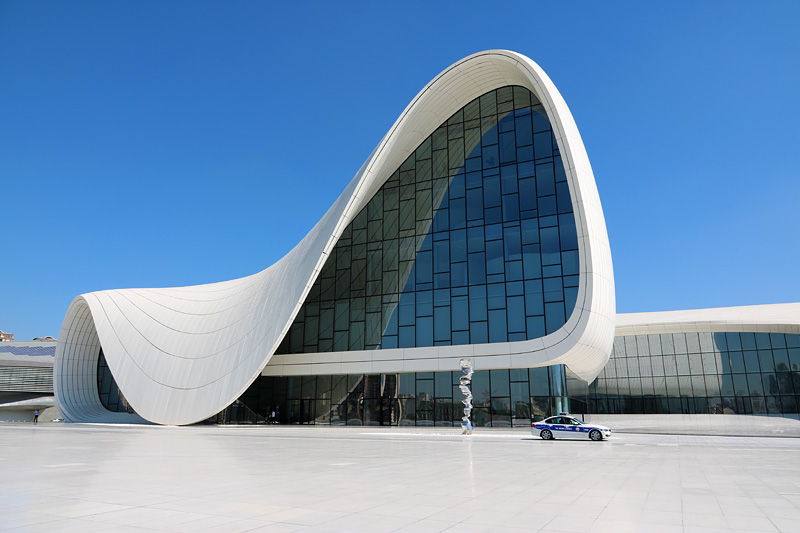
Few buildings are as iconic as the Heydar Aliyev Center in Baku. The masterpiece was completed in 2012 and is the brainchild of Iraqi-born British architect Zaha Hadid, who have also designed the BMW Central Building (Leipzig, Germany), MAXXI (Rome, Italy) and London Aquatics Center - just to mention a few. Most visitors to Heydar Aliyev just wander the massive grounds to take in the vast building complex from every angle, but the cultural center actually host various concerts in addition to the odd permanent exhibition of gifts received by Azerbaijan's presidents.
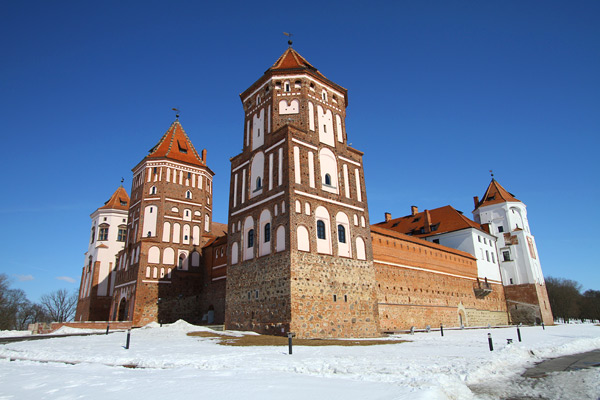
Mir Castle is a real 16th-century castle with towers, spires, courtyard and everything. It's one of the few UNESCO sites in Belarus and a must-do day trip from Minsk. The castle has recently been through a total makeover, so it once again is complete. The interior has been cleverly rebuilt so the new modern exhibition rooms morph together with the original structure. Existing castle rooms are set up as dining room, meeting hall, etc. like in the old days, with antique furnitures and paintings. Information is only in Belarusian, but you can make sense of most of the stuff without.
Another great sight in Mir is Mir village itself across the road. Colourful wooden cottages make up most of the village and there are some pretty churches too. It might be your only change to have a peek at rural Belarus.
Another great sight in Mir is Mir village itself across the road. Colourful wooden cottages make up most of the village and there are some pretty churches too. It might be your only change to have a peek at rural Belarus.
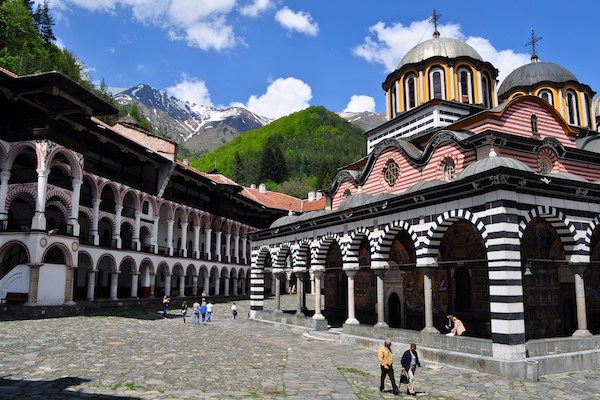
UNESCO rarely gets it wrong. Amazing buildings, beautiful nature and cultural heritage fill the list of sites around the world. Nestled deep in the pristine Rila Mountains of South-western Bulgaria is the Monastery of Saint Ivan of Rila (aka Rila Monastery). There is little question to those that visit the nearly 1,000 year old site (rebuilt a few times), that the monastery is most worthy of its UNESCO honour. The beautiful building set with a dramatic mountain backdrop are the things that postcards were designed for. Some may dismiss it as touristic. But an overnight stay is well rewarded as the day-tripper leave the place virtually deserted once they head back the the capital. Serene, beautiful, cultural. It's what historical sites were meant to be.
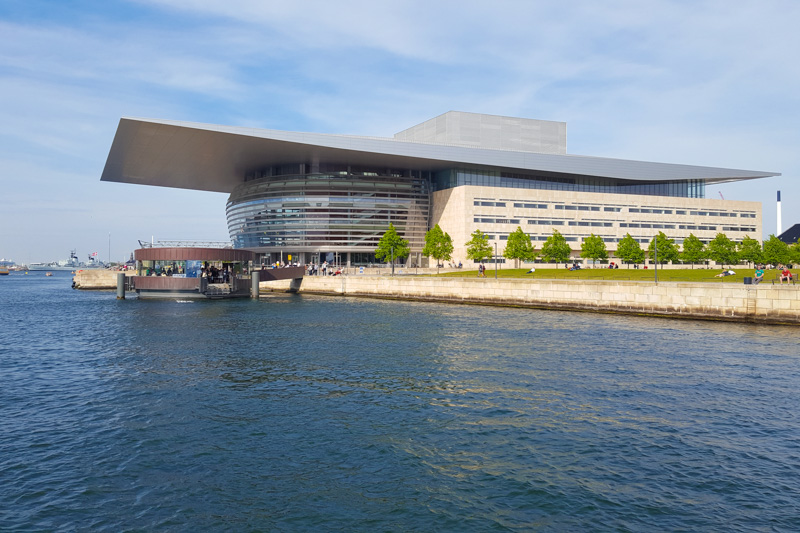
From the distance Copenhagen Opera House doesn't look that big. It's only when you get up close, that you can grasp its gigantic proportions, particularly the 32 meters long overhanging of the roof (also used for high diving competitions). The opera house was completed in 2004 with an exorbitant price tag of well over US$500 million, making it one of the most expensive opera houses in the world. It was donated by A.P. Møller (at that time, the richest man in Denmark and the founder of Maersk shipping) and designed by the equally famous Danish architect Henning Larsen. The strong minded A.P. Møller added so many alterations to the original design, that the architect left in protest before the opera house was finished. While the exterior is very slick, the interior is more flamboyant with pieces of Danish artists (among others Per Arnoldi, Per Kirkeby and Tal R). The three big chandeliers hanging in the foyer are created by the Danish-Icelandic artist Olafur Eliasson. At night time, the three lamps can resemble the three yellow discs on Christania's flag, which have people speculate whether Olafur Eliasson did the hidden tribute to the hash smoking free town on purpose.
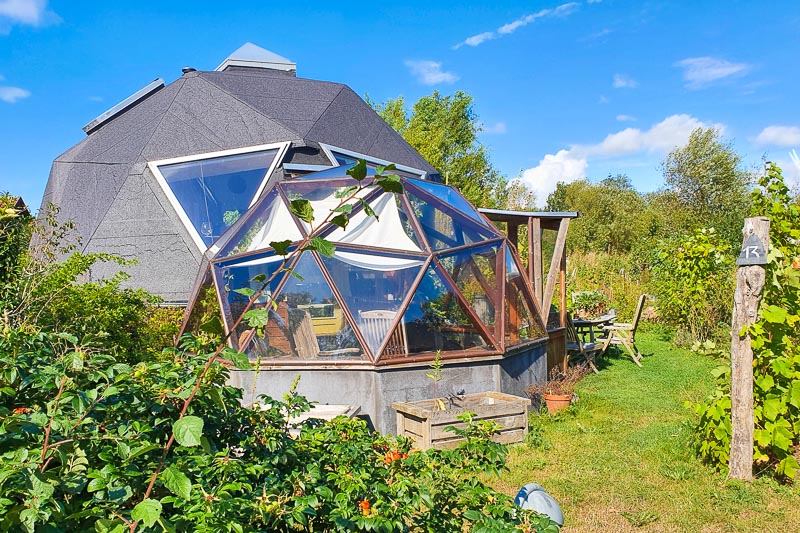
In the outskirts of the traditional village of Torup lies the eco community of Dyssekilde. It was created in 1990 on the land of a potato farm. Today the community consists of 91 homes, which have been built with social interaction, sustainability, and ecology in mind. Though they have building regulations in Dyssekilde, you can find alternative houses in almost any shape, size, and materials. It's, of course, a car free zone, but you can park at the parking lot and explore the vibrant neighborhood on foot. Keep in mind that people actually live here, so show respect.
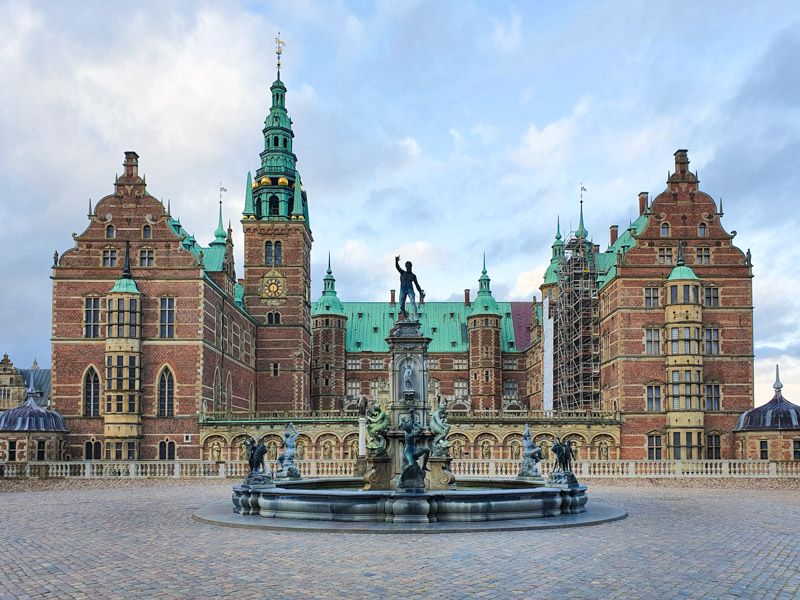
Though Hillerød is a charming historical town, most visitors come for the splendid Frederiksborg Castle and its massive garden. The Renaissance castle was built as the royal residence for King Christian IV in the early decades of the 17th century. Like a true fairy tale castle, it's constructed on three small islets in a lake. Today it functions as a museum. The stunning Baroque castle garden is almost as impressive, with its symmetrical design and perfectly straight hedges.
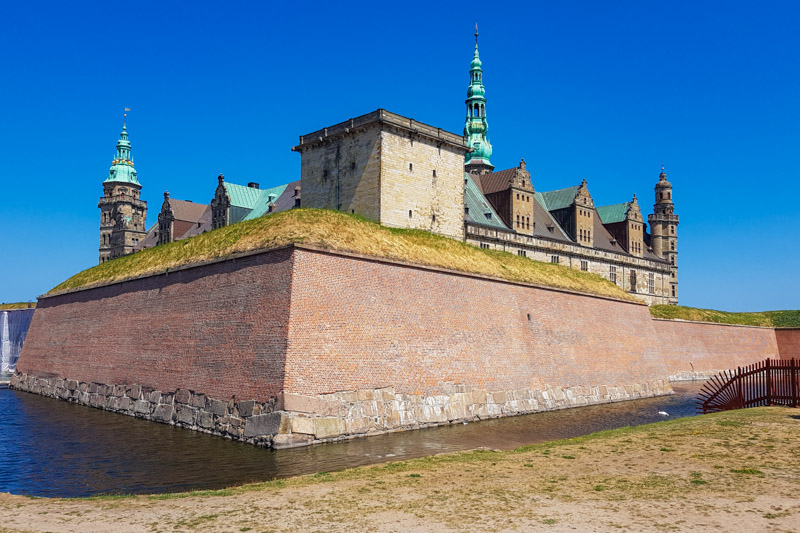
"There is something rotten in the state of denmark" is a famous quote from the Shakespeare's play Hamlet, which is set at Kronborg Castle (called "Elsinore" in the play). Shakespeare never went to Kronborg, but some of his actors did in 1586 and they probably told him about the fancy castle with all the drinking and partying, which might have inspired Shakespeare.
Around year 1600, the castle was one of the finest in all of Europe with its 62 meters long dance hall. It was originally built as a stronghold in the 1420s, but was radically transformed into this extravagant Renaissance castle by King Frederick II in the late 16th-century. It burnt down in 1629, but it was subsequently rebuilt. In 1658 Kronborg was besieged and captured by the Swedes, and in 1785 the castle ceased to be residence for the royal family. Kronborg Castle is the only UNESCO-listed castle in Denmark.
Around year 1600, the castle was one of the finest in all of Europe with its 62 meters long dance hall. It was originally built as a stronghold in the 1420s, but was radically transformed into this extravagant Renaissance castle by King Frederick II in the late 16th-century. It burnt down in 1629, but it was subsequently rebuilt. In 1658 Kronborg was besieged and captured by the Swedes, and in 1785 the castle ceased to be residence for the royal family. Kronborg Castle is the only UNESCO-listed castle in Denmark.
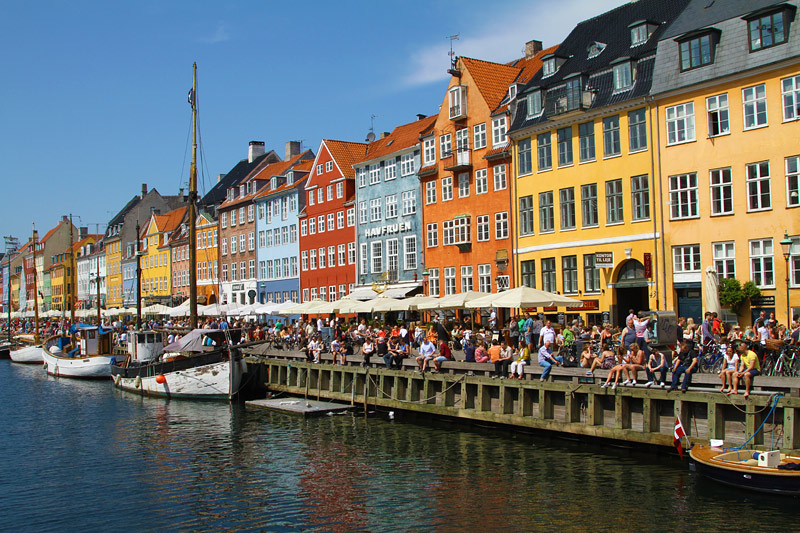
Nyhavn means "new harbour" in Danish and is where the sailors came to shore back in the days when Denmark was a big seafaring nation. It was a rowdy place with pubs, tattoo parlours, and strip joints. Today Nyhavn is still a popular place to have a beer or a traditional Danish open-faced sandwich. The restaurants are mostly used by tourists, since locals find them overpriced. Instead, the Danes just buy beers in a shop and sit at the quay. The row of colourful town houses, which make Nyhavn so iconic, are from the 17th century and H.C. Andersen lived here for many years.
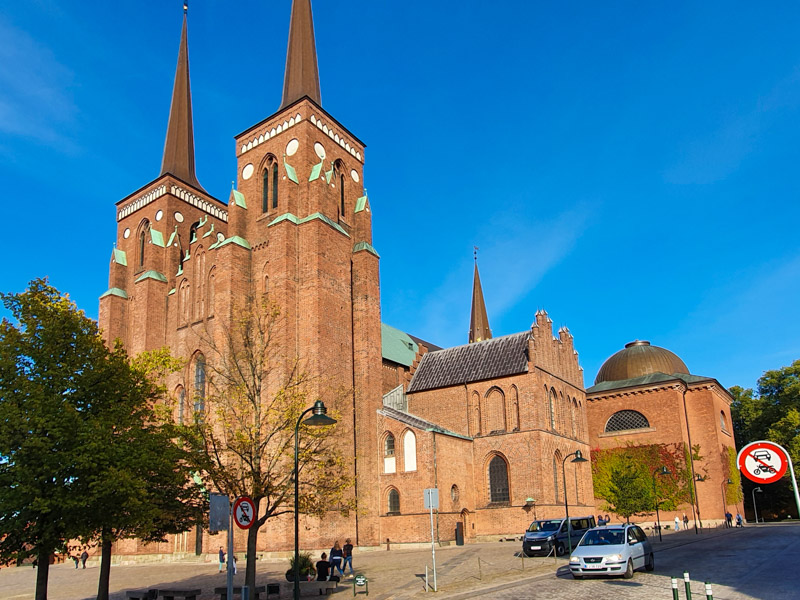
The spectacular Roskilde Cathedral is the most important church in Denmark. It has been the royal burial church for 38 Danish kings and queens, not including Harald Bluetooth (Harald Blåtand) and Sweyn Forkbeard (Svend Tveskæg), who were also buried in Roskilde, but their sites are unknown. The cathedral wasn't built as one complete structure, instead it has extended and altered over 800 years, since it was first constructed during the 12th century. Roskilde Cathedral is, of course, a UNESCO World Heritage site.
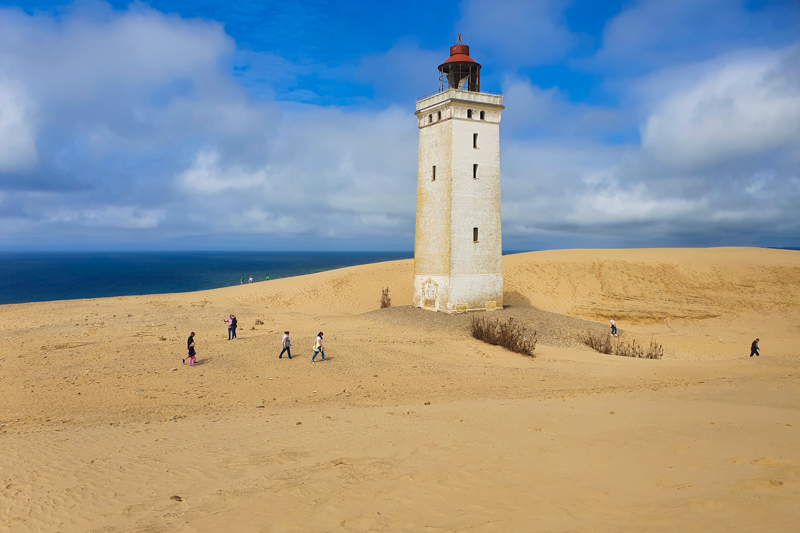
On the high cliff of Rubjerg Knude a lighthouse was constructed in 1900. For the first many decades the lighthouse was struggling with drifting sand. Then navigation technology made the lighthouse redundant in the 1960s, but the lighthouse building was kept as a landmark (and housed a sand drifting museum at some point). However, every year the harsh North Sea took a bite of the cliffs. Eventually the edge of the cliffs had moved so close to the lighthouse that it was in danger of falling into the sea. So in 2019 the lighthouse was moved 70 meters inland, hopefully prolonging its life for many years.