

Religious places in Europe

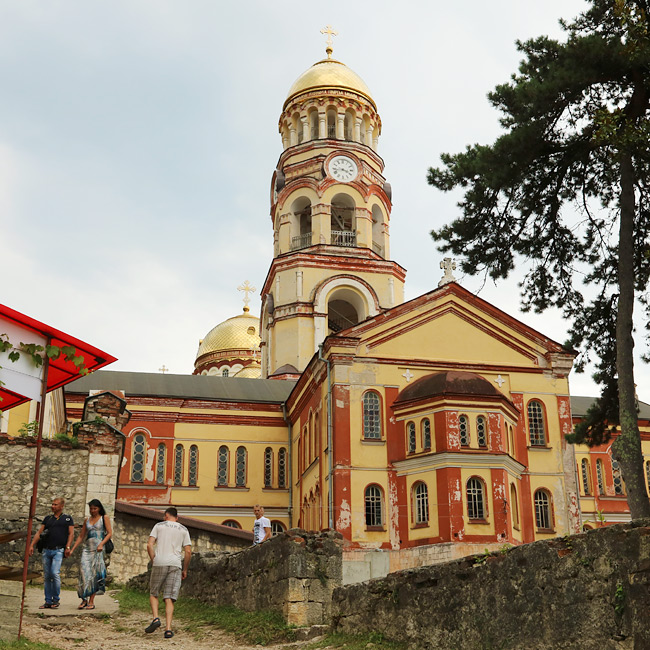
Akhali Atoni Monastery is one of the three sights in Akhali Atoni along with Saint Simon Church and the cave. The monastery is pretty pearched on a outcrop with fine view over the rest of Akhali Atoni. It was founded by Russians monks in the 1870s and houses about 720 of them. Today, the cathedral has been turned in museum with coulurful murals.Though the trails are steep, you can walk between the church, monastery and cave, making Akhali Atoni a perfect daytrip from Sukhumi.
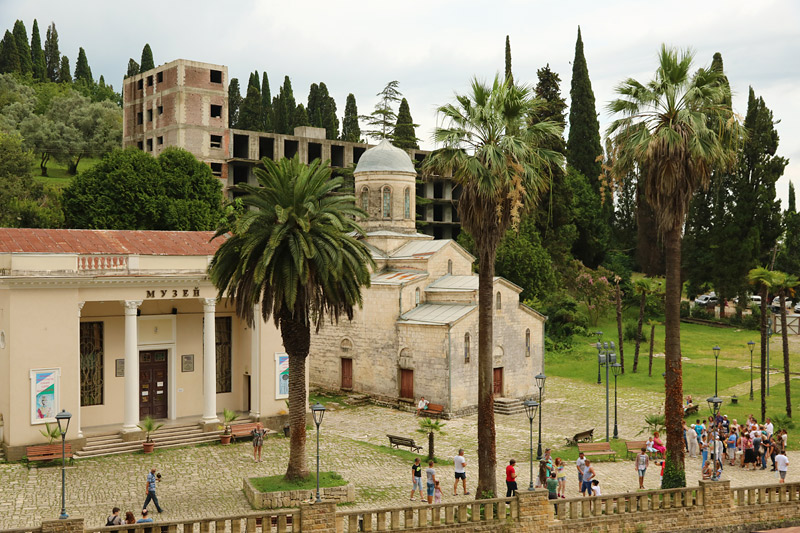
Akhali Atoni has three tourist sights, where Saint Simon the Canaanite Church (also known as Church of Simon the Zealot) is one of them. Like with the other sights, the area around the church is turned into, what most will call, a tacky tourist hell for the many Russian tourists. There are cafes and restaurants, small stands selling everything from local made wine to honey, and if you are looking for to have your picture taken with a hawk, owl or bear cub, that will sadly be possible too. The church itself is a 10th-century Georgian church built on the ruins of a fourth-century church and now sadly on a backdrop of an abandoned construction. The church is dedicated to Saint Simon the Canaanite, an apostle who came here in AD 55. For a more interesting way to reach the church, follow the short trail along the river, which starts at the fine old abandoned train station.
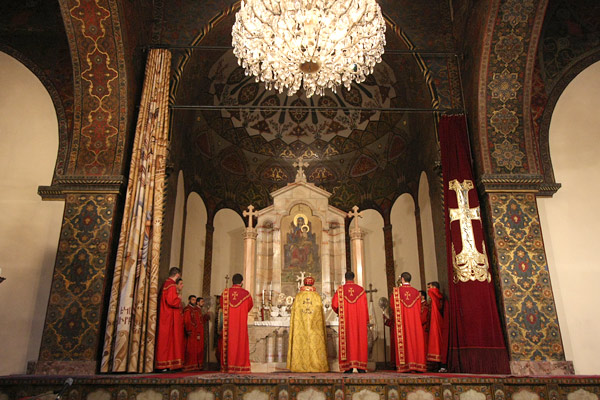
Echmiadzin is for the Armenian Apostolic Church what the Vatican is for the Catholic Church. The first Armenian church was built here in 301 and it has since become the most holy place in Armenia. The church was later rebuilt and extended to the cathedral you can see today, and the complex now includes chapels, priest seminar, home for the Catholicos (leader of the Armenian Church) and the treasury. Here, they keep all the religious relics that have been found in Armenia, including the spear a Roman soldier poked Christ with and pieces of wood from both Noah's Ark and the Holy Cross. Try to visit on a Sunday when mass is going on and the whole place is buzzing.
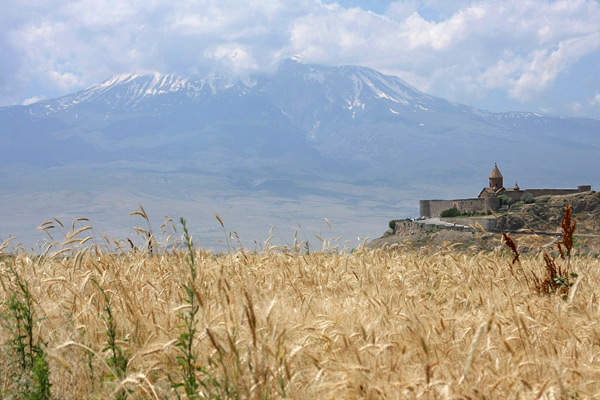
Khor Virap is that iconic church you see on postcards and paintings from Armenia. It is perched on a small hill with an almost too picturesque background of majestic Mt. Ararat which rises across the border in Turkey. The present church of Khor Virap was built in the 17th century on a foundation of previous chapels. Saint Gregory the Illuminator was initially imprisoned here for 13 years in a deep pit - khor virap means "deep well" in Armenian - which can be visited today by climbing down a steep creepy ladder. Khor Virap is an important pilgrimage site for Armenians and religious services are held at the church, including some strange rituals like sacrifice of roosters and release of white doves (which are trained to fly back to the seller). Try to visit in the weekends if you want to see some action.
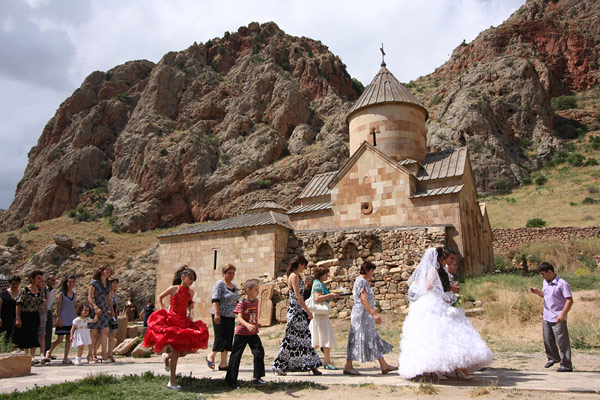
Noravank monastery complex is one of the finest in Armenia. It was constructed during the 13th and the 14th centuries and consists of two churches, where one has two floors (and a scary staircase) making it the only double leveled church in Armenia. The same church, Surb Astvatsatsin, has some elaborated carvings, one depicting Jesus flanked by Peter and Paul all with slanted eyes to ease any Mongol army in case they should return (the Mongols looted Armenia from 1220 to 1320, and the church was built in 1339). There is a fine collection of cross stones (khachkars), and tombstones.
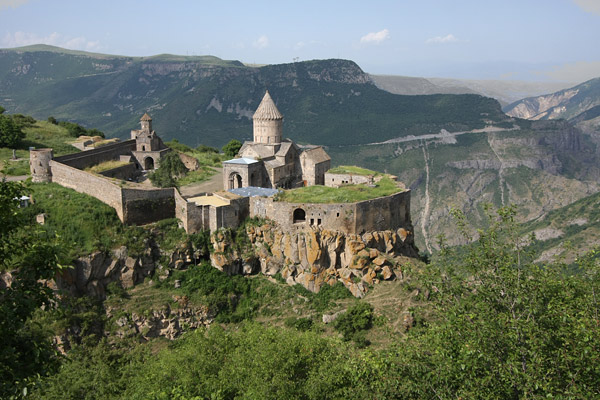
It seems that the early Christians in Armenia were really fond of splendid views for churches in Armenia are often perched on hilltops or edge of gorges, and Tatev monastery is a prime example. Sitting high on an outcrop at the end of Vorotan Canyon, with impressive views down the length of the canyon, it is surely jaw-dropping. Tatev was constructed in the 9th century and functioned as a university in the 14th and 15th centuries. The complex includes several halls and towers which some were used as library, kitchen and dining hall. The 8 m tall, but damaged, pillar in the corner of the courtyard is said to be an sensor for earthquakes - or approaching armies (Tatev was as looted as any other monastery in Armenia by various armies through times). Today you can "fly" over the canyon to the monastery in the brand new cable-car, which, by the way, is the world's longest with its 5.7 km.
© John Smith
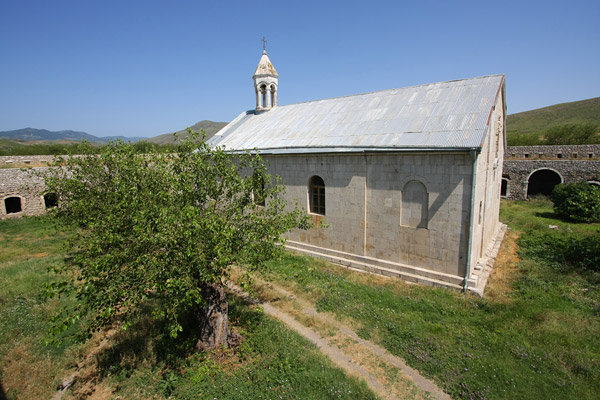
Amaras monestery is one of the oldest Christian monasteries in the world. Established by the same guy who converted Armenia to Christianity (St. Gregory the Illuminator) in the beginning of the 4th century. A century later, a school was established here at the monastery, being the first school to use the newly invented Armenian script. Today, you can still see the Armenian letters that were plastered on the ceiling as educational decoration in the building next to the church. The fine white church you see today is a result of 19th century restoration, since the original church was severely damaged from various wars through time. The gatekeeper's house, that is part of the surrounding wall, has what looks like a handful of bullet holes, probably from the latest war in the 1990s.
© John Smith
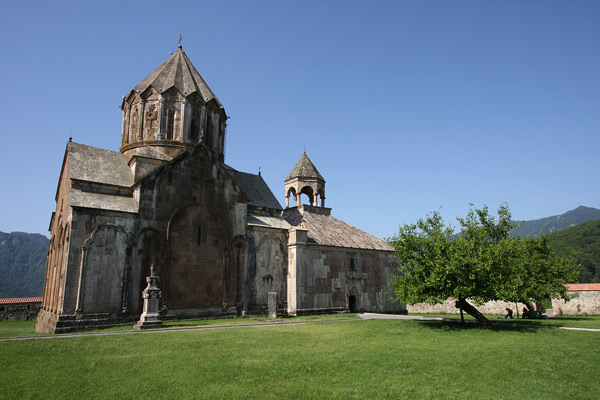
Gandzasar monastery is the main historical/religious site in Artsakh (Nagorno-Karabakh). It's from the 10-13th century, well cared for with a mighty fine collection of cross stones, so-called khachkars, in the walled garden. The walls inside of the cathedral is covered with fine Armenian inscriptions and the ornamentation is considered to be exquisite. Gandzasar is perched above the touristy village of Vank (you might wonder how a village in Artsakh can be touristy, but you will see) at 1,267 m with splendid views over the forest covered mountains.
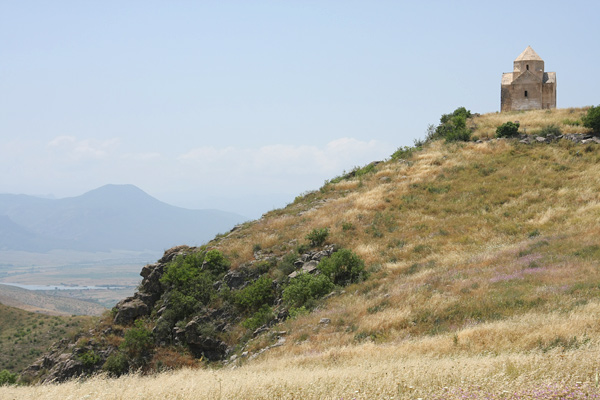
© John Smith
Vankasar church is a tiny bleach white church perched right on the edge of a cliff high above Tigranakert fortress. The church is newly rebuilt which explains its pure white colour. The views are amazing from up here and give you a chance to look across the front line into Azerbaijan. There is a dirt road all the way up here, but you can also take the steep trail that starts down at Tigranakert.
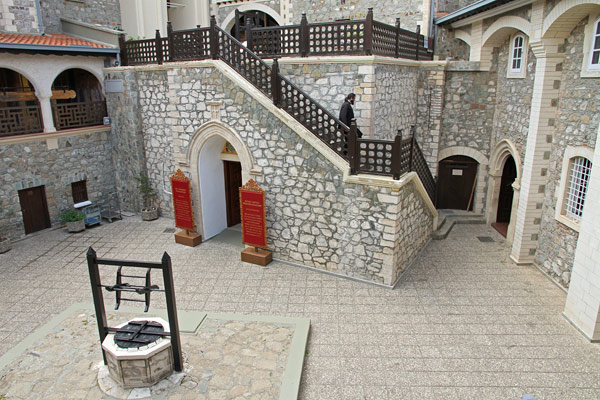
The Kykkos Monastery in the Troodos Mountians is a working orthodox monastery with beautiful friscos and a fine icon museum. Though it looks very modern, it was founded in end of the 11th century, but has been burn down countless times throughout history. No structure of the current monastery predates the last fire in 1891. Beside being a popular pilgrim site for locals, it's also swarmed by resort tourists from the coast.