

Bolivia travel guide
1 2
Name: Plurinational State of Bolivia
Population: 10,118,000
Capital: Sucre (largest city is La Paz)
Currency: Boliviano
Population: 10,118,000
Capital: Sucre (largest city is La Paz)
Currency: Boliviano
Bolivia
Atulcha 
South of Salar de Uyuni
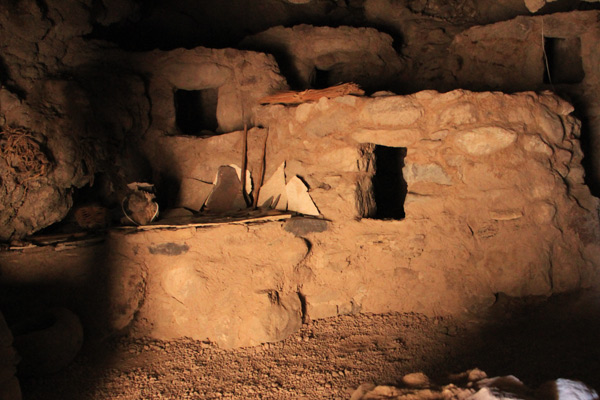
On the South side of the Salar de Uyuni lies the small village of Atulcha. It doesn’t have much more than a few houses but it does make an interesting stop on the tourist route of Uyuni and its surroundings. There is a simple museum about Quinoa, the grain of the Incas. The cycle of the plant, its many uses and the customs and traditions that come with it are explained by a local. Ask the man from the museum to bring you to the mummies of Atulcha, called the Qhatinchu Archeological Site. He’ll take you on a small walk outside the village across a small hill where there are a few caves with mummies that are in quite good shape!
Atulcha is not the only place around the Salar the Uyuni that has a salt hotel but this is a quite nice one. The walls, tables, benches, beds, etc are all cut out of blocks of salt. Luckily the mattresses are not made of salt and are nice and soft!
Atulcha is not the only place around the Salar the Uyuni that has a salt hotel but this is a quite nice one. The walls, tables, benches, beds, etc are all cut out of blocks of salt. Luckily the mattresses are not made of salt and are nice and soft!
Bolivia
Copacabana
On Lake Titicaca
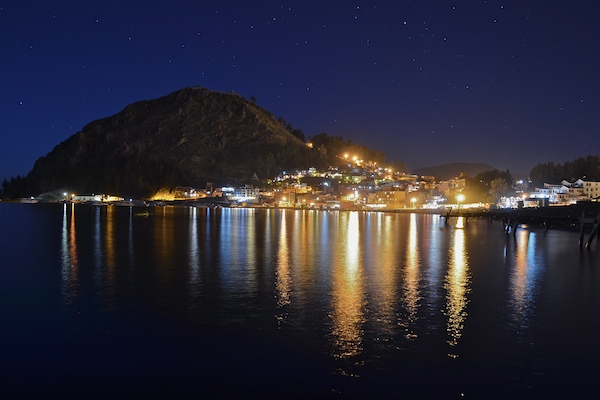
The iconic Lake Titicaca, often dubbed the highest navigable lake in the world, is often a highlight of any trip to the region. In Bolivia, there is no better launching point for lake exploration that the quasi-border town of Copacabana. Truth is, the backpacker grotto-esque feel to the place may turn some travellers off. But with a huge variety of accommodation and restaurant choices, it is a one-stop shop type base. Besides the docks, the town itself offers a few experiences: a hike up the Calvario offers wonderful views of town and the lake, a gentle stroll along the lake side and a couple churches and plazas should occupy any traveller land-side.
Bolivia
Death Road
outside La Paz
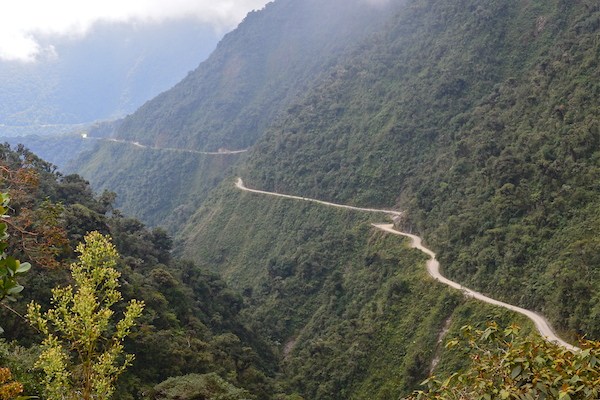
About 56 km, northeast of La Paz, lies a stretch of road names North Yungas Road. The road, however, is much better known by its nickname - The Death Road. By some estimates, some 200-300 travellers lost their lives on this 60+ km stretch of road. This makes it the most dangerous road on Earth. These days, there isn't much traffic other than adventure seekers on their mountain bikes. The trip takes you from 4,650 meter above sea level at La Cumbre Pass, down through cloud forest to near tropical temperatures outside the town of Chulumani. If the the pile of waivers you sign to do the road are any indictor, even the tour can be dangerous.
Bolivia
Dino footprints
Cal Orcko dinosaur track site, 5km outside Sucre
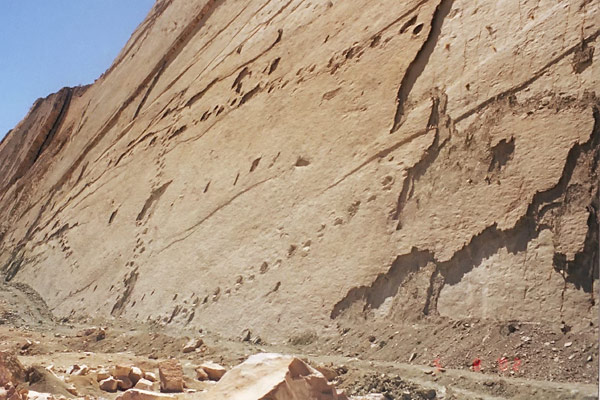
Dinosaur findings have a tendency to be in the strangest places and this is no exception. On an almost vertical slap of rock inside an active cement quarry is largest known collection of dinosaur tracks in the world. Thousands of dino footprints crisscross the now steep limestone wall creating more than 250 trackways made by six different kinds of dinosaurs in all sizes, including Tyrannosaurus Rex. You can catch the Dino truck to the site from the main square in Sucre.
Bolivia
Eduardo Avaroa National Park
South West Bolivia
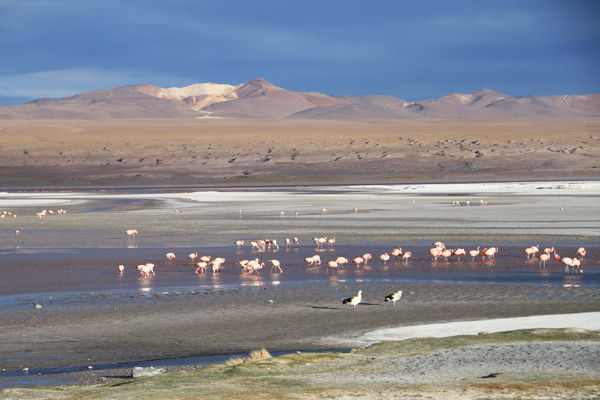
The south-west corner of Bolivia, straddling the border to Chile, is a unique area on this planet. It is protected as a national park but the beauty of this region reaches way beyond the borders of the park. The arid altiplano landscape is dotted with volcanoes such as the active Ollagüe (5863 m) where you can see smoke rise from its side, and the perfectly symmetrically shaped Licancabur volcano (5920 m) on the border with Chile.
The park and region is however mostly known for its many lakes that all have different colours from white to blue, green and red. The most famous ones are the Laguna Verde, at the Licancabur volcano and the Laguna Colorado. The colours of these mainly salty lakes come from different algae and plankton. It is this algae that attracts the three different species of flamingos that are present in high numbers at most of the lakes. This area keeps surprising because there is still much more to see. There are geysers and bubbling mud pools at Sol de Mañana, there are hot springs to warm up on a chilly morning, rock formations such as the Arbol de Piedra and there is the rabbit with a long tail called viscacha.
The park and region is however mostly known for its many lakes that all have different colours from white to blue, green and red. The most famous ones are the Laguna Verde, at the Licancabur volcano and the Laguna Colorado. The colours of these mainly salty lakes come from different algae and plankton. It is this algae that attracts the three different species of flamingos that are present in high numbers at most of the lakes. This area keeps surprising because there is still much more to see. There are geysers and bubbling mud pools at Sol de Mañana, there are hot springs to warm up on a chilly morning, rock formations such as the Arbol de Piedra and there is the rabbit with a long tail called viscacha.
Bolivia
Galaxy Cave **
South of Salar de Uyuni
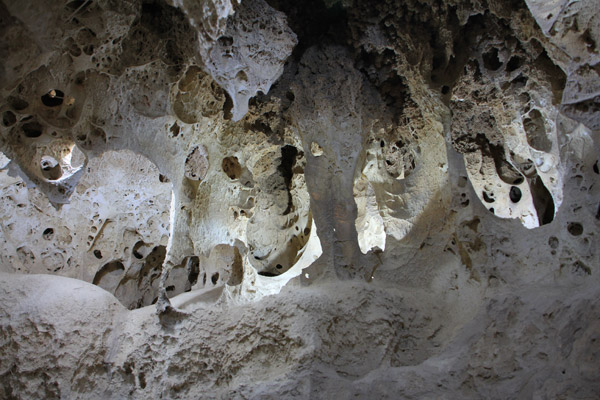
Only discovered in 2003 by two local men, Cueva Galaxia is a small cave but quite different from usual caves with stalagmites and stalactites. The cave has only a few small chambers with pretty ceilings that look more like web-like structures, kind of like deteriorated tree leaves - or like inverted corals - leave it up to your imagination!
In this small area just south of Salar de Uyuni there is also Devil’s Cave (Cueva del Diabolo) with sacred burial chambers. Around these caves and on the hill above the caves you get pretty views of the area. Furthermore is the area full of petrified cacti.
If you wonder what the ** is after the name of the Galaxy caves - it stands for the two men who discovered this site.
In this small area just south of Salar de Uyuni there is also Devil’s Cave (Cueva del Diabolo) with sacred burial chambers. Around these caves and on the hill above the caves you get pretty views of the area. Furthermore is the area full of petrified cacti.
If you wonder what the ** is after the name of the Galaxy caves - it stands for the two men who discovered this site.
Bolivia
Huyana Potosi (6,088 m)
Outside La Paz
© Louise Brønden
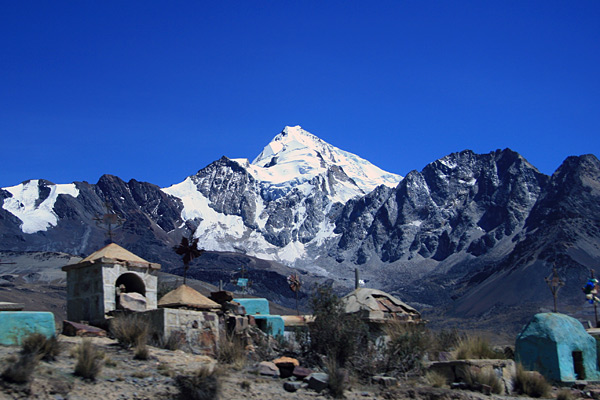
Ever dreamed of climbing a mountain? This could be your chance. Claimed to be one of the worlds easiest 6,000+ meters, Huyana Potosi rises tall right outside La Paz. In just two days you can make it to the top and back to civilization in the city. Ice axes, ropes and crampons are necessities and this is no trekking peak. Ascending to the peak is rewarding – this mountain has a real pointy peak and offers outstanding views of the altiplano, the Cordillera Real (The Royal Range) and the gleaming white peaks of the nearby Illampu mountain.
Bolivia
Isla del Sol
Lake Titicaca
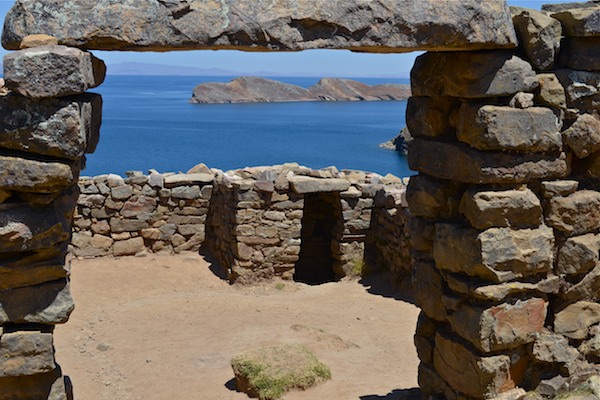
No journey to Lake Titicaca would be complete with a trip onto the lake itself. Isla del Sol, in the southern part of the lake, offers an excellent day or overnight trip. A growing tourism infrastructure offers eco-hotels and organic restaurants for those who wish to spend the night. Or, very well maintained hiking trails cross the island providing wonderful views not only of the lake, but the other-worldly island geography. Added to that, mystical ruins dot the island and taking a local as a guide will give insight into the rituals of the indigenous groups who have used the island as a place of worship for centuries.
Bolivia
Salar de Uyuni
Bolivian Altiplano
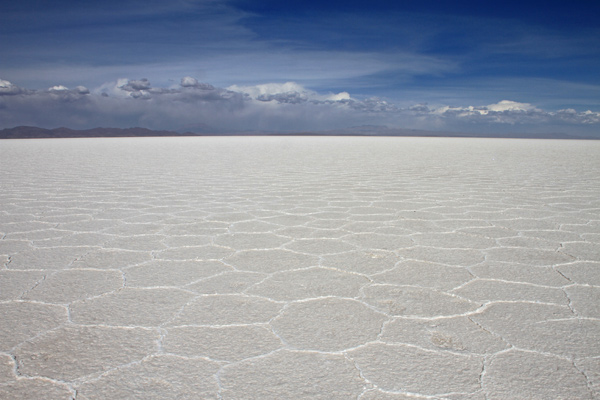
The largest salt lake of the world keeps on amazing people and should be on the itinerary when visiting Bolivia or even South America. At an altitude of about 3600 m it is part of the Bolivian Altiplano. This enormous salt lake is dry most of the year but for a few months there is some water in the lake turning it into a huge mirror. When the lake is dry you can drive across admiring the vastness and because there is a the lack of depth it is popular to make fun photos with different objects. Other attractions are the small local salt production places at the edge of the lake where you can see the locals dry the salt and make salt bricks to use for constructing houses and hotels for tourists. Incahuasi island is another popular stop and pretty much in the middle of the salt lake where there is a trail that leads to the top of this cactus-filled island.
Bolivia
Train graveyard
Uyuni
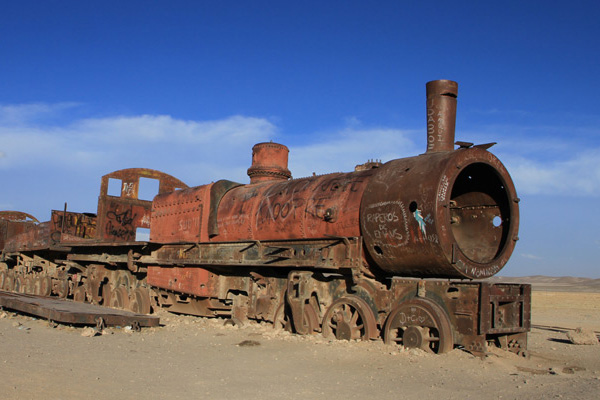
If you like deserted places, the train graveyard just outside of Uyuni is a true gem. A collection of turn of the century (end of 19th start of 20th century) steam locomotives and trains are spread out in the desert. Uyuni used to be a major crossroad of train tracks for transporting minerals away from the mines. Since the decline of the mining industry in the area, the old steam train were also abandoned and put to rest in the desert. For most tour groups this is the first stop on the standard tours in and around the salar de Uyuni. To avoid the crowds and for better light it is better to go late afternoon.
1 2