

Norway travel guide
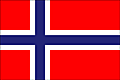
Name: Kingdom of Norway
Population: 4,691,800
Capital: Oslo
Currency: Norwegian krone
Population: 4,691,800
Capital: Oslo
Currency: Norwegian krone
Norway
17th of May Celebrations 
All over Norway
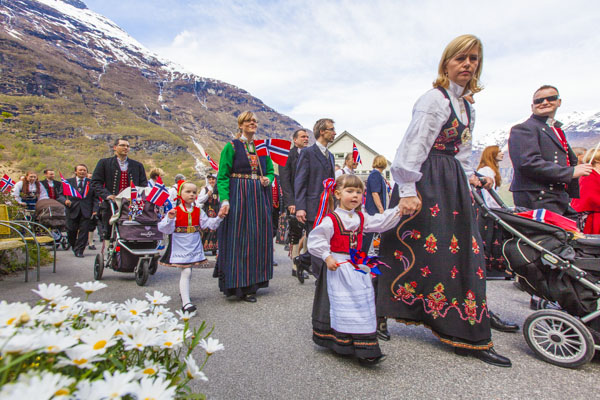
If you like band music, outlandish folk costumes and Norwegian flags, then the 17th of May is the day for you! Norwegians go crazy about the 17th of May, which is also known as Norwegian Constitution Day, although – at least to begin with – the craziness is fairy restrained. Processions, church services and the usual speeches are followed by games, food, dance and – of course – copious amounts of alcohol. If a party is what you are after, one of the bigger urban centres is your best bet, but for something a bit more quaint, find yourself a large, rural village. Ironically, Norway lost its independence only months after gaining it (and the singing of its constitution), and remained in a union with Sweden for another 90 years. But the celebration of the 17th of May was nevertheless popular from the start, even though it now has a broader meaning that it once did, encompassing the royal family and the end of the Nazi occupation during WWII.
Norway
Ålesund
Møre and Romsdal County
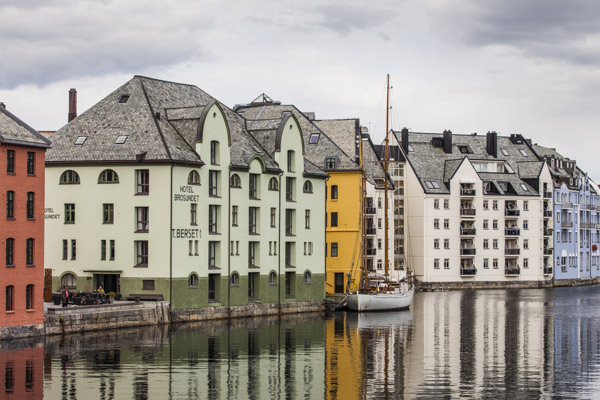
You will probably be visiting Ålesund for one of two reasons: to marvel at its Art Nouveau architecture, or to catch one of the many boat tours that leave from here to explore the nearby islands and waterways. It is a pleasant town, and its history makes it quite unique – it burned to the ground in 1905, and the Art Nouveau centre is the result of an impressive rebuilding effort. These buildings are concentrated in one part of the city; the rest of it is rather uninspiring, and not particularly attractive. Other than exploring the colourful town centre, the highlight of a visit to Ålesund is climbing the 418 steps up Akla hill, which provides gorgeous views of the town and its surrounding islands, hills and inlets. But half the fun of visiting Ålesund is getting here, as it is located at the western end of a peninsula – lots of bridges, winding roads, ferries and tunnels connect it to the rest of the country.
Norway
Atlantic Ocean Road (64)
Møre and Romsdal County
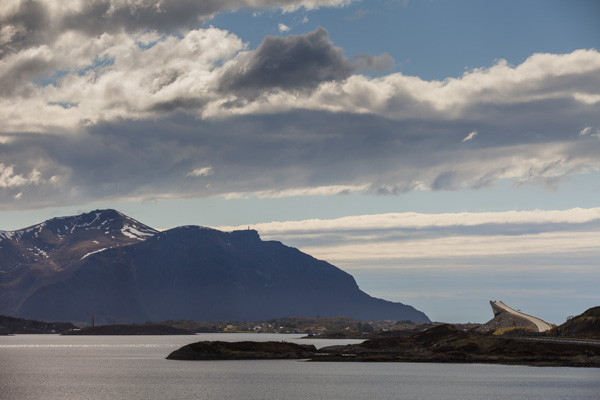
It is not often that a road becomes a destination, but the Atlantic Ocean Road is up there with Australia’s Great Ocean Road and the United States’ Route 66. In fact, Norway seems to have made it a challenge to design and build spectacular roads in the most unlikely of places, be it across mountain passes or, in this case, to connect various remote islands. At just over 8km it isn’t very long, but there are plenty of places to stop, go for walks and admire the crazy bridges with their fjord and mountain backdrops to ensure that it will take you a good few hours to get past. Very exposed to ocean storms, driving here on a sunny summer’s day and a gloomy, windy winter’s evening are two very different experiences. No road trip to Norway is complete without a visit here!
Norway
Bergen
Vestland County
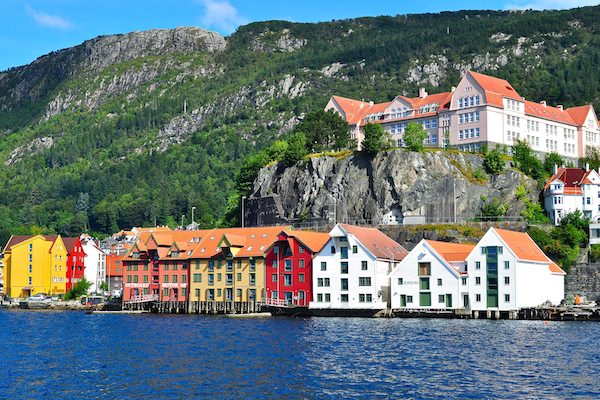
Boasting one of Norway's 7 UNESCO listed sites, the port city of Bergen is unquestionably the most popular destination in the country. Bryggen, the city's old wharf, is a pleasure to wander around, even if you might need to jostle with the hordes of tourists that show up in the busy summer season. The town is no one-hit wonder in terms of attractions. With a variety of forts, parks and a cool hike (or funicular ride) to an outlook over the city, Bergen has enough to occupy travellers for a few days. But the true life of Bergen is found in the outdoor cafes, pubs and restaurants that overspill into the walkways, almost forcing passersby to sit down, relax and enjoy the people watching.
Norway
Bird cliffs
Runde Island, Møre and Romsdal County
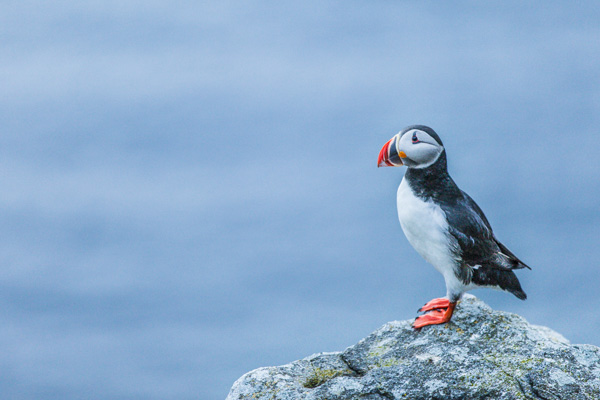
For bird watchers, bird cliffs are a bit like an all-you-can-eat buffet. They are found primarily in the Arctic and north Atlantic, and Norway has some of the most spectacular ones: in Svalbard, on the Lofoten Islands and on Runde. The steep cliffs have small shelves on which bird colonies nest, and a single site can play host to hundreds of thousands of birds at any one time. Needless to say, bird cliffs are a good place to see and photograph birds, primarily Little Auks, Atlantic Puffins, Kittiwakes and Razorbills. They also provide good opportunities to see the predators that prey on these birds, such as White-tailed Eagles. Just keep in mind that these cliffs really are very steep, and many of them present drops of hundreds of metres down to the sea, so try not to step over the edge.
Norway
Borgund Stave Church
Vestland County
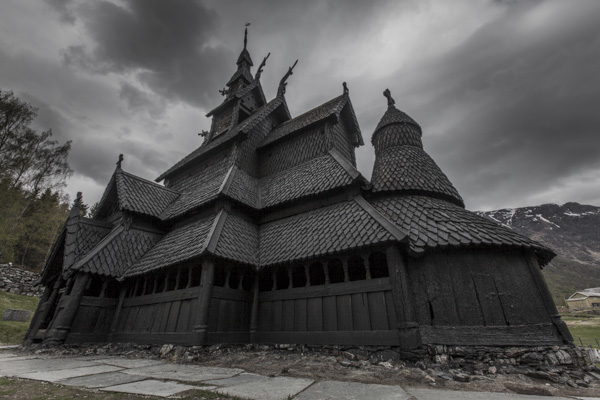
Even if churches aren’t your thing, this one is well worth a visit. For one thing, it’s got four wooden dragon heads on the roof. That’s right – it’s a church with dragons on it! It’s also very beautiful, more reminiscent of a Chinese temple than a church. The inside has a mixture of Norse and Christian carvings and decorations, and there are even a few rune carvings. From the late 12th century, Borgund is the best preserved (although neither the oldest nor the largest) of Norway’s 28 stave churches – so named because of the load-bearing posts or ‘staves’. Visiting at least one stave church should definitely be on any to-see list!
Norway
Bugøynes
Finnmark County
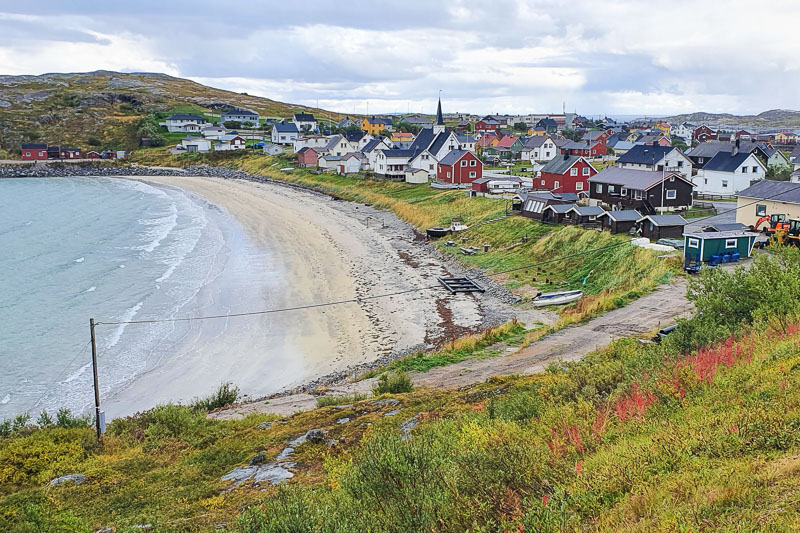
Another "end of the world" fishing village in the north of Norway. The small town clings to a headland in the Varangerfjord and has some idyllic pre-war buildings. As you drive into town, you have the best view of one of the beaches with the town as backdrop.
Norway
Coastal Highway Fv17
Nordland County
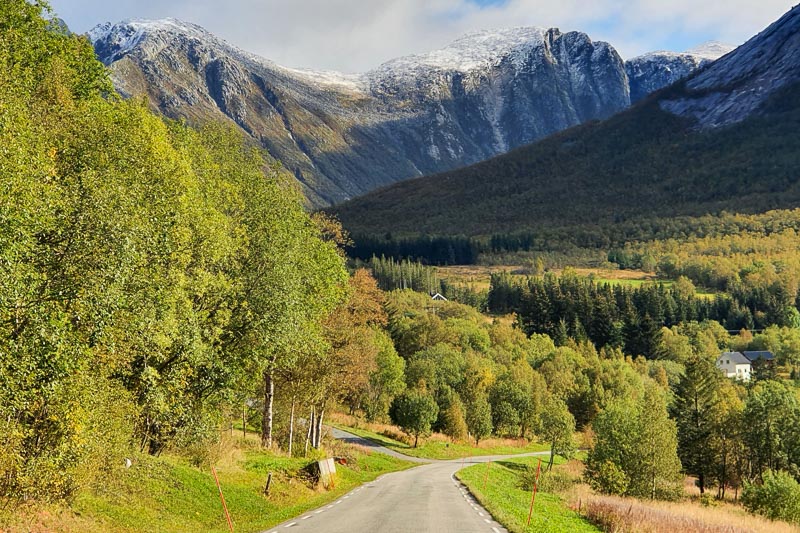
The Coastal Highway Fv17 is one of the prettiest road trips you can take in Norway - and that says something. It winds its way along the coast, jumping from island to island, from Bodø to Steinkjer 650 km away. The scenery is just mind-blowing and changes at every bend. Snowcapped mountains, deep fjords, dense forest and even glaciers. There are 6 ferry crossings (and 29 tunnels) and the complete journey can be done in 2 days, but more is recommended, particularly if you want to explore some of the islands (like UNESCO enlisted Vegaøyan). 420 km of the route is one of Norway's 18 National Scenic Routes.
Norway
Ersfjord Beach
Senja Island, Finnmark County
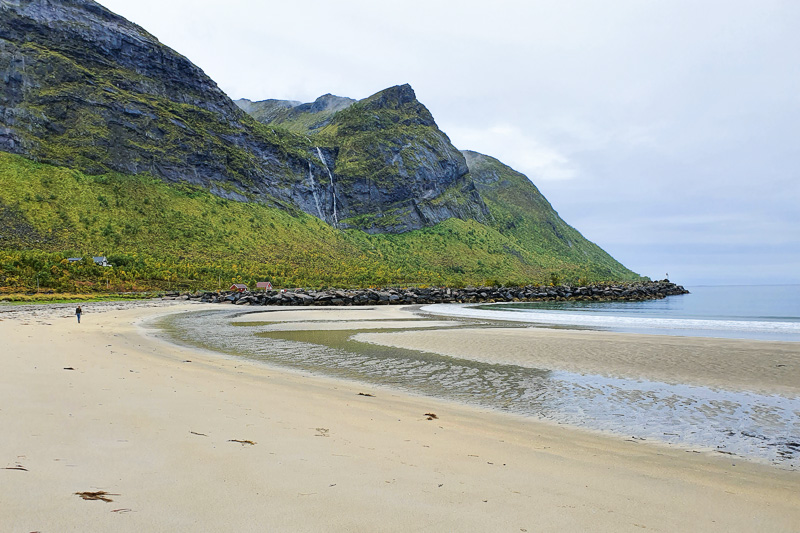
You will be hard pressed to find a more dramatic setting for a beach. Enveloped on both sides by jagged mountains with waterfalls gushing down the sheer walls. The crescent shaped sandy beach is wide with a few houses at both ends. If it wasn't for freaking cold water, it would have been perfect.
Norway
Fjord ferries
All over Fjord Norway
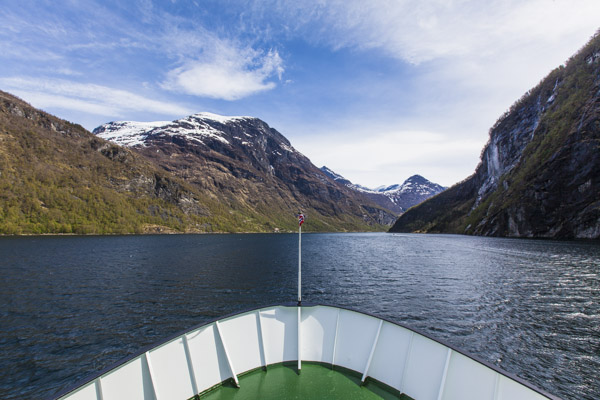
When driving or biking along Norway’s west coast, it inevitably becomes necessary to catch ferries across the fjords. Although expensive, the fjord ferries certainly add a bit of variety – and save a lot of time – to the long, narrow, winding roads. Some are short, some are long, but they all provide beautiful views of water, mountains and villages. The most famous fjord ferry in Norway is the Geirangerfjord Ferry, which takes you past some of the country’s most beautiful waterfalls. The western and northern fjords alone boast more than 80 ferries. As they say in Norway: the fjord is the road!