

Uzbekistan travel guide
1 2

Name: Republic of Uzbekistan
Population: 28,128,600
Capital: Tashkent
Currency: Uzbekistan som
Population: 28,128,600
Capital: Tashkent
Currency: Uzbekistan som
Uzbekistan
Aral Sea 
Moynaq
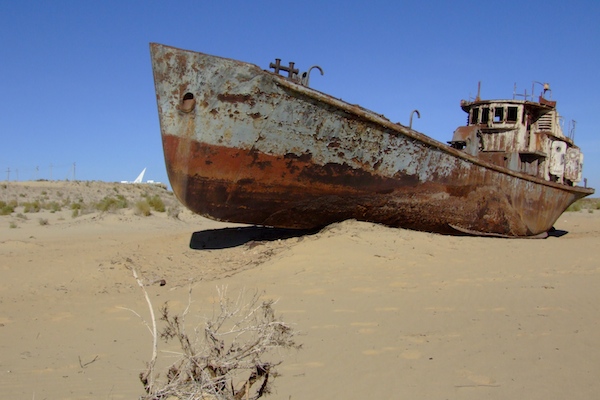
When speaking of environmental disasters, things like Chernobyl or the Exxon Valdez might immediately spring to mind. But what is arguably the single greatest man-made environmental catastrophe lies on the border of Uzbekistan and Kazakhstan. The Aral Sea was once one of the four largest lakes in the world. However, an aggressive irrigation project during the Soviet era saw the lakes main tributaries block, leaving the Aral Sea with no lifeline. Over the years, it began to shrink. Fishing villages once on the seashore found themselves further and further from their former fishing grounds. Contaminant and salt seeped into the ground. The list goes on and on. Possibly the best place to try to understand the magnitude is in the Uzbek village of Moynaq. A ship graveyard now lies in the former harbour. There is something beyond surreal about the sight of huge fishing boats rotting away in the middle of a desert.
Uzbekistan
Bukhara
Bukhara
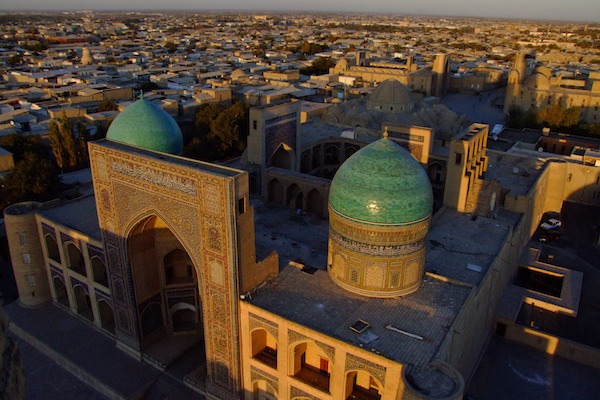
There is, perhaps, no better place to relive the fabled Silk Road than the old town of Bukhara. Although lacking in individual showpieces (like the Registan in Samarkand), Bukhara has maintained an authentic feel. Its interwinding streets and alleyways meander past ancient mosques and medressas. But it is the fact that the market is so alive that makes Bukhara special. While many of the items on sale are tourist oriented, the visitor can still see local merchants labouring away on hand-made crafts with skills passed down through generations. While the main thoroughfares might get a little busy, it is easy to escape down a back street and have the place to yourself.
Uzbekistan
Elliq-Qala
120 km from Khiva
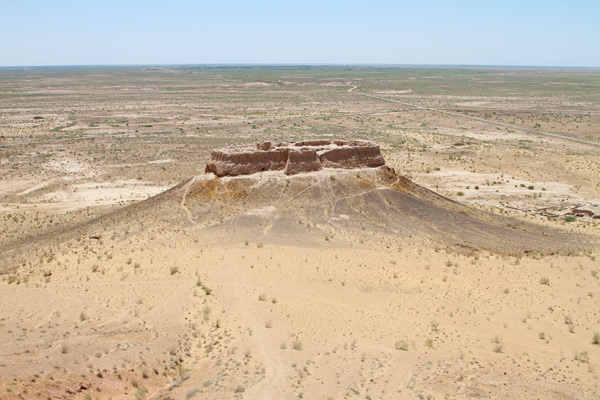
Elliq-Qala is the common name for a series of ancient ruins of mud forts. Elliq-Qala literally means "Fifty Fortresses", even though only 20 or so were discovered. The most impressive fort is the Ayaz Qala which stands high on a hill overlooking the desert plain. There is a minor fort at the base along with crumpled ruins of a third. The views of the forts from the desert and from the top of the mud walls are just magnificent. There are two lakes in the area, none of them being pretty, but since this is northern Uzbekistan any body of water is worth having a look at. The one near the Ayaz Qala Yurt Camp (right at the base of Ayaz Qala) is about an hour hike away (one way) through the blistering hot desert. The Elliq-Qala are normally reached on either a half day (three forts and two lakes) or full day (same as half day plus additional four forts) taxi excursion from Khiva.
Uzbekistan
Khiva
Western Uzbekistan
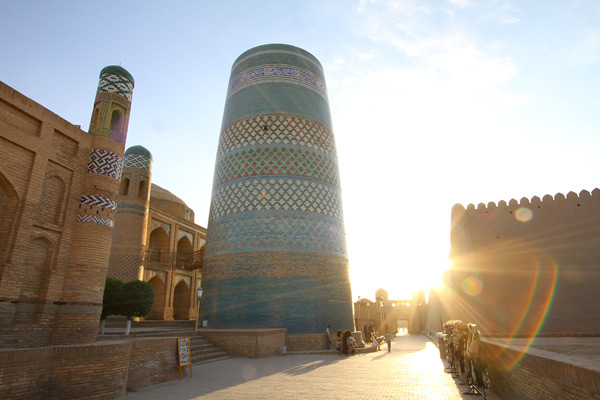
The third jewel in the crown of Uzbekistan's ancient Silk Road cities is the town of Khiva. And while some might think "you've seen one, you've seen them all", this is not the case with Khiva. The walled up old Khiva, Ichon Qala, has been heavily restored - almost to the point of Disneyfication. This level of restoration might not appeal to all, but it's a glimpse into the former glory of the city. The old town within the city walls is a wonderful maze of mosques, medressas, art shops, hotels and cafes along with residential houses, adding daily life to the otherwise open-air museum. It's a place to explore at random and just visit as many "historical sights" as you please. Great views over Khiva, both the new and the old part, can be enjoyed by climbing either one of the minarets and/or the northern part of the mud wall, accessed at the northern gate.
Uzbekistan
Mizdakhan
13 km outside Nukus
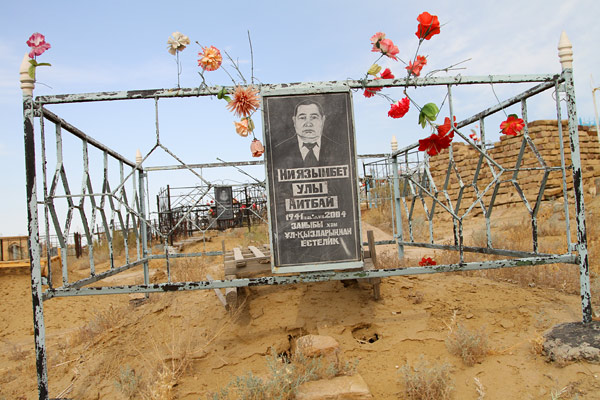
Mizdakhan is a wicked cemetery close to the border with Turkmenistan. Ancient Mizdakhan was once an important city for many centuries until it got sacked by Timur. However, it stayed a sacred place and burial site up to present. Today, the hill is covered with mausoleums and graves, including a handful of ancient tombs. There are great views over the neighbouring ruin of the mud castle Gyaur Qala and the plains that stretch into Turkmenistan.
Uzbekistan
Moynaq
Northern Uzbekistan
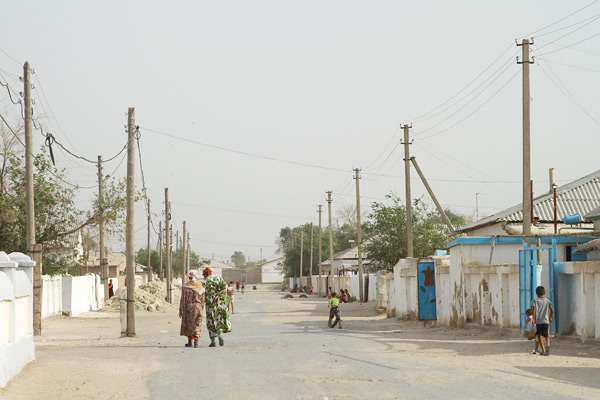
Before the 1950s, Moynaq was located at the southern shore of the Aral Sea and was a thriving fishing community. Then the USSR's central planners started to drain the Aral Sea in favour of an insane irrigation project to boost cotton production in other parts of Central Asia. The result was devastating and in no place is it more visible than Moynaq. The sea has disappeared and left Moynaq in a lifeless desert of sand and salt. Today, the former fishing town is a very dusty place with an end-of-the-world feel and a grim future. At the northern end of the town stands the Aral Sea memorial at the former shoreline with ten rusting boats below and not a drop of water in sight.
Uzbekistan
Registan
Samarkand
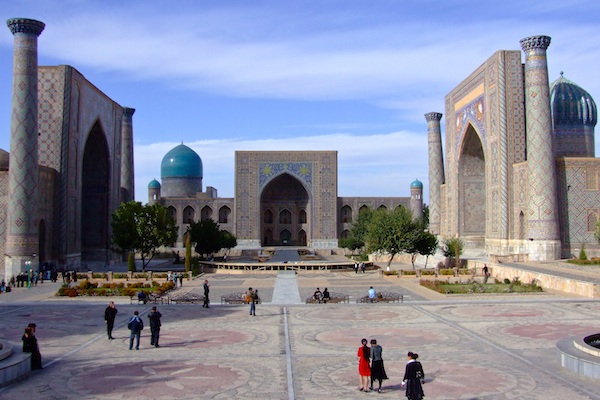
There are few places on Earth that are so absolutely spectacular, yet somehow seemingly unknown. The Registan in Samarkand, Uzbekistan, is one of those places. A UNESCO world heritage site, the central square surrounded by magnificently ornate medressas (dating back as much as 500 years) is a true sight to behold. A pillar of Islamic learning throughout the centuries, Samarkand is a thing of legend in the Muslim world. Towering doors and vaulting ceilings lead the visitors eyes to heaven, while the masterfully tiled walls and floors help to keep your feet on the ground. Samarkand is a truly spiritual place.
Uzbekistan
Samarkand
Central Uzbekistan
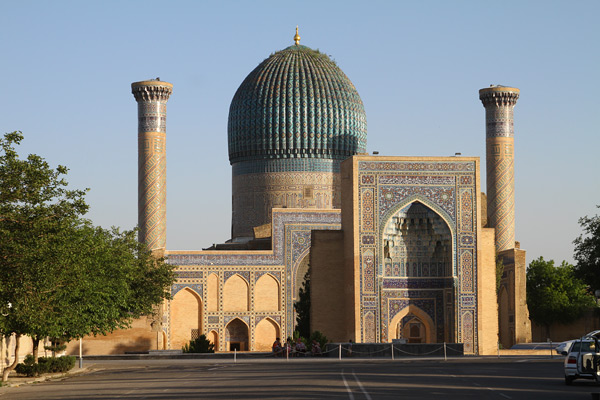
Samarkand is the most famous of Uzbekistan's 3 must-see Silk Road cities (the others being Bukhara and Khiva). When you first enter the city, the first impression will be of a very modern place with lots of Soviet era apartment blocks, and not at all that ancient Silk Road city with protective walls, towering minarets, and azur domes that you might expect. But when you finally arrive at the Registan and see the blue tiled mosques and medressas, you quickly forget the dull surroundings. The historical centre around Registan and Timur's mausoleum, Gur-e-Amir (picture), is really done up, too much in many opnions, but it's not impossible to find your way into the old town, where people still live in mud brick houses.
Uzbekistan
Shakhrisabz
Two hours drive from Samarkand (90 km)
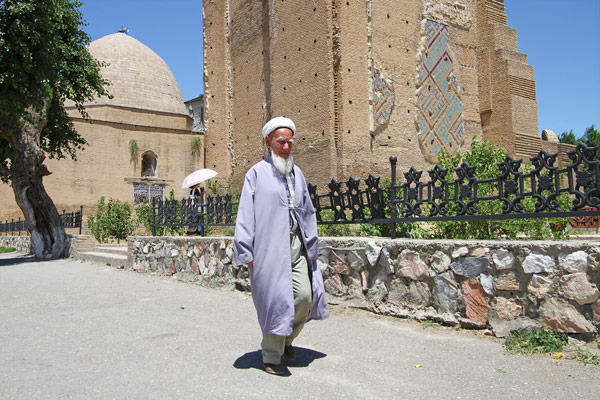
Timur (1336-1405) was for Uzbekistan what Genghis Khan (1162-1227) was for Mongolia. Timur was born in Shakhrisabz and grew up to be a blood-thirsty ruler who conquered great parts of Arabia, Persia, Caucasus and northern India, not to mention Central Asia. Like Genghis Khan, his campaigns resulted in the death of more than a million people. Under Timur rule, Shakhrisabz was said to be more splendid than even Samarkand. Today Shakhrisabz is just a small town with a few historical reminders of a bygone era, but is nonetheless an interesting destination. Besides obvious sights, like the intended tomb for Timur which he built himself (Timur's real mausoleum is in Samarkand), the town has a great small-town feel with a buzzing main street carrying the fitting name Ipak Yoli, Uzbek for Silk Road. The drive from Samarkand is equally lovely and goes over the Takhtakaracha Pass (1788 m) with views of snow-covered mountains in the distance. The ride only takes two hours, making Shakhrisabz a possible day trip from Samarkand.
Uzbekistan
Sheep testicles
All over Central Asia
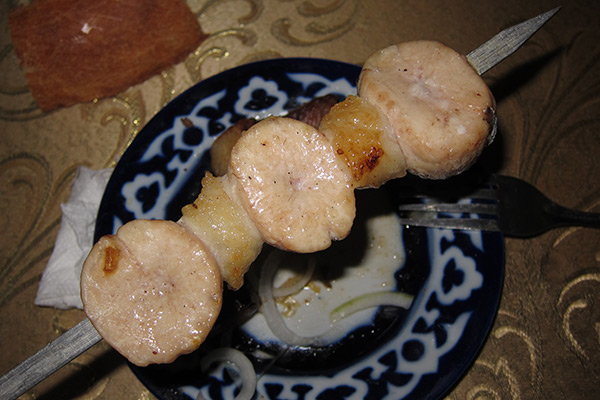
Mutton (sheep) is the meat of choice throughout Central Asia. At the butchers you will see all parts of the animal; head, legs, fat, intestines... and, yes, the testicles. They are sliced and served as shashlyk (kebab spear) like any other meat. And how do they taste? Well, you better try yourself.
1 2